Ulu Knife History: The Woman’s Knife of the Arctic
The ulu is one of the oldest knife designs still in daily use. Long before it turned up in Alaska gift shops and suburban kitchen drawers as a very good pizza cutter, it was the working knife of Arctic women, used to butcher seal and caribou, scrape hides and cut the skins that became clothing. This is ulu knife history as the record tells it, from slate blades to steel, plus a note on how our own ulu knives fit in.
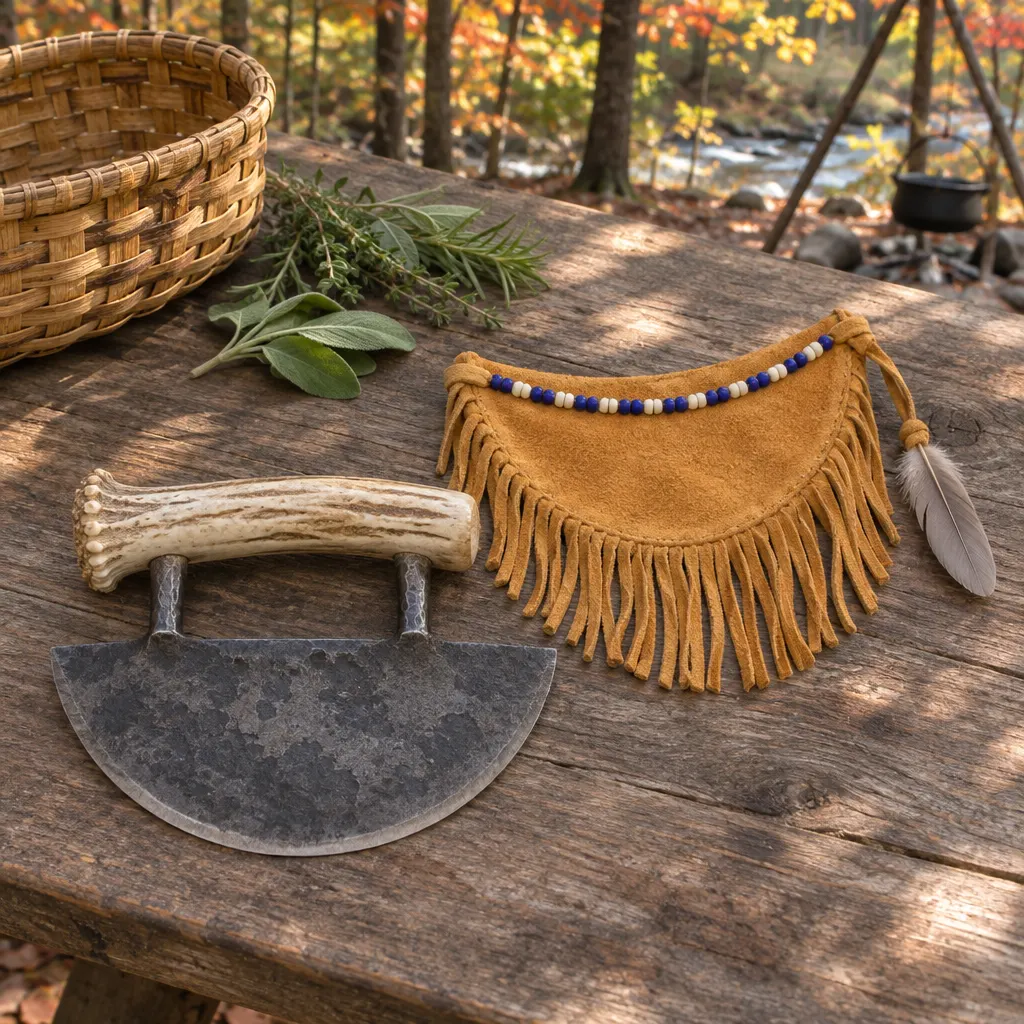
Where the Ulu Comes From
The ulu belongs to the peoples of the Arctic across Alaska, Canada and Greenland. It was traditionally used by Inuit, Iñupiat, Yupik and Aleut women, and it is still used in those communities today. Archaeologists have found ulus dating back to as early as 2500 BCE, and the earliest blades were stone.
The word is Inuktitut. Ulu is usually translated as woman’s knife, and the plural is uluit. Other Arctic languages have their own names for it. In Labrador it is uluk, for example. The shape is the same everywhere it turns up: a crescent or fan shaped blade with the handle set directly above the edge, so the hand pushes straight down into the cut.
That layout is the whole secret. Force goes straight through the blade instead of out along a lever, which makes the ulu good at hard cuts, even through bone, and very easy to control. The rocking motion also pins food against the board, so the ulu works one handed.
The Woman’s Knife
In traditional Inuit life, women used the ulu while men used other tools for hunting and fishing. The ulu was central to the work women did, which kept a household fed and clothed through an Arctic winter.
The jobs it did
- Skinning and cleaning seal, caribou and fish.
- Scraping and thinning hides so they could be worked into clothing.
- Cutting patterns from skins for parkas and kamiit, the soft skin boots of the Arctic.
- Cutting sinew for sewing thread.
- Cutting and serving food.
- Trimming snow blocks, and even cutting a child’s hair.
Different sizes for different work
Ulus were not one size. A small blade of about 5 centimeters, around 2 inches, was part of a sewing kit for cutting sinew and skin patterns. A blade of about 15 centimeters, around 6 inches, was the general purpose size. Larger ulus, occasionally up to 30 centimeters, turn up as well.
A knife for a lifetime
A woman might use the same ulu for many years, sometimes her whole adult life, and handles could be carved or marked in ways that meant something to her. Ulus are passed down through families, and receiving one from an older female relative is considered an honor. The skill came the same way, learned by watching and practicing alongside the women who already had it.
Materials Then and Now
The ulu’s history is partly a history of what was available in a place with very little wood and no smelting. Here is how the blade changed over time:
| Blade material | Where and when | What we know |
|---|---|---|
| Ground stone | Across the Arctic, the oldest finds | Most often slate, also shale and quartzite. Slate splits into thin sheets that can be ground to a sharp edge. |
| Native copper | The Copper Inuit, or Inuinnait, of the central Canadian Arctic | Pure copper found in lumps was hammered into shape cold, without smelting. The community name Ulukhaktok means the place where ulu parts are found. |
| Meteoric iron | Northwest Greenland, from about the eighth century | Iron from the Cape York meteorite was cold worked with stone hammers into harpoon blades and ulus. Meteoric iron ulus have been found in northern Canada. |
| Trade iron and steel | Labrador by the 1600s, Alaska by the 1880s | European iron reached Labrador early. After contact with 19th century whalers, steel took over quickly, and Iñupiat makers often cut ulu blades from saw blades. |
| Steel | Today | Usually steel, often saw steel, with handles of caribou antler or wood. Commercial versions sometimes use plastic. |
Handles were made from caribou antler, muskox horn, walrus ivory, bone, or wood when there was any to be had. When slate and copper were scarce, some makers even used whale baleen or ivory for the blade itself.
How the blade met the handle
Fixing a blade to a handle without screws or epoxy took some ingenuity. In the 1880s the anthropologist Franz Boas recorded that Inuit on Baffin Island glued blades into handles with a mix of clay, dog hair and seal blood. Other groups in the west sewed blade and handle together with rawhide, whalebone or root lashing through a shared hole. Anyone who has watched modern glue fail in a dishwasher can appreciate the effort.
Slate, copper, meteorite iron, saw steel. The materials changed. The shape did not.
Regional Styles
Four broad styles are usually described:
- Iñupiat, or Alaskan: the center of the blade is cut out and both ends of the blade fit into the handle.
- Canadian: the blade joins the handle by a single central stem. In the western Canadian Arctic blades tend toward a triangular shape, while eastern blades have more pointed ends.
- Kalaallit, or West Greenlandic.
- Tunumiit, or East Greenlandic.
Within those styles, size and blade shape vary by community and by the job the knife was made for.
The Ulu Today
The ulu never went out of use. It is still part of traditional work like processing seal and caribou, and it has become a common kitchen tool far from the Arctic. Plenty of people use one only for pizza, which is a little like using a canoe only to hold ice at a party, but it does work.
It also carries a lot of meaning. Gold, silver and bronze ulus are awarded to winners at the Arctic Winter Games, and ceremonial ulus are sometimes presented to mark achievements in education. In Canada, the federal rules that ban knives with a blade set at right angles to the handle make a specific exception for the ulu.
The ulu also became a popular souvenir in Alaska, and plenty of ulus sold to visitors over the years were made for display more than work. If you want one to use, look for a solid blade, a handle that fills your hand and an edge that has actually been sharpened.
Our Ulus and the Tradition
We should be straight about this. Our ulus are hand forged in high carbon steel in the ulu shape because it is a shape that works. They are not offered as Inuit, Yupik or Aleut work, and we would rather tell you the history honestly than borrow it.
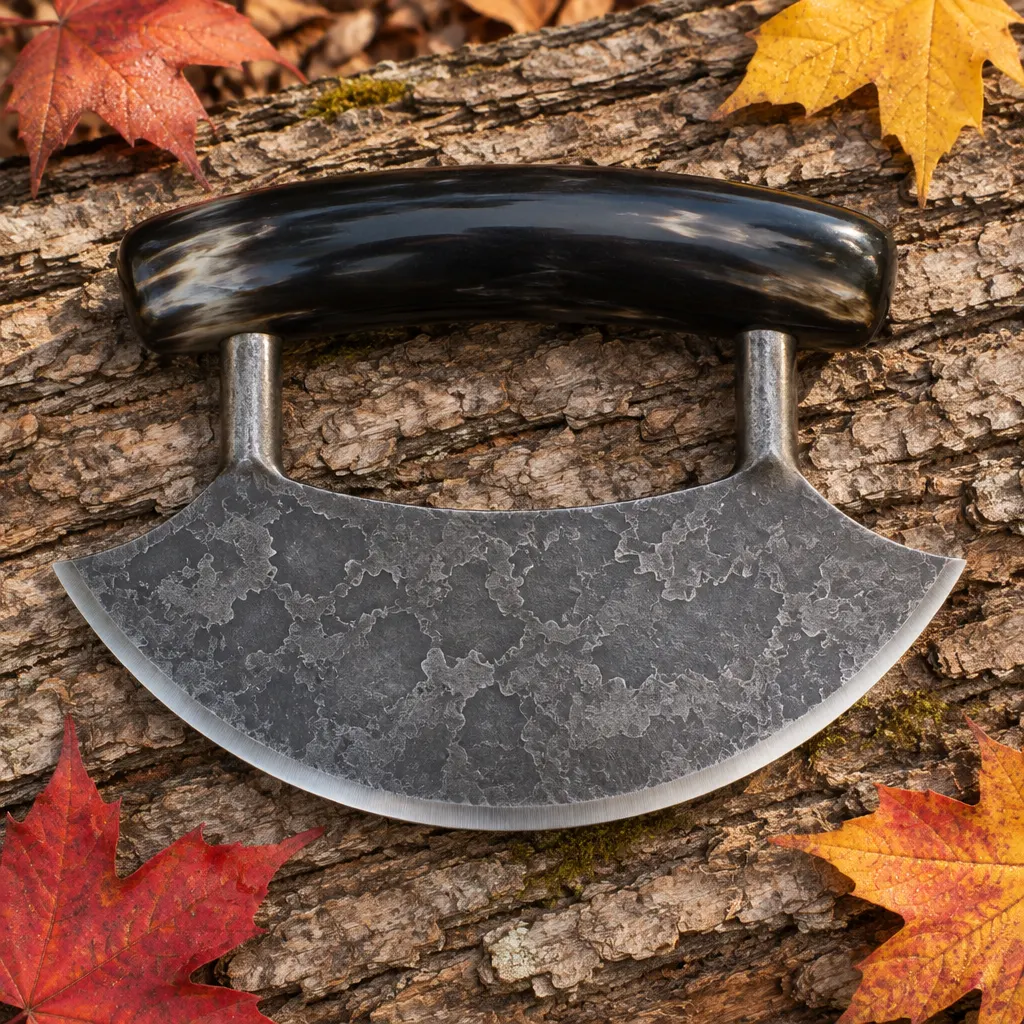
We make them in two layouts. Some set the handle on two short steel posts, which echoes the Alaskan pattern where the blade meets the handle at both ends. The Turkey Creek Whitetail Antler Handle Ulu Knife has a 6 inch curved edge and a whitetail antler grip on two posts, and the Beauty Spot Ulu Knife, Bison Horn sets polished black bison horn on twin posts. Others use a single center post, closer to the Canadian stem. The Ducktown Ulu Knife, Hickory has a hickory grip on one forged center post.
For the kitchen, the Coker Creek Ulu Knife and Bowl, Black Walnut comes with a turned 9 inch black walnut chopping bowl, and the Towee Ulu Knife and Cutting Board, Elk Antler pairs an elk antler handle with a dished hardwood board. The Sugar Valley Ulu Knife and Cutting Board Set, Black Walnut in our gift sets adds a 12 inch round walnut board with a dished hollow. If you are interested in hide work, the scrapers and fleshers in Heritage Tools come from the same family of jobs.
Once you have one, our guide on how to use an ulu knife covers the rocking, slicing and scraping cuts, and knife handle materials compares antler, horn and hardwood grips.
Questions and answers
What does ulu mean?
Ulu is the Inuktitut word for the knife, and it is usually translated as woman’s knife. The plural is uluit.
How old is the ulu knife?
Very old. Ulus have been found dating back to as early as 2500 BCE, with stone blades. The design has stayed in continuous use since, moving from slate to copper, iron and steel.
Who traditionally used the ulu?
Women of the Arctic, including Inuit, Iñupiat, Yupik and Aleut women. They used it for butchering, hide work, sewing and food, while men used other tools for hunting and fishing.
What were ulus made of before steel?
Mostly ground slate, along with shale and quartzite. Some groups used native copper or iron from the Cape York meteorite, and a few used baleen or ivory. Handles were antler, horn, ivory, bone or wood.
Why is the ulu shaped like a crescent?
The handle sits directly over the curved edge, so your hand pushes straight down. That puts a lot of force on a small part of the edge, lets the blade rock through food and makes it easy to control one handed.
Pieces that go with this guide: Turkey Creek Whitetail Antler Handle Ulu Knife, Ducktown Ulu Knife, Hickory, Beauty Spot Ulu Knife, Bison Horn, Coker Creek Ulu Knife and Bowl, Black Walnut, Towee Ulu Knife and Cutting Board, Elk Antler and Sugar Valley Ulu Knife and Cutting Board Set, Black Walnut.
Keep exploring
Shop by collection
- Native American-Style Knives
- Fixed Blade Knives
- Signature Collection
- EDC Knives
- Tomahawks & Axes
- Bearded Axes
- Throwing Axes and Tomahawks
- Tomahawks
- Double Bit Axes
- Axes & Hatchets
- Hunting & Skinning Knives
- Gut Hook Knives
- Skinning Knives
- Damascus Knives
- Antler and Bone Handle Knives
- Pocket Knives
- Neck Knives & Small Fixed Blades
- Camp & Bushcraft Knives
- Bowie Knives
- Daggers
- Boot Knives
- Ring Pommel Knives
- Heritage Tools
- Adzes, Froes and Drawknives
- Fire Starting Kits
- Leather Awls
- Wood Carving Tools
- Knife Accessories
- Axe and Tomahawk Sheaths
- Axe and Tomahawk Wall Mounts
- Knife Display Stands and Cases
- Knife Lanyards and Beaded Keychains
- Knife Making Supplies
- Knife Rolls
- Knife Sheaths
- Leather Strops
- Replacement Axe Handles
- Ulu Knives
- Leather Goods
- Bolo Ties
- Leather Belts and Belt Buckles
- Possibles Bags and Pouches
- Quivers and Arm Guards
- Rifle Slings and Shell Holders
- Gift Sets & Combos
- Horn, Antler and Bone
- Antler and Damascus Rings
- Antler Home Decor
- Drinking Horns and Powder Horns
- Horn and Wood Combs
- Forged Goods
- Bottle Openers
- Campfire Cooking Tools
- Fire Pokers and Fireplace Tools
- Forged Hooks
- Letter Openers
- Kitchen and Table
- Charcuterie and Cutting Boards
- Knife Blocks and Magnetic Strips
- Wooden Spoons and Bowls
- Outdoor and Camp
- Atlatls
- Slingshots
- Throwing Targets
- Walking Sticks
- War Clubs
- Spears & Lances
- Native Style Decor
- Dream Catchers
- Talking Sticks and Rain Sticks
- Machetes
- Shop everything
Hand Forged Ulu Knives
Crescent blades in high carbon steel with antler, horn and hardwood handles.
-
 New
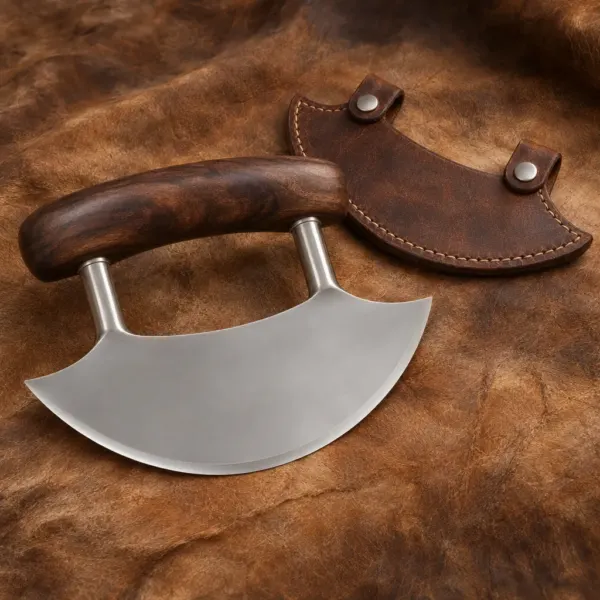
Balsam Ridge Dull Polished Ulu Knife, Black Walnut
5.75 in blade · Black walnut
An ulu knife with a 5.75 in crescent stainless steel blade in a dull polished finish, a black walnut handle on twin stainless steel posts, and a leather…
$155.00Free US shipping -
 New
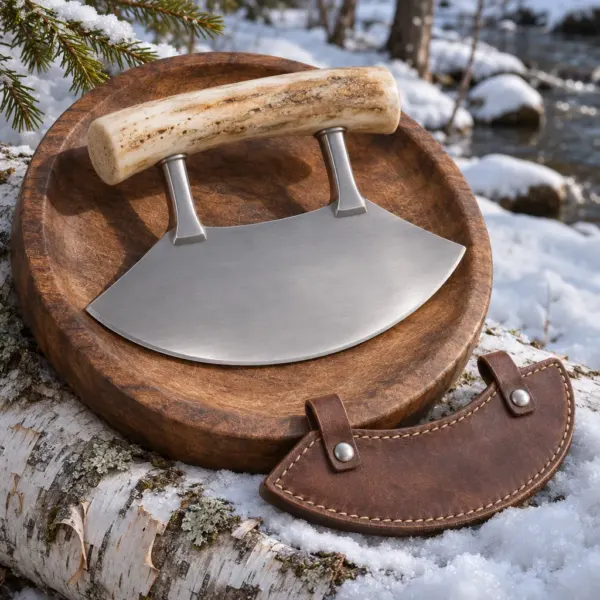
Otter Pond Sand Polished Ulu Knife and Cutting Board, Natural Bone
5.75 in blade · Bone
An ulu knife and cutting board set with a 5.75 in sand polished stainless steel crescent blade, a natural bone handle on twin stainless steel posts, a leather…
$205.00Free US shipping -
 New
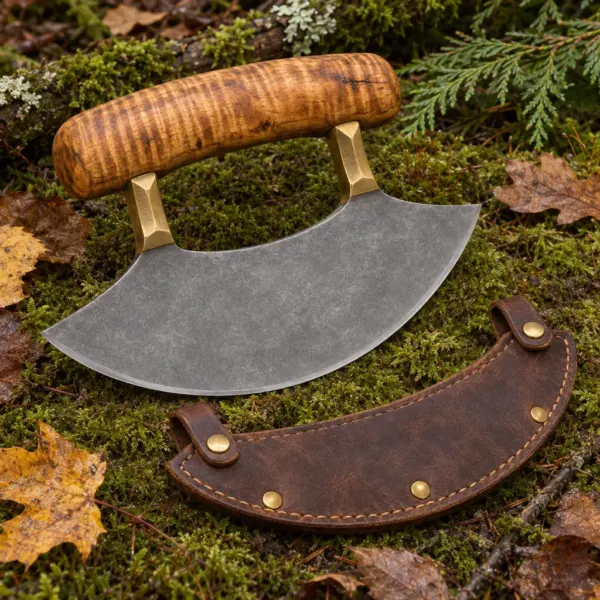
White Mountain Stonewash Ulu Knife, Curly Maple
5 in blade · Maple
An ulu knife with a 5 in stonewash stainless steel crescent blade, a curly maple handle on twin brass posts, and a leather edge guard.
$130.00Free US shipping -
 New
Falcon Glade Stonewash Ulu Knife, Curly Maple
5.75 in blade · Maple
Ulu knife with a 5.75 in stonewash stainless steel crescent blade, curly maple handle on twin copper posts, and a leather edge guard.
$155.00Free US shipping
Keep Reading

Hatchet vs Axe: Which One You Need, Plus Maul vs Axe
One hand or two, short handle or long, and when a maul beats both. How to choose between a hatchet and an axe.
Pipe Tomahawk History: Trade, Diplomacy and How They Were Made
Where the pipe tomahawk came from, why it mattered in trade and treaty making, how smiths built one, and how to display one now.

What Is a Damascus Knife? Pattern Welded Steel, Wootz and Fakes
Pattern welded steel, the wootz blades that gave it a name, how the pattern is forged and etched, and how to tell real Damascus from a printed fake.