How to Use an Ulu Knife: Cuts, Uses, Sharpening and Care
The ulu is the all-purpose knife of the Arctic, used for generations by Inuit, Yupik and Aleut families to cut meat and fish, prepare hides and do everyday kitchen work. Its crescent blade and overhead handle make it one of the easiest knives to control.

What Makes an Ulu Different
On an ordinary knife the handle sits behind the blade, so your wrist does the pushing. On an ulu the handle sits directly above the edge. The force of your hand goes straight down, and the curved edge means only a small part of the blade touches the food at any moment. The result is a lot of cutting power with very little effort.
How to Hold It
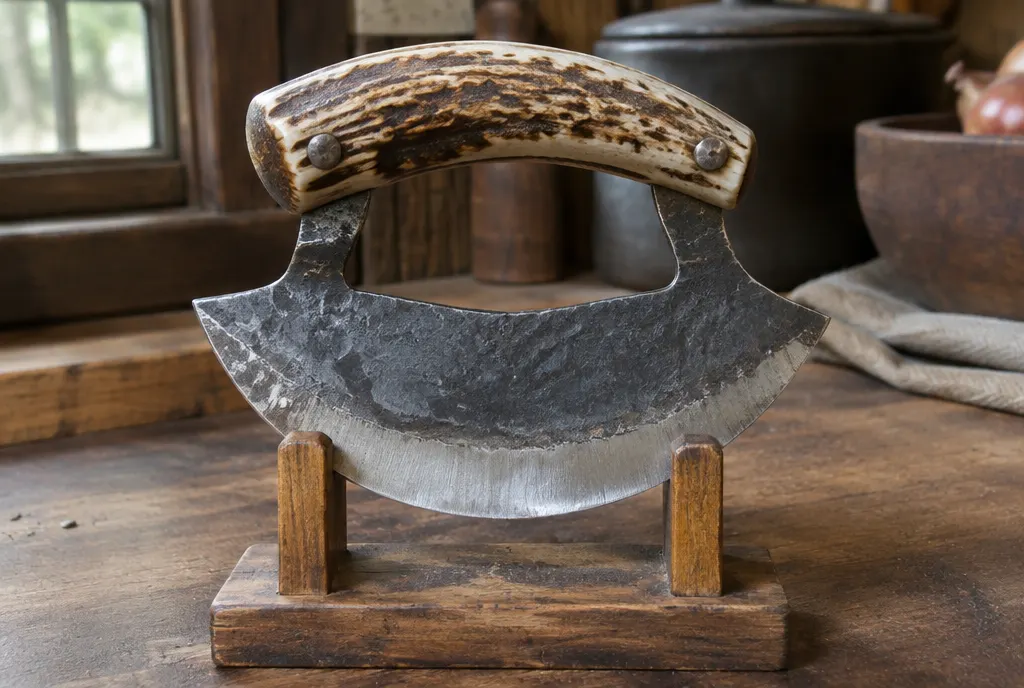
Wrap your hand around the handle with your knuckles above the blade, the way you would hold the handle of a stamp. Keep your wrist straight. Your other hand steadies the food with the fingertips curled back, well away from the edge.
The Three Basic Cuts
- The rocking cut. For herbs, garlic, nuts and vegetables. Set one tip of the blade on the board and roll through to the other tip, then roll back. Turn the pile and repeat.
- The slicing cut. For meat, fish, cheese and pizza. Start at the far tip and pull the curve through the food in one smooth arc. Let the weight of the blade do the work.
- The scraping cut. For skinning and hide work. Hold the blade at a low angle and push it away from you in short strokes, with the edge following the surface.
A dished chopping board or bowl makes the rocking cut faster, because the food keeps falling back under the blade.
Rock the blade and let the curve do the cutting.
Sharpening an Ulu
First check the edge. Many ulus are ground on one side only, with the other side flat. Sharpen the beveled side on a fine stone, following the curve in short sections from one tip to the other, then lay the flat side on the stone for a single light pass to remove the burr. If your ulu is ground on both sides, give each side the same number of strokes.
A few passes on a leather strop finish the edge. For the full method, see our guide to sharpening a hand-forged knife.
Care and Storage
- Wash by hand and dry straight away. Never put a carbon steel ulu in the dishwasher.
- Wipe the blade with food-safe mineral oil after washing. The steel will darken with use, which is normal and protects the surface.
- Oil antler, horn and wood handles a few times a year.
- Store it on its stand or with the edge guard on, never loose in a drawer.
More detail is in the knife care guide. To compare handles, read knife handle materials.
What Is an Ulu Knife Used For
In the Arctic the ulu does the work of a whole knife block. Its traditional jobs include skinning and butchering seal, caribou and fish, scraping and trimming hides, cutting skins and sinew for sewing, and preparing food for the table. Small ulus with blades of about two inches are used for fine sewing work. Larger ones handle butchering.
In a modern kitchen the same shape is hard to beat for:
- mincing herbs, garlic and onions,
- chopping nuts and chocolate,
- slicing pizza, flatbread and sandwiches,
- cutting meat and fish into strips for drying or smoking,
- dicing vegetables in a bowl without chasing them across a board.
Because the hand stays above the blade and the wrist stays straight, many people with a weak grip or sore wrists find an ulu easier to use than a chef’s knife.
Traditional Ulu Styles and Materials
The earliest ulu blades were ground from slate, with handles of bone, antler, ivory or wood. In parts of the central Arctic they were made of native copper. Steel arrived with trade and whaling, and makers often cut blades from old saw blades because the steel was thin, tough and already hardened.
The shape varies by region. In the Alaskan pattern the handle is joined to the blade at both ends, often with an open space between. In the Canadian pattern a single central stem connects the blade to the handle. Both work the same way in the hand.
Our ulu knives are hand-forged in high-carbon steel in the traditional crescent shape. Carbon steel takes a keener edge and is easier to sharpen than stainless, but it must be dried and oiled. A stainless steel ulu asks for less care and gives up a little edge quality in return.
Common Questions
What is an ulu knife?
An ulu is a knife with a crescent-shaped blade and a handle set directly above it. It was developed by the Inuit, Yupik and Aleut peoples of the Arctic and is still in daily use there.
How do you pronounce ulu?
OO-loo, with the stress on the first syllable.
Is an ulu good for cutting meat?
Yes. The curved edge slices raw and cooked meat cleanly, and it is especially good for cutting thin strips and for trimming fat and silver skin.
Do I need a special bowl or board?
No. A flat board works for every cut. A dished board or bowl only makes mincing faster, because the food gathers under the blade.
Is an ulu left or right handed?
An ulu ground on both sides works the same in either hand. A blade ground on one side only tends to steer slightly, so it can feel more natural in one hand than the other. Check the grind before you buy if that matters to you.
Hand-Forged Ulu Knives
Crescent blades in high-carbon steel with antler, horn and hardwood handles.
-
 New
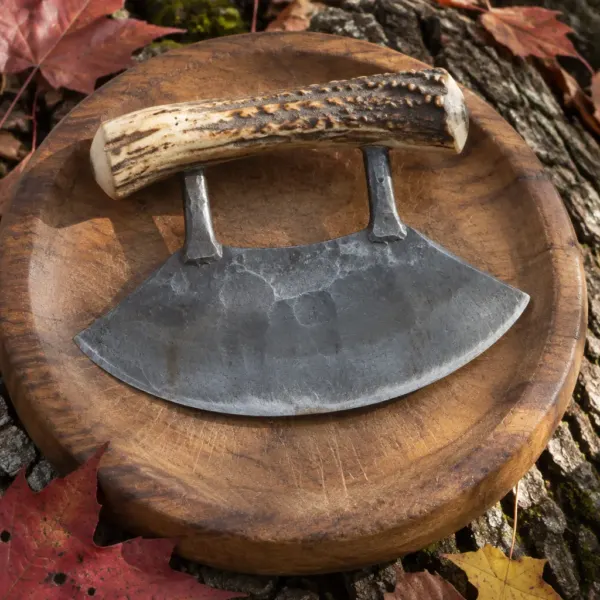
Manassas Gap Ulu Knife and Cutting Board, Deer Antler
5.75 in blade · Antler
Ulu Knife and Cutting Board with a 5.75 in hand-forged crescent blade, whitetail deer antler handle and leather edge guard and a dished hardwood chopping board.
$305.00Free US shipping -
 New
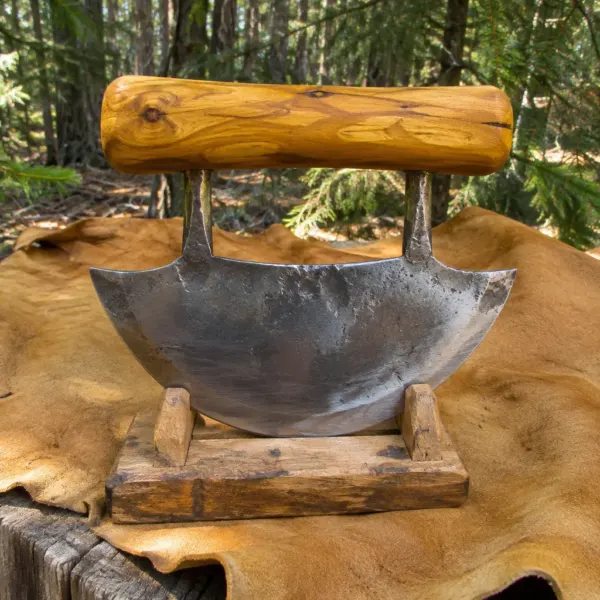
Table Rock Ulu Knife with Stand, Osage Orange
6 in blade · Osage orange
Ulu Knife with Stand with a 6 in hand-forged crescent blade, osage orange handle and leather edge guard and a matching wooden stand.
$275.00Free US shipping -
 New
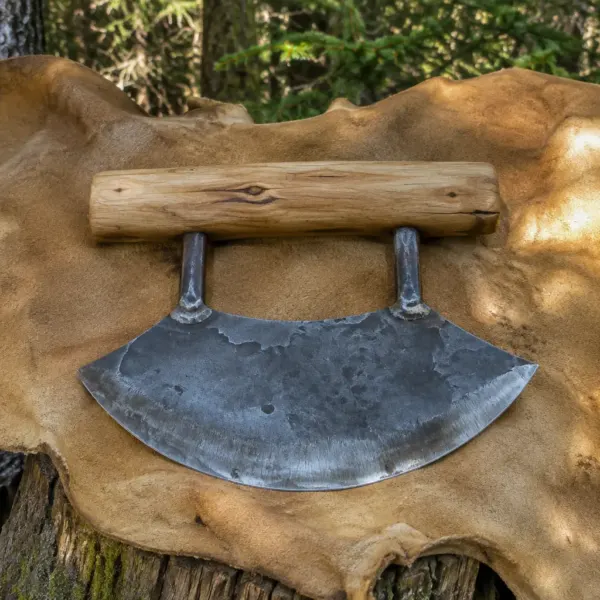
Cowee Ulu Knife, Hickory
5.75 in blade · Hickory
Ulu Knife with a 5.75 in hand-forged crescent blade, hickory handle and leather edge guard. A hand-forged ulu knife in the traditional Alaskan crescent pattern.
$225.00Free US shipping -
 New
Stagecoach Road Ulu Knife and Cutting Board, Curly Maple
5.75 in blade · Maple
Ulu Knife and Cutting Board with a 5.75 in hand-forged crescent blade, curly maple handle and leather edge guard and a dished hardwood chopping board.
$305.00Free US shipping
Keep Reading

Skinning Knife Blade Shapes: Drop Point, Trailing Point and Gut Hook
Which blade shape opens, skins and capes best, and what length to carry for deer and bigger game.

How to Sharpen a Knife With a Whetstone: A Guide for Hand-Forged Blades
A step-by-step way to put a working edge back on a hammered carbon steel blade without touching the forged faces.

Knife Handle Materials: Antler, Horn, Hardwood and Bone Compared
How antler, horn, hardwood, bone and wrapped handles look, feel and age, and how to look after each one.