Skinning Knife Blade Shapes: Drop Point, Trailing Point and Gut Hook
The shape of a blade decides how it behaves under a hide. Belly, point and length each change the work. Here is what the main skinning knife shapes do, and which one to carry.
The Parts That Matter
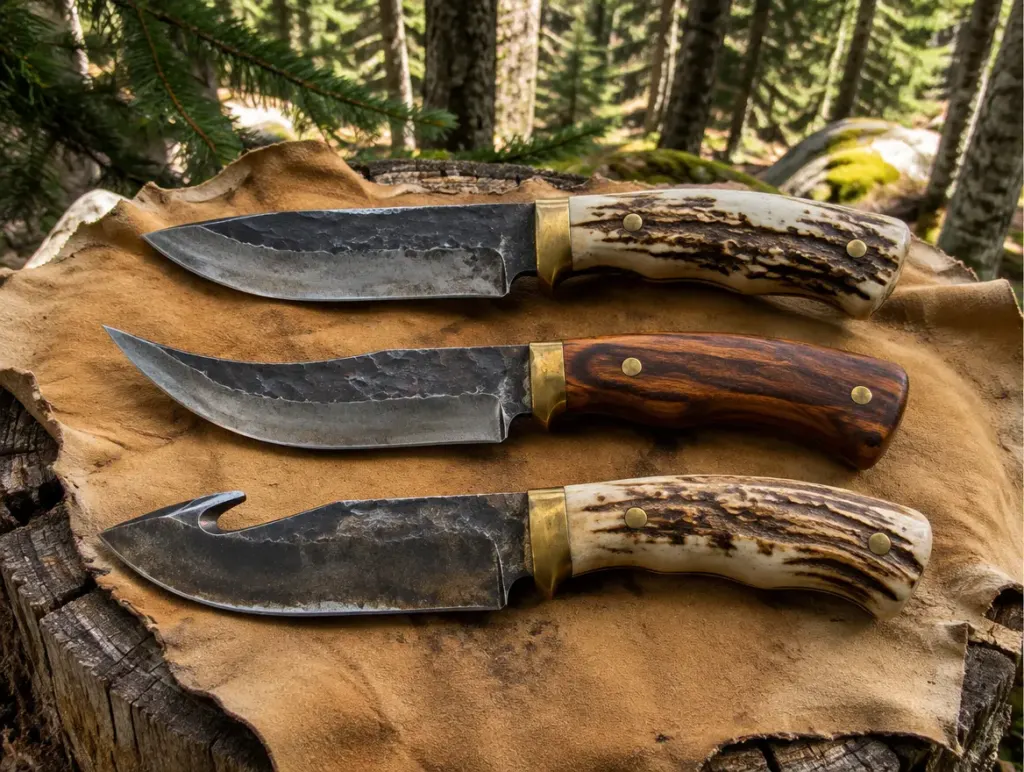
- Belly: the curved part of the edge. The longer and deeper the belly, the longer each skinning stroke.
- Point: a high, sharp point pierces easily. A lowered point stays out of the way and is less likely to puncture what lies under the hide.
- Spine: a thick spine adds strength for splitting a pelvis or working through a joint.
Drop Point
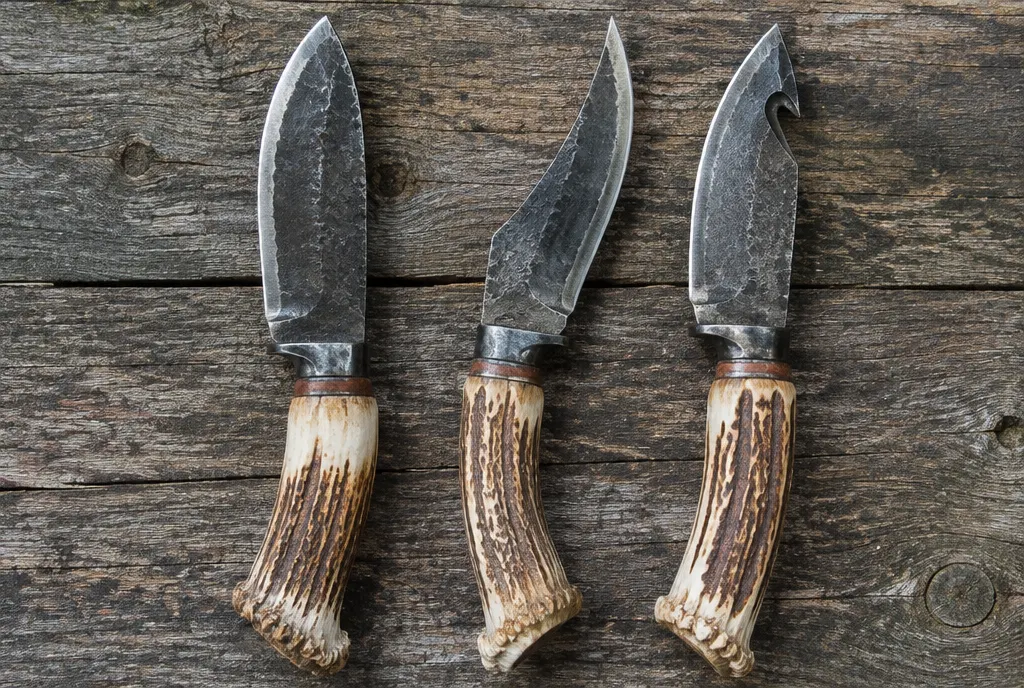
The spine curves gently down to the tip. That lowers the point, leaves a strong tip and still gives plenty of belly. A drop point field dresses, skins and handles camp chores, which is why it is the best choice if you carry one knife.
Trailing Point and Trade Skinner
The edge sweeps up so the point rides at or above the spine. This gives the longest belly a blade of that size can carry, ideal for long sweeping cuts on deer, hogs and larger game. The tip is fine, so it is a skinning specialist and not a prying tool. The old trade skinners carried west in the fur trade era follow this pattern.
Clip Point
The front of the spine is cut away, straight or concave, which brings the point down fine and sharp. A clip point pierces well and is handy for detail work and joints, with enough belly for general skinning.
More belly means longer skinning strokes. A lower point means fewer accidents.
Gut Hook
A sharpened notch on the spine near the tip. You make a small opening, set the hook under the hide and pull. It unzips the animal without the point touching the entrails. Behind the hook the blade is usually a drop point or skinner. The hook needs a small round file or rod to sharpen.
Caping Knife
A short, narrow blade of about 2.5 to 3.75 inches with a fine point. It is made for the careful cuts around eyes, ears, lips and antler bases when you are saving a cape for a mount, and it is a handy small-game knife as well.
What Length to Carry
- Small game and birds: 2.5 to 3.5 inches.
- Whitetail and similar: 3.5 to 4.5 inches. Longer is not better here.
- Elk, moose and hogs: 4.5 to 5.5 inches, often paired with a smaller knife for detail.
A full tang and a handle that stays grippy when wet matter as much as the shape. Antler and textured horn are traditional for that reason, as explained in knife handle materials. After the hunt, wash, dry and oil the blade as described in the knife care guide.
The Best Skinning Knife for Deer
For whitetail and mule deer, most hunters are best served by a drop point or semi-skinner of 3.5 to 4.5 inches. That is long enough to open the animal and work around the shoulders, and short enough to steer with a fingertip on the spine. Look for three things:
- Enough belly. The curve should start about halfway along the edge.
- A grip that holds when wet. Antler, ridged horn or a finger groove all help.
- Steel that touches up fast. High-carbon steel comes back on a pocket stone in a minute, which matters halfway through a deer.
If you skin several animals a season, add a trailing point skinner for the long cuts and keep the drop point for opening and detail. You can compare both among our deer skinning knives and hunting knives.
Finger Hole and Ring Skinning Knives
Some skinners have a hole in the blade for the index finger, or a steel ring at the end of the handle. Both do the same job: they lock the knife to your hand when everything is slippery. A ring also lets the knife hang from a finger while you use both hands to pull hide, so you never have to set it down. See our ring knives for examples.
Edge and Steel
A skinning edge works best at about 18 to 22 degrees per side: thin enough to part hide from meat, sturdy enough to survive a touch of bone. Hair, dirt and hide dull an edge faster than meat does, so cut from the inside out where you can, with the edge facing away from the hair. Carry a small fine stone or a strop and use it before the knife feels dull, not after. The method is in how to sharpen a knife with a whetstone.
Common Questions
What is the best blade shape for skinning a deer?
A drop point if you carry one knife, because it opens, skins and trims safely. A trailing point is faster on the hide itself.
Is a gut hook worth having?
It makes the opening cut quicker and cleaner, and many hunters like it for that reason. The trade-offs are a hook that needs its own round sharpener and a spine that is less comfortable to press on.
What is the difference between a skinning knife and a hunting knife?
A hunting knife is a general-purpose field knife. A skinning knife is a specialist with more belly and a shorter or higher point, made mainly for removing the hide.
How sharp should a skinning knife be?
Sharp enough to shave. A keen edge needs less force, and less force means more control and fewer slips.
What size knife is best for field dressing?
A 3.5 to 4.5 inch blade for deer-sized game. Longer blades are harder to control inside the body cavity.
Hunting and Skinning Knives
Hand-forged fixed blades with antler, horn and hardwood handles.
-
 New
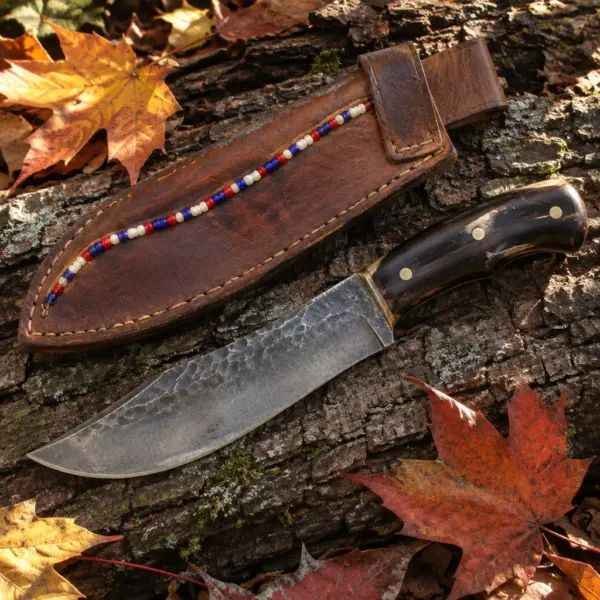
Burkes Garden Mountain Man Knife, Bison Horn
6.25 in blade · Buffalo horn
Mountain Man Knife with a 6.25 in hand-forged blade, polished black bison horn scales and a beaded leather sheath.
$325.00Free US shipping -
 New
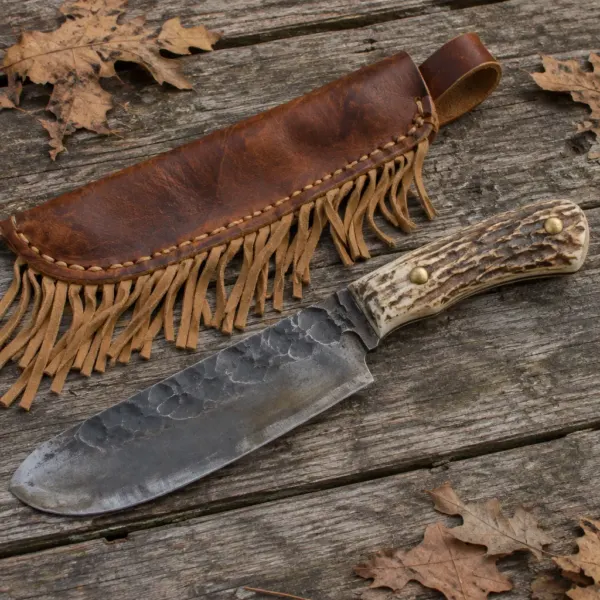
Craggy Pinnacle Trade Butcher Knife, Deer Antler
6.5 in blade · Antler
Trade Butcher Knife with a 6.5 in hand-forged blade, whitetail deer antler scales and a fringed leather sheath.
$290.00Free US shipping -
 New
Rattlesnake Rock Bird and Trout Knife, Curly Maple
4 in blade · Maple
Bird and Trout Knife with a 4 in hand-forged blade, curly maple scales and a leather sheath. A slim bird and trout knife for small game and fish.
$235.00Free US shipping -
 New
South Toe Clip Point Hunting Knife, Black Walnut
5 in blade · Black walnut
Clip Point Hunting Knife with a 5 in hand-forged blade, black walnut scales and a beaded, fringed sheath with feathers.
$310.00Free US shipping
Keep Reading

How to Sharpen a Knife With a Whetstone: A Guide for Hand-Forged Blades
A step-by-step way to put a working edge back on a hammered carbon steel blade without touching the forged faces.

Knife Handle Materials: Antler, Horn, Hardwood and Bone Compared
How antler, horn, hardwood, bone and wrapped handles look, feel and age, and how to look after each one.

What Is a Neck Knife? How to Wear, Carry and Choose One
A small fixed blade worn on a cord. Where the idea comes from, how to wear one safely and what size to choose.