Knife Handle Materials: Antler, Horn, Hardwood and Bone Compared
The handle is the part of a knife you actually hold, and the material changes how it grips, how it ages and how much care it wants. Here is what to expect from each of the natural materials used on traditional blades.
Antler
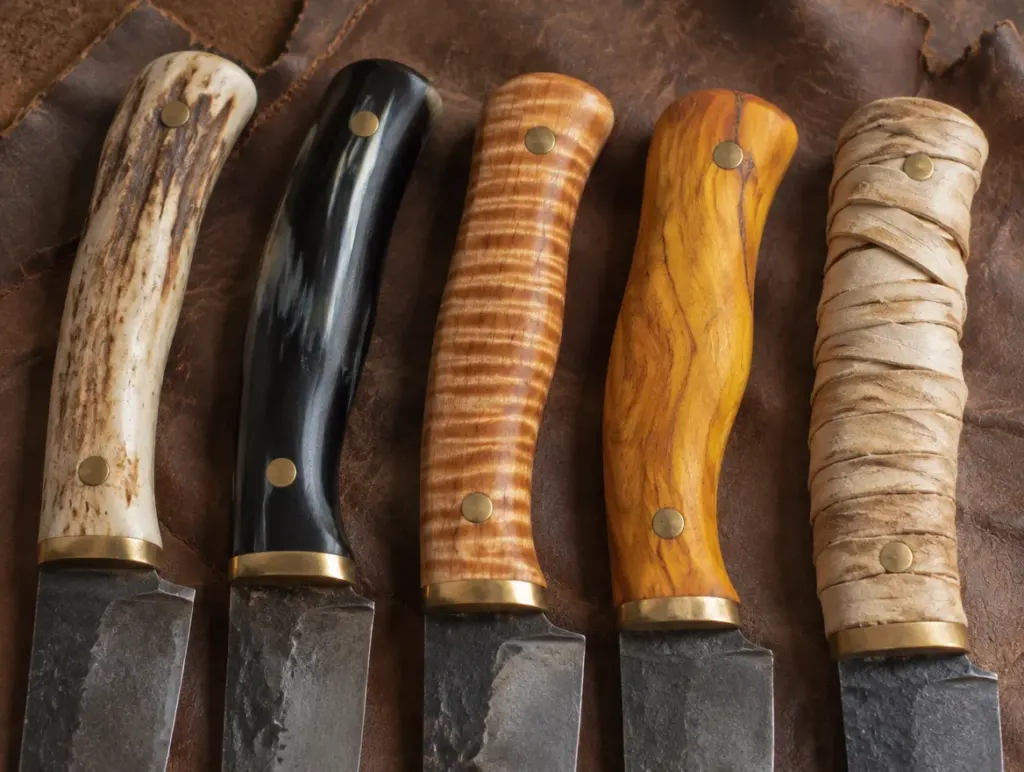
Elk and whitetail deer antler is dense bone grown and shed each year. The outer surface is naturally ridged, which gives a secure grip even with wet or cold hands, and no two pieces look the same. Elk is larger and paler; whitetail is finer and often darker.
Care: antler can dry out and develop fine checks. Rub in a little mineral oil now and then and keep it away from heaters and car dashboards.

Horn
Buffalo, ram and cow horn is keratin, the same protein as a fingernail. It polishes to a deep gloss, feels warm and smooth, and comes in solid black, amber and streaked cream. Ram horn keeps its natural ridges for extra grip.
Care: horn dislikes heat and long soaking, which can make it warp or shrink. Wipe it clean, dry it and add a drop of mineral oil a few times a year.
Hardwoods
- Hickory and white ash: tough and springy. They absorb shock, which is why they are the classic woods for tomahawk and axe hafts.
- Black walnut: dark, stable and easy on the hand. A traditional American gunstock and knife wood.
- Curly maple: hard, pale and striped with figure that shows best under an oil finish.
- Black cherry: smooth and fine-grained. It darkens from pink-brown to a deep red-brown with light and handling.
- Osage orange: very dense and rot resistant. Bright yellow when new, mellowing to amber and brown.
- Dogwood and white oak: hard, close-grained and hard-wearing, used for tool handles for centuries.
- Rosewood: naturally oily, heavy and dark red-brown, with good resistance to moisture.
Care: rub in boiled linseed oil or a wood wax a few times a year. Wipe off the excess and let it cure.
Natural handles are never identical. That is the point.
Bone
Polished cattle bone is hard, smooth and ivory colored, and it picks up a warm tone with age. It is more brittle than antler, so avoid dropping it on stone or concrete.
Care: wipe with a damp cloth and dry. Keep it away from heat.
Rawhide and Leather Wraps
A wrapped handle is the oldest and simplest kind. Wet rawhide lacing shrinks as it dries and sets almost as hard as horn. Leather cord gives a softer, slightly padded grip that does not slip.
Care: keep wraps dry. If they get wet, let them dry slowly at room temperature. Condition leather once or twice a year.
How to Choose
- Wet work and field dressing: antler or ram horn for natural texture.
- Everyday carry and gifts: polished horn, walnut or curly maple.
- Hard use and chopping: hickory, ash or osage orange.
- A period look: antler, bone or a rawhide wrap.
Blade shape matters as much as the handle. See skinning knife blade shapes, or read the full knife care guide.
How the Handle Is Fitted to the Blade
- Full tang with scales: the steel runs the full width and length of the handle, with a slab of material pinned to each side. It is the strongest construction and the easiest to inspect, because you can see the steel all the way round.
- Hidden tang: a narrower tang is set into a hole in a solid piece of antler, horn or wood and fixed with a pin or epoxy. It is lighter and shows off the whole piece of material, which is why it is the usual choice for antler crowns.
- Through tang: the tang passes right through the handle and is peened or threaded at the butt, often over a brass cap.
For chopping and batoning, choose a full tang. For skinning, carving and everyday cutting, any of the three is strong enough.
How Natural Handles Age
Natural materials change with time, and most of the change is for the better. Antler and bone darken from cream toward honey where the hand touches them. Wood deepens in color under oil and light. Brass pins and guards lose their shine and turn a soft brown.
Natural materials also move with the seasons. In a dry winter a handle can shrink by a hair, leaving a pin or the edge of the tang standing slightly proud. This is normal and usually reverses when the air is humid again. What you want to avoid is fast change: a hot car, a sunny windowsill or a long soak in the sink.
Natural or Synthetic
Modern handle materials such as Micarta, G10 and resin are close to indestructible. They do not swell, shrink or crack, and they suit knives that live in wet or salty conditions. Stabilized wood sits in between: real wood filled with resin under vacuum, so it keeps its figure and gains much of that stability.
Natural handles ask for a few minutes of care a year. In return each one is different, they feel warm in the hand and they match the look of a forged blade. On a traditional knife that is usually the better trade.
Common Questions
What is the most durable natural knife handle material?
Dense hardwoods such as osage orange and hickory, followed closely by antler. All three stand up to shock and wet weather better than bone or polished horn.
Is antler a good knife handle?
Yes. It is tough, it grips well when wet and it has been used for knife handles for thousands of years. Its only weakness is drying out, which a little oil prevents.
Does taking antler harm the animal?
Deer and elk shed their antlers every year and grow a new set, so antler can be collected from the ground after it drops.
Can a horn or antler handle get wet?
Rain and washing do no harm if you dry the knife afterward. Do not leave it soaking, and never put it in a dishwasher.
What oil should I use on a wood knife handle?
Boiled linseed oil or tung oil for a lasting finish, or food-safe mineral oil on a kitchen knife. Apply a thin coat, wait a few minutes and wipe off the excess.
Knives in Natural Materials
Antler, horn and hardwood handles on hand-forged blades.
-
 New
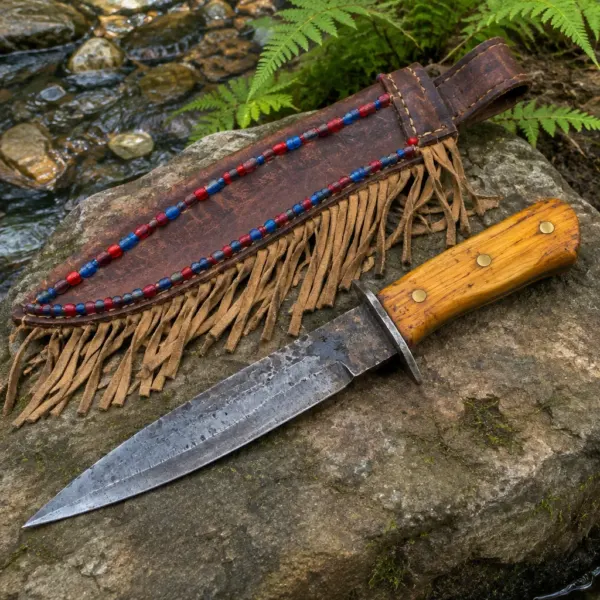
Icewater Spring Spear Point Dagger, Osage Orange
6.75 in blade · Osage orange
Spear Point Dagger with a 6.75 in hand-forged blade, osage orange scales and a beaded, fringed sheath.
$360.00Free US shipping -
 New
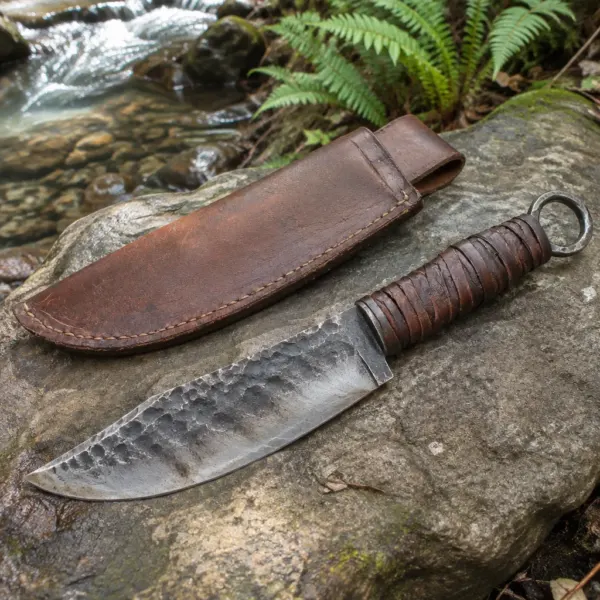
Curtis Creek Ring Pommel Camp Knife, Leather Wrap
6.5 in blade · Leather wrapped
Ring Pommel Camp Knife with a 6.5 in hand-forged blade, brown leather cord wrapped over the tang wrap and a leather sheath.
$310.00Free US shipping -
 New
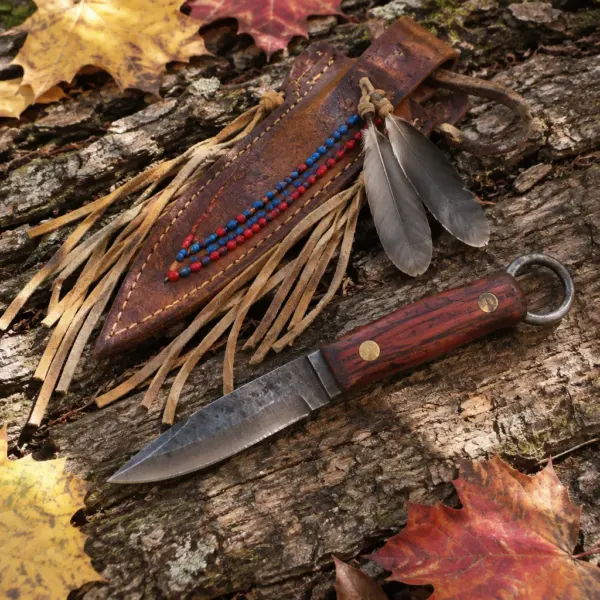
Spring Mountain Ring Pommel Caper, Rosewood
3.5 in blade · Rosewood
Ring Pommel Caper with a 3.5 in hand-forged blade, rosewood scales and a beaded, fringed sheath with feathers.
$295.00Free US shipping -
 New
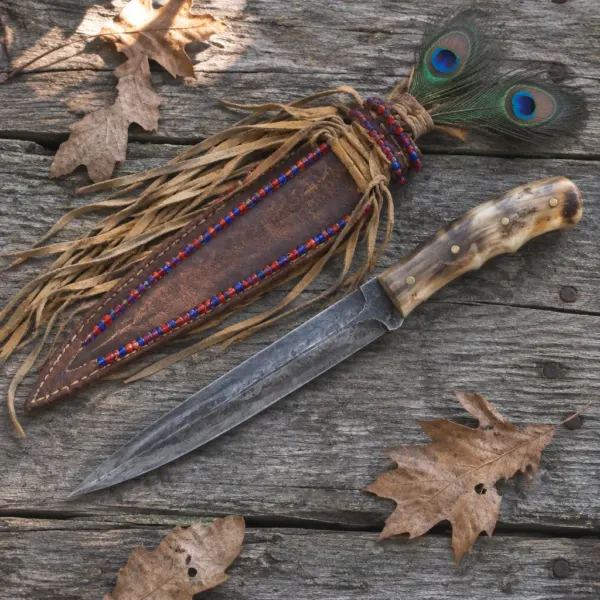
Pass Mountain Toothpick Dagger, Cow Horn
9.25 in blade · Cow horn
Toothpick Dagger with a 9.25 in hand-forged blade, polished cow horn scales and a beaded, fringed sheath with feathers. An Arkansas toothpick knife: a long, straight double-edged dagger.
$430.00Free US shipping
Keep Reading

What Is a Neck Knife? How to Wear, Carry and Choose One
A small fixed blade worn on a cord. Where the idea comes from, how to wear one safely and what size to choose.

How to Use Flint and Steel to Start a Fire
What you need, how the sparks are made and the steps from first strike to open flame.

What Is a Bowie Knife? History, Blade Shapes and How to Choose
Where the Bowie knife came from, what defines one, and how to pick the right length and pattern for camp or collection.