How to Use Flint and Steel to Start a Fire
Before matches, this was how most of the world made fire. Flint and steel is simple, reliable and works when a lighter is empty or wet. It takes a little practice, and the right tinder.

How It Works
The spark does not come from the stone. When the sharp edge of the flint scrapes a hardened high-carbon steel striker, it shaves off tiny particles of steel. The friction heats them so much that they burn in the air as they fall. Your job is to catch one of those sparks on something that will hold an ember.
That is different from a modern ferro rod, which throws a shower of much hotter sparks. Traditional sparks are cooler, so the tinder matters.
What You Need
- A steel striker: hardened high-carbon steel. Soft or stainless steel will not spark.
- Flint or chert: any hard stone with a sharp, glassy edge.
- Char cloth: charred cotton that catches a spark and glows without flaming.
- A tinder bundle: a bird’s nest of dry grass, shredded cedar or juniper bark, or unraveled jute twine.
- Kindling: pencil-thin dry twigs, ready before you strike.

Making Char Cloth
Cut pure cotton cloth, such as an old T-shirt or denim, into two-inch squares. Put them in a small metal tin with a pinhole in the lid and set the tin in the coals. Smoke will stream from the hole. When the smoke stops, take the tin off the fire and let it cool completely before opening. The cloth should be black, soft and intact.
Striking a Spark
- Hold the flint in your weaker hand with a sharp edge facing out. Lay a piece of char cloth on top of the stone, its edge just behind the sharp edge.
- Grip the striker in your other hand with your fingers through the curve.
- Strike downward so the face of the steel glances off the edge of the flint. It is a quick scraping blow, not a hammer blow.
- Watch the char cloth. A spark that lands will show as a small orange dot that slowly spreads.
The spark is a tiny shaving of burning steel. The char cloth is what catches it.
From Ember to Flame
Fold the glowing char cloth into the middle of the tinder bundle. Lift the bundle and blow gently and steadily into it. The smoke will thicken, then the bundle will burst into flame. Set it down and add kindling a little at a time.
When It Does Not Work
- No sparks: the flint edge has gone dull. Chip a fresh edge by striking it with the back of the steel, or turn to a new face.
- Sparks but no ember: the char cloth is damp or under-charred. Keep it in a sealed tin.
- Ember but no flame: the tinder is too coarse or not dry. Shred it finer and keep it in a pocket or pouch.
Keep the striker dry and lightly oiled, the same as any carbon steel tool. For the tools that go with it, see the heritage tools collection.
Choosing a Fire Steel
A fire steel, also called a fire striker, is a small bar of hardened high-carbon steel shaped to fit the hand. The most common pattern is the C striker, with curled ends that wrap around the fingers. Others are U-shaped, oval or flat.
- Hardness comes first. A good striker is hard enough that a file slides across it without biting. Steel that is too soft will not spark, however hard you hit it.
- Size it to your hand. Three or four fingers should fit inside the curve with the striking face clear of your knuckles.
- Look for a smooth, flat striking face. A face about a quarter inch wide gives the flint a clean surface to shave.
- Break in a new striker. Forging can leave a thin soft skin on the surface. If a new steel sparks weakly, rub the striking face on a stone or a file until bright metal shows.
Which Stones Throw a Spark
The stone only has to be harder than the steel and able to hold a sharp edge. Flint and chert are the classics. Jasper, agate, chalcedony and quartzite all work, and so does a sharp piece of quartz. Soft stones such as limestone and sandstone crumble and do nothing. If you are not sure, break the stone to make a fresh edge and try it.
Tinder That Catches a Traditional Spark
Char cloth is the easiest, but it is not the only choice.
- Charred punk wood: soft, rotted wood charred in a tin the same way as cloth.
- Tinder fungus: chaga, which grows on birch, takes a spark when it is dry and holds a slow ember for a long time.
- Amadou: a felt-like layer prepared from the hoof fungus, used across Europe for centuries.
- Charred plant fiber: the ends of cotton or jute rope, charred and snuffed out.
Dry grass, bark and wood shavings will not catch a flint and steel spark by themselves. They are the tinder bundle that the ember lights.
Flint and Steel or Ferro Rod
A ferro rod is made of ferrocerium, an alloy invented in 1903. Scraped with a hard edge, it throws a shower of sparks at several thousand degrees, hot enough to light fine dry tinder directly. Flint and steel sparks are much cooler and need char or fungus to hold them.
The ferro rod is the better emergency tool. Flint and steel is the older skill, the one used at rendezvous and living history camps, and a hand-forged striker lasts for decades.
Common Questions
Does flint and steel work when it is wet?
The stone and the steel work as soon as you wipe them dry. The char cloth and tinder must be completely dry, so carry them in a tin or a waxed pouch.
Can you use any rock with a fire steel?
No. You need a hard stone with a sharp edge, such as flint, chert, jasper, agate or quartz.
Why does my fire steel not spark?
The three usual causes are a dull stone edge, a striker that is too soft or still has its forge skin, and a blow that hits square instead of glancing down the edge.
What is char cloth made of?
Pure plant fiber, usually cotton or linen. Synthetic and blended cloth melts and will not char properly.
How long does a fire striker last?
Each strike removes only a few specks of steel. A striker in regular use lasts for many years, and the face can be dressed flat again on a stone.
Fire Steels and Heritage Tools
Hand-forged strikers, flint and steel kits, awls and hide tools.
-
 New
Newfound Mountain Fire Steel Striker
2.75 in blade · One-piece forged steel
Fire Steel Striker: c-shaped fire steel, hand-forged and hardened high-carbon steel.
$210.00Free US shipping -
 New
Maupin Field Leather Awl, Black Walnut
2.5 in blade · Black walnut
Leather Awl: tapered awl point, hand-forged high-carbon steel, with a black walnut handle. A leather awl, also used as a stitching awl for buckskin and leather.
$230.00Free US shipping -
 New
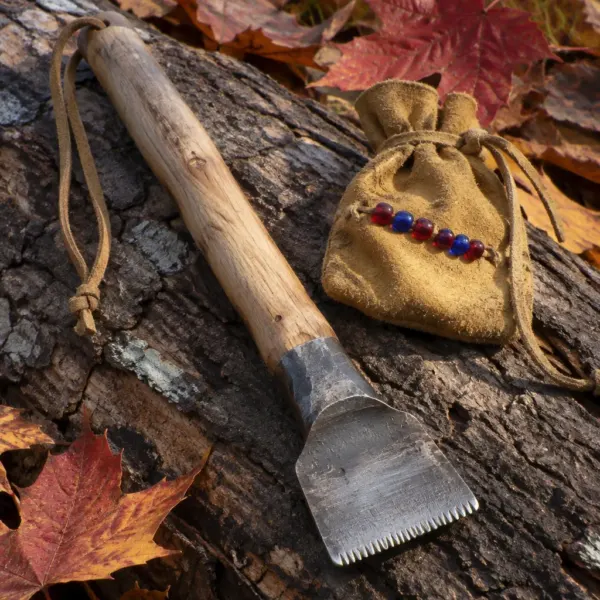
Camp Creek Bald Hide Flesher, Hickory
2.25 in blade · Hickory
Hide Flesher: toothed fleshing blade, hand-forged high-carbon steel, with a hickory handle. A hide flesher, one of the basic hide tanning tools.
$275.00Free US shipping -
 New
Tom Floyd Hide Scraper, Black Walnut
2.25 in blade · Black walnut
Hide Scraper: elbow-style hide scraper with a hand-forged steel bit lashed in rawhide, with a black walnut handle.
$280.00Free US shipping
Keep Reading

What Is a Bowie Knife? History, Blade Shapes and How to Choose
Where the Bowie knife came from, what defines one, and how to pick the right length and pattern for camp or collection.
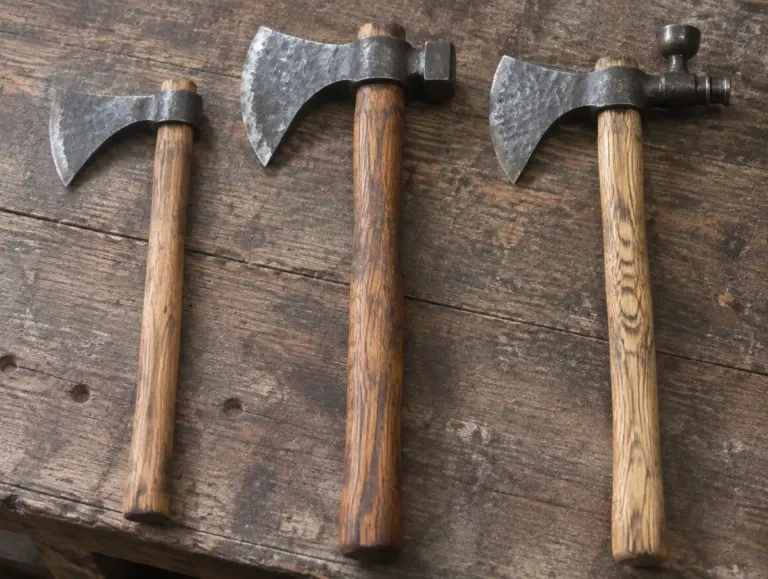
How to Choose a Tomahawk: Head Shapes, Haft Length and Weight
Head shape, haft length and weight: what matters for camp work, what matters for throwing and what matters on the wall.
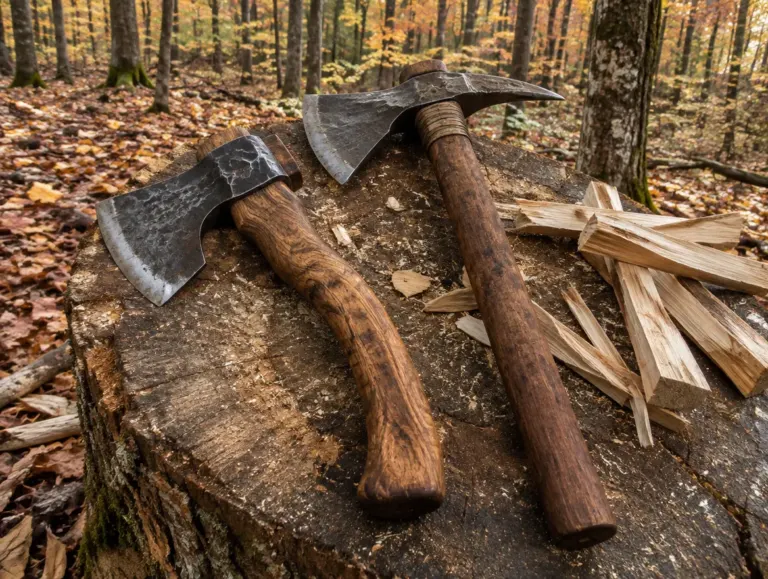
Tomahawk vs Hatchet: What Is the Difference?
They look alike, but the eye, the haft and the weight are different. Here is how to tell them apart and which one suits your work.