Tomahawk vs Hatchet: What Is the Difference?
A tomahawk and a hatchet can be the same length and nearly the same weight, yet they are built on different ideas. One is a light cutting tool with a replaceable haft. The other is a small axe made to split.
The Head and the Eye
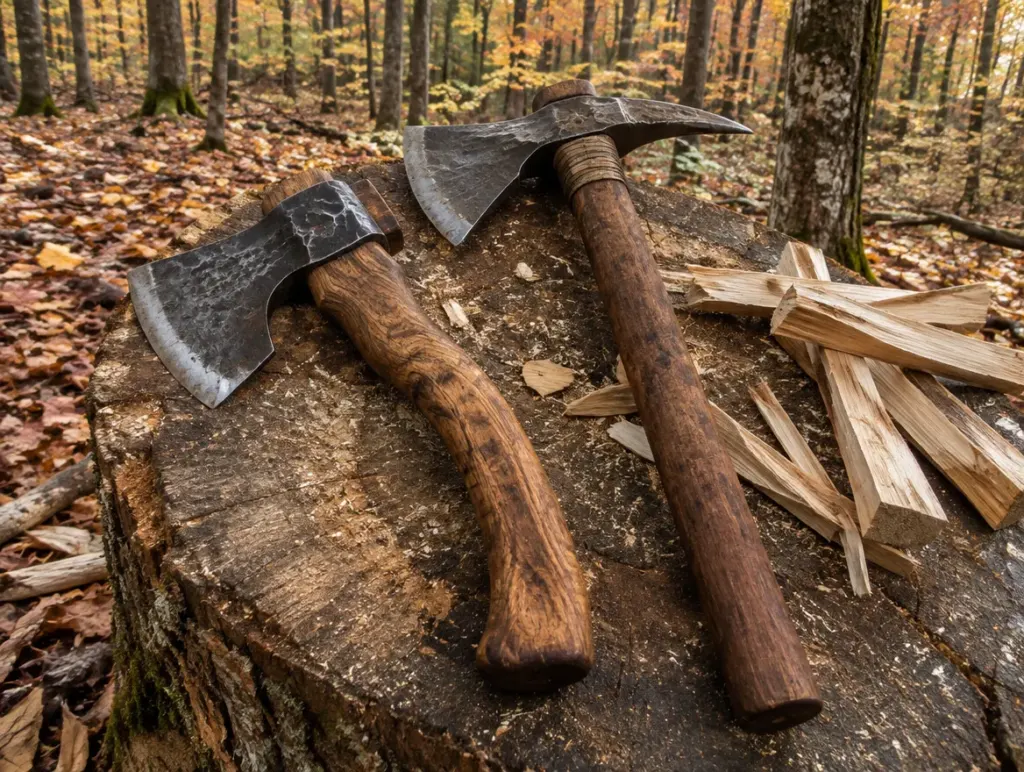
A hatchet head is a short axe head: a wedge-shaped bit with thick cheeks and, usually, a flat poll you can hammer with. The handle goes in from the bottom and is locked with a wedge driven in from the top.
A traditional tomahawk head has a round or teardrop eye that tapers. The haft is dropped through the eye from the top and seats by friction, so the head tightens every time you swing. If the haft breaks, you knock it out and fit a new one with nothing more than a knife.
The Handle
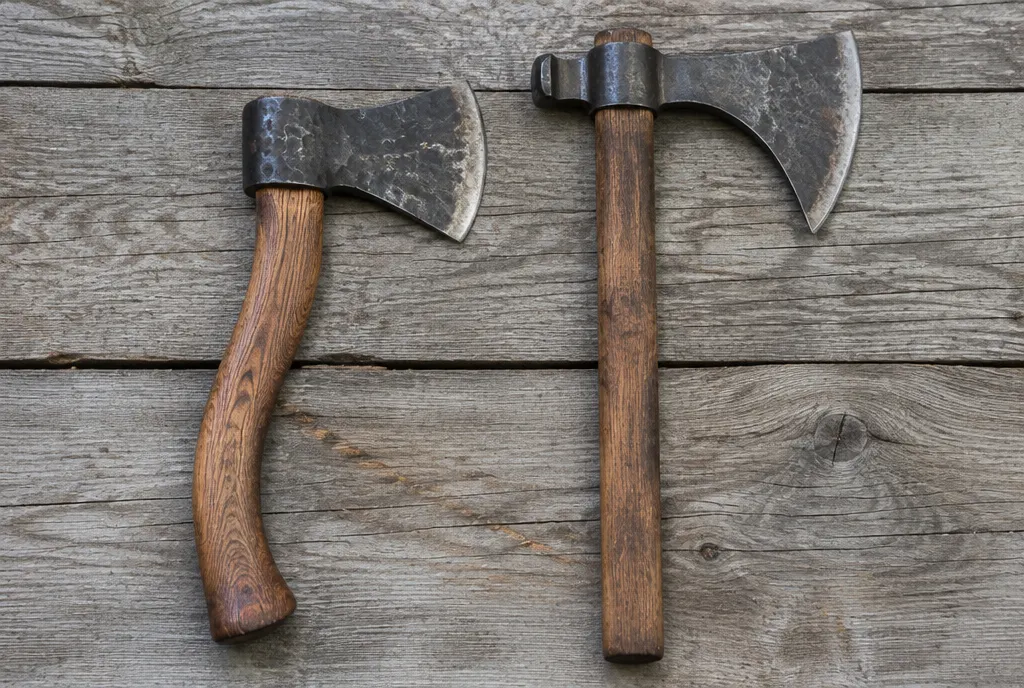
Hatchet handles are curved, with a swell at the end to keep the tool in your hand on a hard swing. Tomahawk hafts are straight. A straight haft lets you slide your hand anywhere along it, choke up for fine work and release it cleanly for a throw.
Weight and Edge
A camp hatchet usually carries a head of about 1.25 to 1.5 pounds, with the mass packed behind the edge so it splits wood apart. A tomahawk head is lighter, often 12 to 20 ounces, with a thinner bit that slices deeper into green wood, rope and brush but will stick in a round rather than split it.
A hatchet splits. A tomahawk cuts, carries and throws.
What Each One Does Best
- Hatchet: splitting kindling, driving stakes, limbing, rough carpentry. It is the tool you reach for twenty times a day at camp.
- Tomahawk: light chopping, carving, clearing a trail, throwing, and riding on a belt without dragging you down.
If you plan to throw, choose a tomahawk. Hatchets can be thrown, but a wedged curved handle does not survive missed throws for long, and it cannot be swapped in the field.
A Short History
The word tomahawk comes from the Powhatan word recorded by English colonists in Virginia in the early 1600s. The first tomahawks had stone heads. Iron and steel heads arrived with European trade and quickly became one of the most traded goods in North America, carried by Native people, traders and frontier settlers alike.
The hatchet comes from the European carpenter’s and camp axe tradition. On the frontier the two tools were often carried by the same people, and patterns such as the belt axe sit somewhere between them.
Which One Should You Buy
- Choose a hatchet if your main jobs are firewood and camp building.
- Choose a tomahawk if you want a lighter tool for the trail, for throwing or for a collection.
- Choose both if you spend real time in camp. They overlap less than you would expect.
Not sure which tomahawk pattern fits? Read how to choose a tomahawk.
Tomahawk vs Hatchet for Camping
For a fixed camp with a fire to feed, the hatchet wins. Its wedge-shaped head splits kindling in one blow, and the flat poll drives tent stakes without damage. If the tool rides in a truck or a canoe, the extra weight costs you nothing.
On foot, the sums change. A belt tomahawk can weigh half a pound less than a camping hatchet, and its straight haft slides through a belt loop or the side straps of a pack. It will limb, carve, clear a trail and make feather sticks, and a hammer poll pattern drives stakes as well as a hatchet does. For firewood, split small rounds by striking the poll with a wooden baton and leave the big ones.
Bearded Hatchets, Belt Axes and Other In-Between Patterns
- Bearded hatchet: the lower corner of the bit drops below the eye. That gives a long cutting edge on a light head and lets you grip right behind the edge for carving.
- Belt axe: a small frontier axe with a wedged handle and a hawk-sized head, made to ride on a belt.
- Trade axe: the plain round-eyed axe of the fur trade. It is forged like a tomahawk and used like a hatchet.
- Carving axe: a short axe with a long, slightly curved edge, ground for control in green wood instead of for splitting.
These patterns are worth a look if you want one tool to do both jobs. You will find them among our hand forged axes and hatchets.
Tomahawk vs Throwing Axe
The hatchets used in axe-throwing venues are not tomahawks. They have wedged handles, heavier heads and thin, flat cheeks made to stick in soft boards from a set distance. Leagues publish their own rules on head weight, handle length and edge, so read the rule book before you buy for league play. For backyard throwing at a log round, a plain tomahawk is easier to learn and much cheaper to fit with a new haft.
Common Questions
Is a tomahawk better than a hatchet?
Neither is better at everything. A hatchet is better at splitting and hammering. A tomahawk is better at carrying, carving, throwing and quick repairs, because the haft can be replaced without tools.
Is a tomahawk a type of axe?
Yes. It belongs to the axe family, as a light single-handed axe with a straight haft and a friction-fit head.
Can a tomahawk split firewood?
It can split kindling and small rounds, especially if you strike the poll with a wooden baton. It will bind in large rounds, where a hatchet or a full-size axe is the right tool.
Why do tomahawks have straight handles?
So the head can slide on and off, so your hand can move anywhere along the haft, and so the hawk leaves the hand cleanly when thrown.
Which is lighter, a tomahawk or a hatchet?
Usually the tomahawk. A typical head weighs 12 to 20 ounces, against 20 to 24 ounces for a camp hatchet head.
Tomahawks, Axes and Hatchets
Hand-forged heads on hickory, ash and hardwood handles.
-
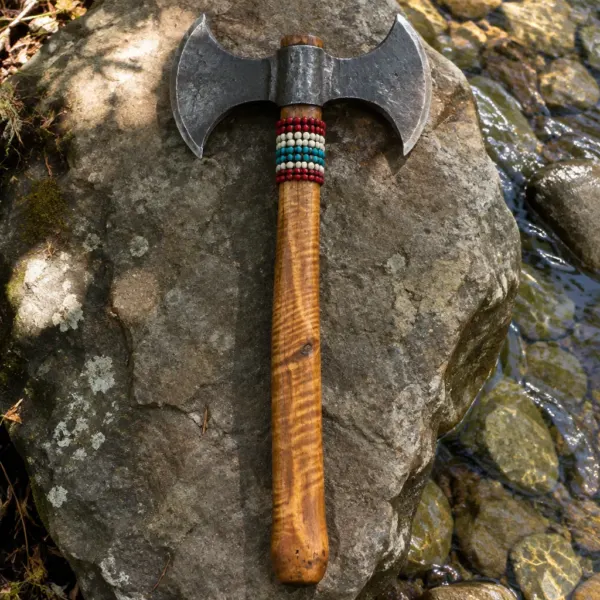 New
Sinking Creek Crescent Double-Bit Tomahawk, Curly Maple
4.25 in blade · Maple
Crescent Double-Bit Tomahawk with a double-bit head with two crescent edges, hand-forged in high-carbon steel, on curly maple.
$425.00Free US shipping -
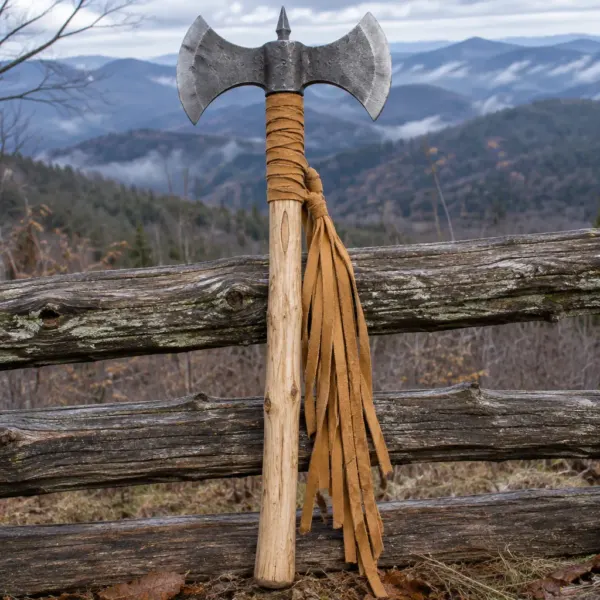 New
Grassy Cove Spearhead Double-Bit Tomahawk, White Ash
3.75 in blade · Ash
Spearhead Double-Bit Tomahawk with a double-bit head topped with a forged spear point, hand-forged in high-carbon steel, on white ash.
$470.00Free US shipping -
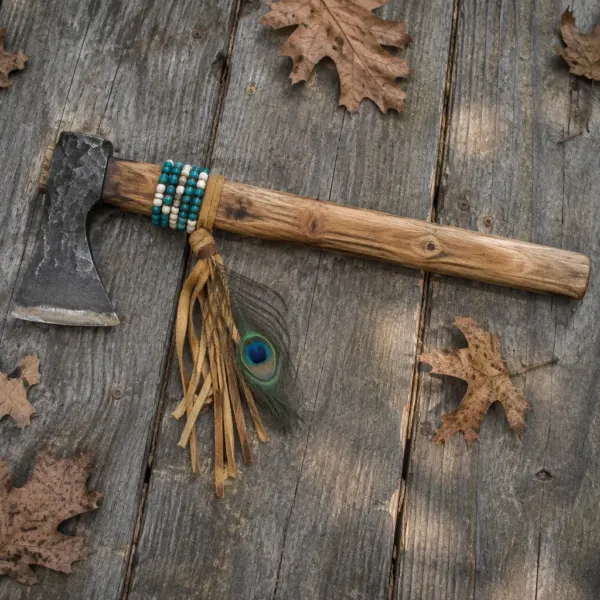 New
Humpback Rocks Carving Axe, White Oak
4.25 in blade · White oak
Carving Axe with a carving axe head with a long straight edge and a single bevel, hand-forged in high-carbon steel, on white oak.
$365.00Free US shipping -
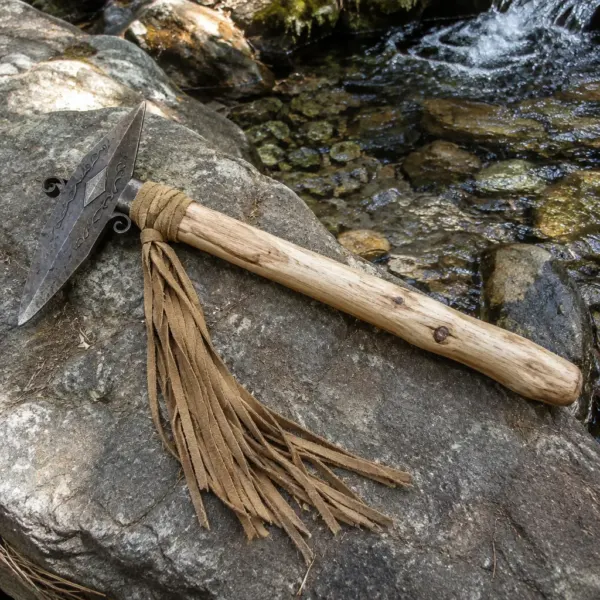 New
Tricorner Knob Spontoon Tomahawk, White Ash
5.25 in blade · Ash
Spontoon Tomahawk with a spontoon head with a spear-shaped blade and curled side lugs, hand-forged in high-carbon steel, on white ash.
$375.00Free US shipping
Keep Reading

How to Throw a Tomahawk: Distance, Grip and Rotation
A safe setup, the right distance, a relaxed grip and one clean rotation. Everything a beginner needs for the first stick.
How to Use an Ulu Knife: Cuts, Uses, Sharpening and Care
The rocking cut, the slicing cut and the scraping cut, plus how to sharpen and look after a hand-forged ulu.

Skinning Knife Blade Shapes: Drop Point, Trailing Point and Gut Hook
Which blade shape opens, skins and capes best, and what length to carry for deer and bigger game.