How to Throw a Tomahawk: Distance, Grip and Rotation
Throwing a tomahawk is easier than it looks. The hawk does most of the work if you stand at the right distance and let it turn once. Start with safety, then distance, then the throw.
Set Up a Safe Range
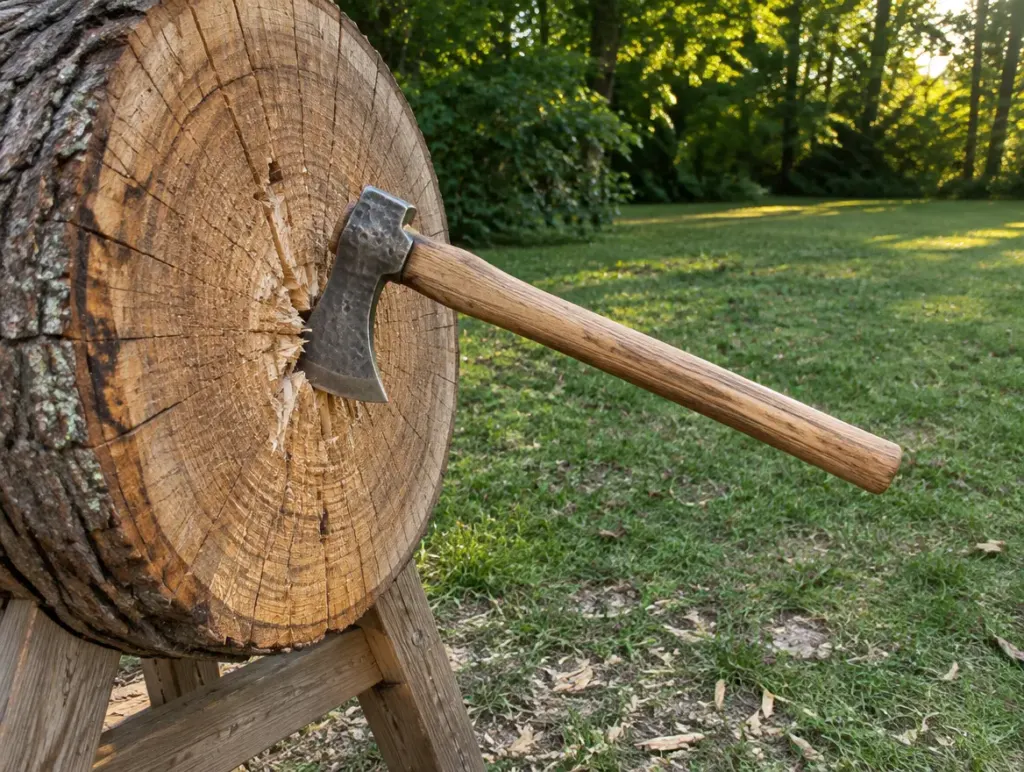
- Use a target made from the end grain of a softwood log round, at least 18 inches across and 6 inches thick, with its center about chest height.
- Clear at least 15 feet behind and to the sides of the target. A tomahawk that misses or bounces can travel a long way.
- Nobody stands beside or behind the target, and nobody walks forward until every hawk has been thrown.
- Wear closed shoes. Check that the head is tight on the haft before every session.
- Throw on your own property or at a range that allows it, and check local rules first.
Nobody stands beside or behind the target. Ever.
Find Your Distance
A tomahawk needs room to make one full turn. For most adults with an 18 to 19 inch hawk, that distance is about 12 to 13 feet, or five normal paces from the target. Mark the spot with a stick so you can return to it.
Grip and Stance
Hold the haft near the end as if you were shaking hands with it. Keep the grip firm but relaxed, with the edge pointing straight at the target and the head square, not tilted.
Stand with your throwing-side foot back. Face the target with your shoulders square. You can throw from this position, or take one step forward with the opposite foot as you release.

The Throw
- Raise the hawk straight back over your shoulder, elbow pointing at the target.
- Swing forward in one smooth motion, like driving a nail high on a wall.
- Let go when your arm is extended toward the target and the haft is nearly vertical. Do not flick your wrist. The hawk rotates on its own.
- Follow through with your hand pointing at the spot you want to hit.
Power is not the goal. A slow, straight throw sticks more often than a hard one.
Fixing Your Rotation
- The handle hits first: the hawk has not turned far enough. Step half a pace back.
- The top of the head hits first: the hawk has turned too far. Step half a pace closer.
- The hawk hits flat on its side: your wrist is twisting. Keep the edge in line with the target through the whole swing.
Once one rotation is reliable, try two. The distance is roughly double plus a pace or two, usually around 20 to 22 feet.
Choosing and Caring for a Throwing Hawk
A throwing hawk should be plain: a simple flared head, a straight hickory haft of 18 to 19 inches and a friction-fit eye, so a broken haft can be replaced in minutes. Keep the edge keen enough to bite wood, not razor sharp. Beaded, feathered and pipe tomahawks are display pieces and should stay off the range.
Hafts are consumable. Sand out splinters, oil the wood, and keep a spare. For help picking a pattern, see how to choose a tomahawk.
Build a Simple Target
The best target is a slice from a softwood log: cottonwood, poplar, willow or pine. Cut it 6 to 10 inches thick so the end grain faces you. End grain parts around the blade and closes again, where the side of a plank splits and throws the hawk back.
- Mount the round on a tripod of poles, an A-frame or a pair of posts, tilted back very slightly, with the center at about chest height.
- Wet the face with a hose before a session. Damp wood is softer, grips the blade better and lasts longer.
- Turn the round now and then so the wear spreads, and replace it when the center is chewed out.
- Stand on level ground behind a clearly marked throwing line. Bare earth or grass behind the target is kinder to a missed hawk than gravel or concrete.
Common Beginner Mistakes
- Throwing too hard. Extra force adds spin and wrecks your timing. Throw at the pace you would toss a ball to a friend.
- Flicking the wrist. Keep the wrist locked and let the hawk slide out of your hand.
- Gripping too tight. A clenched hand holds on too long and drags the throw low.
- Changing two things at once. Keep the same motion on every throw and adjust only your distance, half a pace at a time.
- Throwing a hawk with a loose head. Seat the head before each session and check it again after any miss.
Common Questions
How far away do you stand to throw a tomahawk?
About 12 to 13 feet for one rotation with an 18 to 19 inch hawk. Shorter hafts turn faster and need a little less room. Two rotations take roughly 20 to 22 feet.
How heavy should a throwing tomahawk be?
Most adults do well with 20 to 26 ounces all in. Lighter hawks are easier on the arm but less forgiving. Heavier ones stick hard but tire you quickly.
Should a throwing tomahawk be sharp?
Sharp enough to bite into wood, and no more. A razor edge chips on bad throws and is a hazard when you pull the hawk out of the target.
What wood makes the best tomahawk target?
Soft, straight-grained wood with the end grain facing the thrower. Cottonwood, poplar and pine are the usual choices. Hardwoods such as oak bounce more hawks than they hold.
Can you throw any tomahawk?
No. Throw only plain hawks made for it. Pipe tomahawks, spike hawks and anything beaded or feathered will be damaged, and a spike adds risk if the hawk bounces back.
Throwing and Belt Tomahawks
Plain, balanced hawks with straight hafts, made to be used.
-
 New
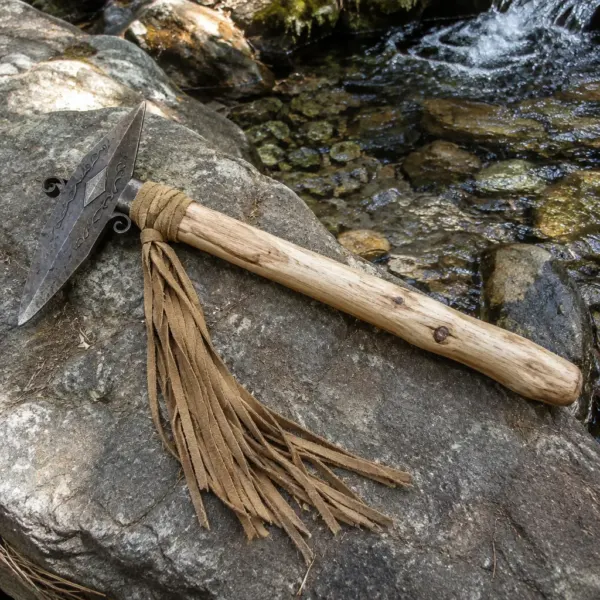
Tricorner Knob Spontoon Tomahawk, White Ash
5.25 in blade · Ash
Spontoon Tomahawk with a spontoon head with a spear-shaped blade and curled side lugs, hand-forged in high-carbon steel, on white ash.
$375.00Free US shipping -
 New
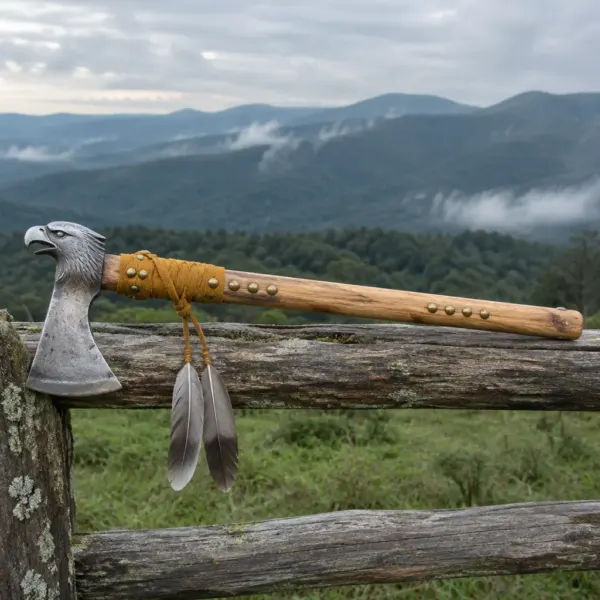
Cloudland Eagle-Head Tomahawk, Hickory
3.5 in blade · Hickory
Eagle-Head Tomahawk with a tomahawk head with a forged eagle-head poll, hand-forged in high-carbon steel, on hickory.
$435.00Free US shipping -
 New
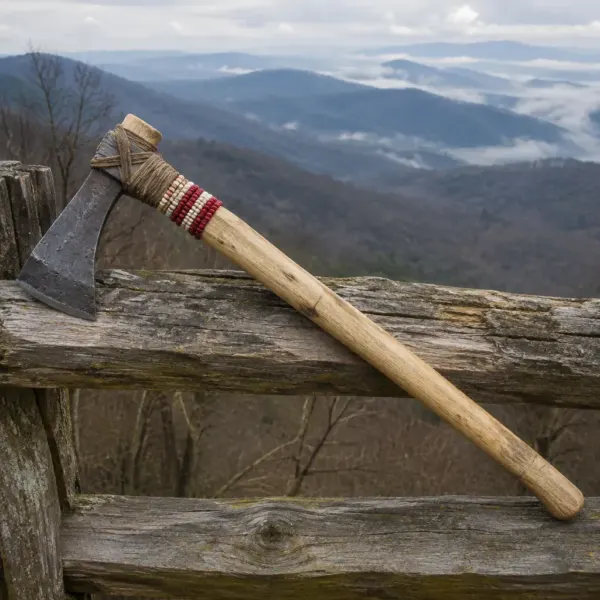
Sodom Laurel Trade Hawk, White Ash
3.5 in blade · Ash
Trade Hawk with a wrapped-eye trade hawk head, hand-forged in high-carbon steel, on white ash.
$315.00Free US shipping -
 New
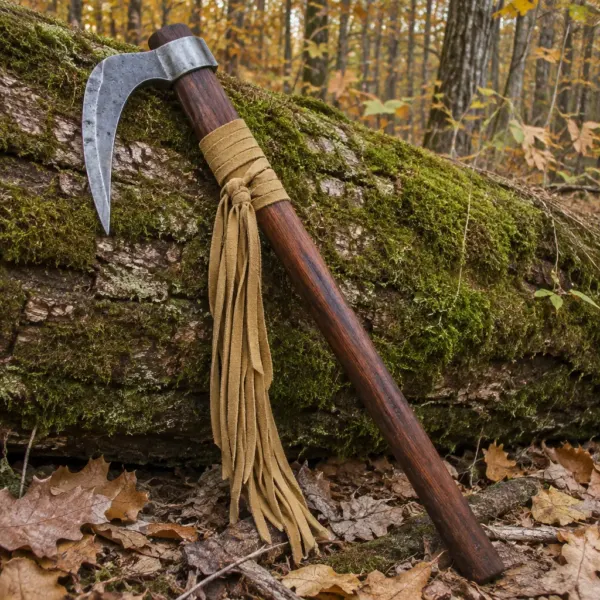
Noontootla Bearded Hawk, Black Cherry
4 in blade · Cherry
Bearded Hawk with a bearded hawk head with a long hooked bit, hand-forged in high-carbon steel, on black cherry.
$345.00Free US shipping
Keep Reading
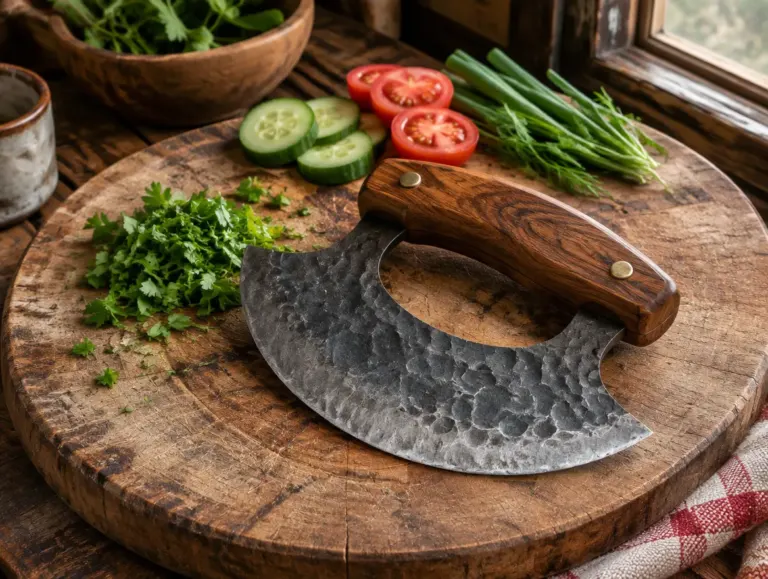
How to Use an Ulu Knife: Cuts, Uses, Sharpening and Care
The rocking cut, the slicing cut and the scraping cut, plus how to sharpen and look after a hand-forged ulu.

Skinning Knife Blade Shapes: Drop Point, Trailing Point and Gut Hook
Which blade shape opens, skins and capes best, and what length to carry for deer and bigger game.

How to Sharpen a Knife With a Whetstone: A Guide for Hand-Forged Blades
A step-by-step way to put a working edge back on a hammered carbon steel blade without touching the forged faces.