Knife making supplies: Damascus blanks, billets and handle scales
Finishing a blank is the easiest way into knife making. The forging, grinding and heat treating are done, so the work left is fitting a handle, shaping it and putting an edge on the blade, and you can do all of that with hand tools and a drill on a small bench. The scales here are long enough for the drop point and skinner blanks, and the burl pair also covers the Bowie. The table further down lists the sizes side by side.
Damascus blade blanks
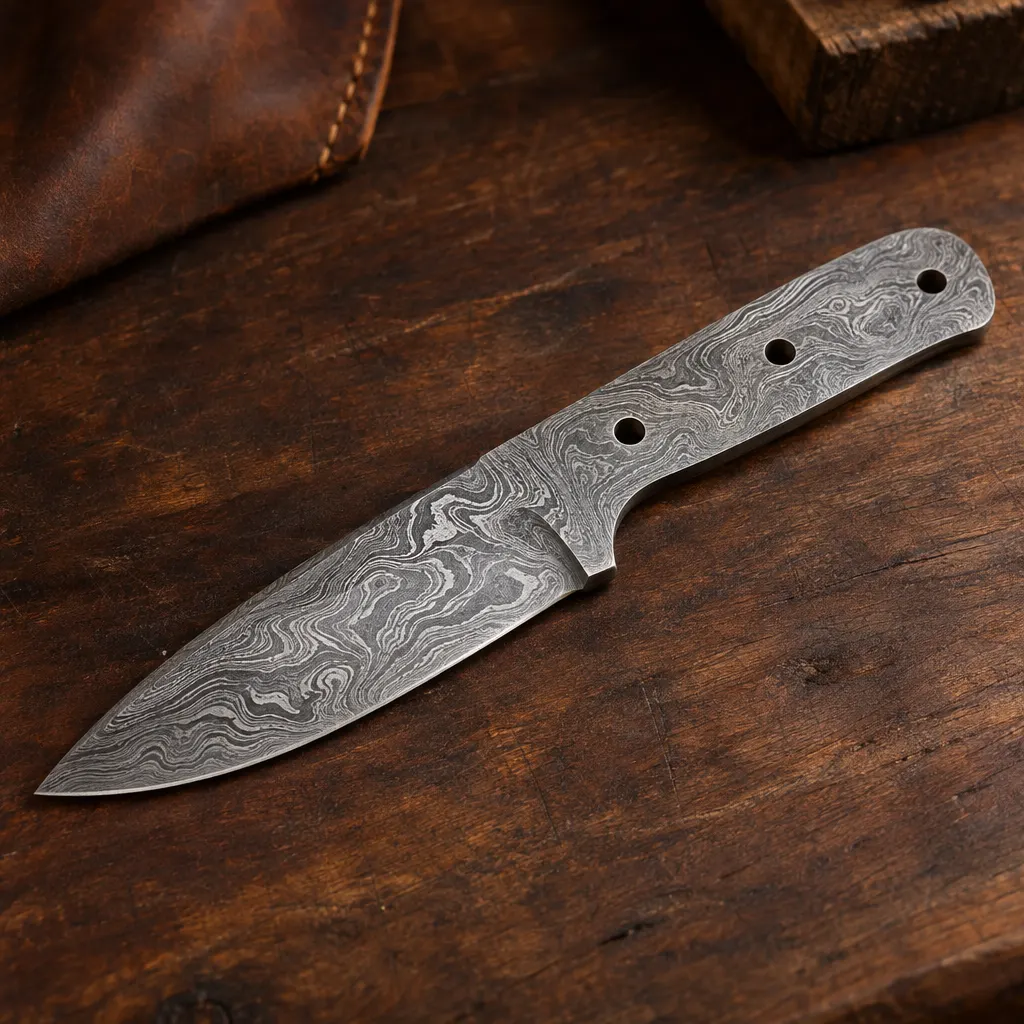
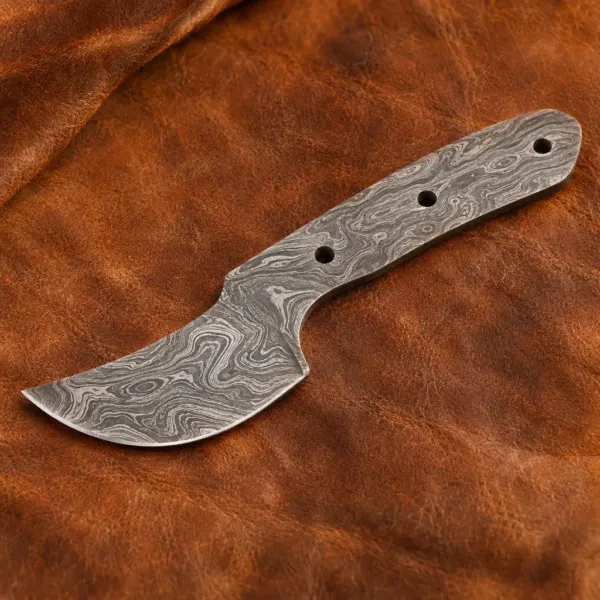
The Damascus Drop Point Hunting Knife Blank, Full Tang is 8.5 in overall with a 4 in blade, about 0.15 in thick, with three pin holes and room for scales up to 4.5 in long. The Damascus Skinner Knife Blank with Three Pin Holes is a little smaller at 7.5 in overall with a 3.25 in blade. The Damascus Bowie Knife Blank with Clip Point and Full Tang is the big one: 14 in overall with a 9 in blade, about 0.18 in thick, four pin holes and room for a guard and scales up to 5 in. All three are pattern welded Damascus in a random pattern, heat treated and acid etched, with the edge ground but not sharpened, which is safer while you work on the handle.
Damascus billet bar for forging
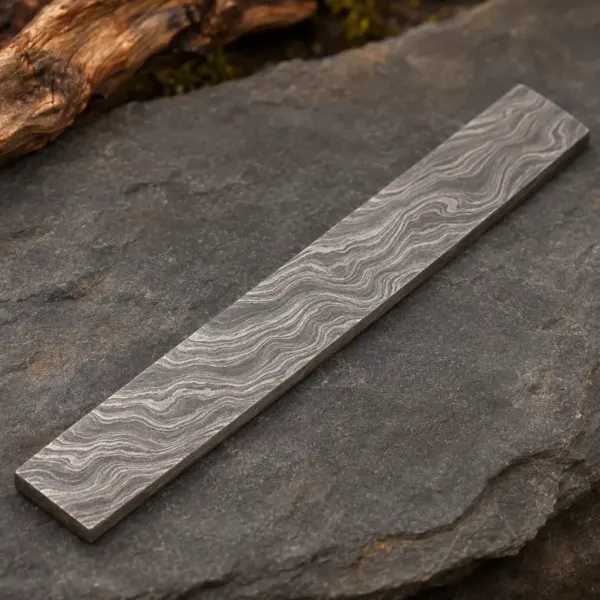
The Damascus Steel Billet Bar for Knife Making, 8 in Long measures 8 in by 1.5 in by 0.25 in, layered from high carbon steels, surface ground and lightly etched. It is annealed and not heat treated. That makes it the choice for someone with a forge or a grinder who wants to shape a blade from scratch, then harden and temper it. If you have no way to heat treat steel, start with one of the finished blanks instead.
Knife handle scales in burl, ram horn and stag antler
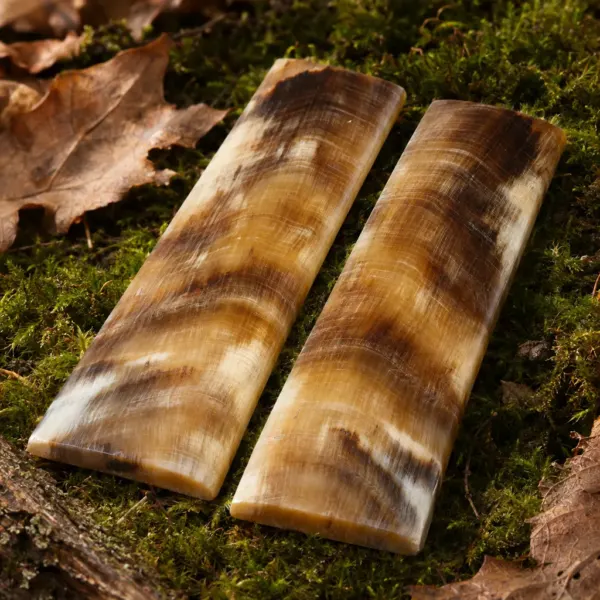
Each set is a matched pair cut from the same block, horn or antler, so both sides of the handle look alike. The Stabilized Maple Burl Knife Handle Scales, Matched Pair are 5 in by 1.5 in by 0.375 in each. Stabilizing fills the wood with resin, so the burl resists swelling and cracking when the weather changes and sands to a smooth, hard finish. The Ram Horn Knife Handle Scales, Matched Pair are about 4.75 in long and come flattened and sanded but unpolished, so you can take them to whatever shine you like. The Stag Antler Slabs for Knife Handles, Matched Pair are about 4.5 in long with the inside face flattened and the natural bark left on the outside, which gives the grip its rough, traditional feel.
What else you need to finish a blank
- Two part epoxy to bond the scales to the tang. A slow setting epoxy gives you time to line things up.
- Pin stock to match the holes. The kit already includes three brass pins.
- A drill to bore the pin holes through the scales, using the tang as a guide.
- Clamps to hold the scales tight while the epoxy cures.
- Files and sandpaper to shape the handle. The kit includes 120 and 400 grit sheets.
- Sharpening stones for the final edge, and painter's tape to protect the etched blade while you work.
The DIY knife making kit
The DIY Knife Making Kit with Damascus Blank and Walnut Scales holds a Damascus drop point blank, a pair of black walnut scales, three brass pins, two sheets of sandpaper in 120 and 400 grit, and a brown leather belt sheath. The finished knife comes out about 8 in overall with a 3.75 in blade. The blank is heat treated and etched, and the scales and sheath are left unfinished for you to shape, oil and dye as you like. You will still need epoxy, a drill and clamps. It makes a good first project and a good gift for anyone who has talked about making a knife. See our gift guide for more ideas.
How to finish a knife blank, step by step
- Tape the blade. Lay the tang on each scale, trace it and cut the scales a little oversize.
- Clamp one scale to the tang and drill through the pin holes, then do the other side.
- Sand the inside faces of the scales flat and clean the tang with a solvent.
- Mix the epoxy, coat both faces, push the pins through and clamp it up until it cures.
- Trim the pins, then file and sand the scales down to the tang, round the edges and work up to a fine grit.
- Oil or finish the handle, then sharpen. Our sharpening guide shows how.
Blank, billet and scale comparison
| Item | Size | Material and fit | Price |
|---|
| Damascus Drop Point Hunting Knife Blank, Full Tang | 8.5 in overall, 4 in blade, about 0.15 in thick | Damascus, random pattern, heat treated and etched; scales up to 4.5 in, three pin holes | $65 |
| Damascus Skinner Knife Blank with Three Pin Holes | 7.5 in overall, 3.25 in blade, about 0.15 in thick | Damascus, random pattern, heat treated and etched; scales up to 4.25 in | $55 |
| Damascus Bowie Knife Blank with Clip Point and Full Tang | 14 in overall, 9 in blade, about 0.18 in thick | Damascus, random pattern, heat treated and etched; guard and scales up to 5 in, four pin holes | $110 |
| Damascus Steel Billet Bar for Knife Making, 8 in Long | 8 in by 1.5 in by 0.25 in | Layered high carbon steels, annealed, not heat treated | $75 |
| Stabilized Maple Burl Knife Handle Scales, Matched Pair | Each 5 in by 1.5 in by 0.375 in | Maple burl stabilized with resin, sanded flat | $40 |
| Ram Horn Knife Handle Scales, Matched Pair | Each about 4.75 in by 1.5 in by 0.3 in | Ram horn, flattened and sanded, unpolished | $35 |
| Stag Antler Slabs for Knife Handles, Matched Pair | Each about 4.5 in by 1.25 in by 0.3 in | Deer antler, inside face flat, bark left on | $45 |
| DIY Knife Making Kit with Damascus Blank and Walnut Scales | Finished knife about 8 in, 3.75 in blade | Damascus blank, black walnut scales, brass pins, sandpaper, leather sheath | $120 |
Caring for Damascus steel
Damascus is layered carbon steel, so it will rust if it is left wet or stored in a damp drawer. Keep blanks and the billet lightly oiled and wrapped until you use them, and wipe the finished knife dry after every job. Our knife care guide covers oils and storage. Once the knife is done, give it a home in one of our leather knife sheaths, keep the edge keen on a leather strop, or show it off on a knife display stand. If you want a blade made to your own design instead, see custom orders.
Questions and answers
What do I need to start making knives?
The simplest start is a heat treated blank, a pair of handle scales, pins, epoxy, a drill, clamps and sandpaper. Our DIY kit covers the blank, scales, pins, sandpaper and a sheath, so you only add the epoxy and the tools.
Are the Damascus blanks heat treated?
Yes. The drop point, skinner and Bowie blanks are heat treated and acid etched, with the edge ground but not sharpened. The billet bar is the exception: it is annealed and not heat treated, so you shape and harden it yourself.
What is a Damascus billet used for?
A billet is a bar of layered steel that you forge or grind into your own blade. It suits makers who have a forge or a grinder and a way to harden and temper the steel.
What glue do you use for knife handle scales?
A two part epoxy is the usual choice, together with pins through the tang. Rough up and clean both surfaces first so the epoxy has something to grip.
What is stabilized wood?
Stabilized wood has been filled with resin and cured, so it is harder, takes a polish and resists swelling and cracking from moisture. It is a good choice for burl, which is beautiful but can be soft and open grained.
Can a beginner use the knife making kit?
Yes. The hard parts are done, and the steps above are all hand work. Go slowly, test fit before you glue, and keep the blade taped until the handle is finished.






 Antler and Bone Handle Knives127
 EDC Knives275
 Fixed Blade Knives583
 Forged Goods21
 Horn, Antler and Bone26
 Kitchen and Table17
 Knife Accessories52
 Leather Goods32
 Machetes6
 Native Style Decor11
 Outdoor and Camp15
 Signature Collection405
 Pocket Knives127
 Hunting & Skinning Knives210
 Bowie Knives89
 Daggers71
 Ring Pommel Knives61
 Camp & Bushcraft Knives93
 Neck Knives & Small Fixed Blades96
 Tomahawks & Axes284
 Gift Sets & Combos31
 Native American-Style Knives728
 Ulu Knives43
 Heritage Tools54
 War Clubs14
 Spears & Lances12