Pipe Tomahawk History: Trade, Diplomacy and How They Were Made
The pipe tomahawk is an odd object when you stop and look at it. There is a blade on one side, a tobacco bowl on the other and a handle you could smoke through. It came out of the North American fur trade and became one of the most meaningful gifts of its time. Here is where it came from and how smiths made one.
Where the Name and the Tool Came From
The word tomahawk comes from Powhatan, an Algonquian language of coastal Virginia, and entered English in the 1600s. The first tomahawks were clubs and small axes with heads of stone, bone or antler set on wooden handles. Once European traders arrived with iron, metal heads took over, and the small iron trade axe became a common trade good.
The pipe tomahawk came later. By the early 1700s someone had put a pipe bowl on the poll of a trade axe and bored a smoke channel down the handle. Historians are not certain whether the idea started with Native or European makers. What is clear is that the pipe tomahawk is an object unique to North America.
The Pipe Tomahawk in the Fur Trade
The fur trade era in North America ran from roughly 1650 to 1870, and tomahawks of every kind moved through it. French, British and later American traders and smiths supplied them. A plain trade axe was a working tool. A pipe tomahawk was worth more, and it carried a meaning the plain axe did not.
The pipe side tied it to the ceremony of smoking together, which played a serious part in making agreements among many Native nations. The blade side was an axe. An old description puts it plainly: one end was the pipe of peace, the other an axe of war. Historians still read the pipe tomahawk as a symbol of the meeting between Native and European peoples, which could go either way.
One end was the pipe of peace, the other an axe of war.
Diplomacy and Gifts
Pipe tomahawks were handed over at treaty signings and diplomatic meetings. A finely made pipe hawk from a government official was meant to impress, and the leaders who received them often kept them for life. Some appear in photographs, held by the men they were given to, as a mark of standing.
The Lewis and Clark expedition took pipe tomahawks west to trade and to give as gifts. Presentation pieces made for important occasions could be lavish, with inlay and engraving and carefully finished hafts. Ordinary trade pieces were plainer.
Made for the trade, finished by the owner
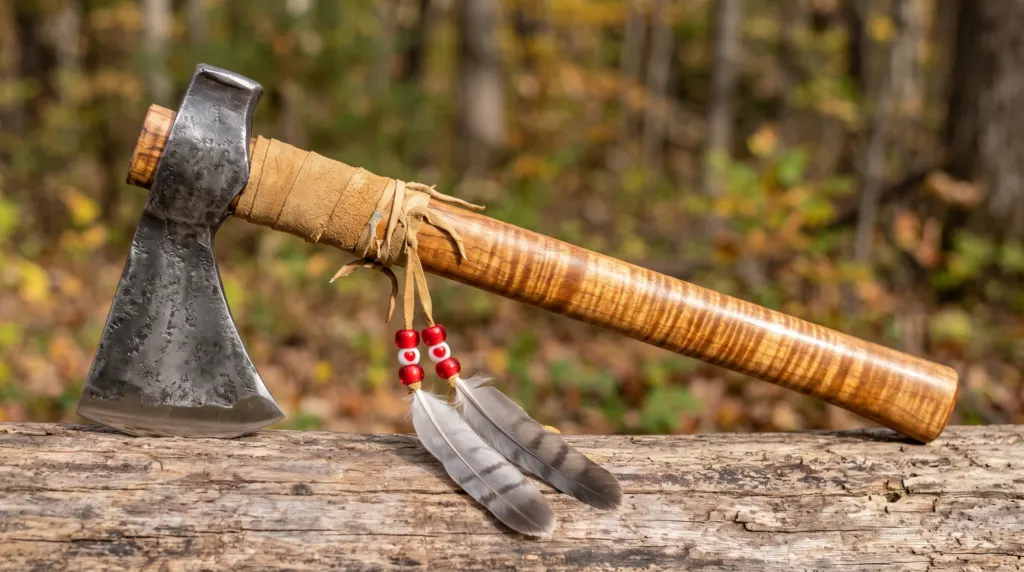
Once a pipe tomahawk changed hands, it became its owner’s. Native owners dressed the hafts with brass tacks, beadwork, quillwork, horsehair and feathers. That is why two pipe hawks with nearly identical heads can look nothing alike on the wall.
How Pipe Tomahawks Were Made
A period pipe tomahawk was hand forged by a blacksmith or a gunsmith, one at a time. The details varied from shop to shop, but the common construction went something like this.
The head
Most heads were wrought iron with a steel edge. Iron was cheaper and easier to work. Steel would take and hold an edge. The smith forge welded steel into the bit so the cutting edge could be hardened while the rest of the head stayed tough iron. A pipe tomahawk in the Colonial Williamsburg collection, dated about 1760 to 1780 and found in eastern Tennessee, is built exactly that way: wrought iron with a steel blade edge.
Some heads were made of brass. Brass looked fine and cut poorly, so those pieces leaned toward ceremony.
The eye and the bowl
Many trade axe heads were made by wrapping a bar of iron around a form to make the eye, then welding the ends together to make the blade. Our Sodom Laurel Trade Hawk, White Ash uses a wrapped eye head in that tradition. On a pipe hawk the bowl stood on the poll. Depending on the maker, it was forged as part of the head or made separately and fitted to it.
The haft
The haft was a straight piece of hardwood, bored down its length so smoke could pass from the bowl to a mouthpiece at the end. A small plug near the head end could be pulled to clean the bore. Finer pieces carried inlays of silver, pewter, brass or lead set into the wood.

Smoking Pipe or Display Piece?
A working pipe tomahawk could be smoked, and it could chop. Historians generally see them as more symbolic than practical. A heavy iron bowl on a long haft is not anyone’s idea of a relaxing pipe, and the meaning of the object counted for at least as much as the use.
Ours are display pieces, and we say so plainly. Every pipe tomahawk in our pipe tomahawks category has a decorative bowl, and the haft is not drilled for smoking. They are hand forged in high carbon steel with real edges, but please do not try to smoke one. You will just be blowing into a stick.
The Unicoi Gap Pipe Tomahawk, Curly Maple has a flared bit and a forged bowl on a curly maple haft. The Cable Gap Pipe Tomahawk, Black Cherry is left plain, the way a working trade piece often was. The Rabun Pipe Tomahawk, Black Cherry carries a compact head with a narrow bit on black cherry, and the Sandymush Pipe Tomahawk, White Ash is dressed with brass tacks, a buckskin grip wrap and pigeon feathers. If you want a matched pair, the Ranger Pipe Tomahawk and Knife Set, Curly Maple pairs a pipe hawk with a trade knife.
Displaying a Pipe Tomahawk Today
- Support the haft. Hang it level or with the head slightly raised, on two pegs or a bracket that carries the haft and not only the head.
- Mind the light. Keep it out of direct sun and away from heaters. Sun fades leather and feathers. Heat dries out a wooden haft and can crack it.
- Oil the steel. High carbon steel rusts in a damp room. A light coat of oil every few months is enough. The knife care guide covers oil and storage.
- Leave the cover on if children or cats live in the house. Cats are not impressed by history.
- Dust gently. Use a soft brush on feathers and beadwork. Do not wash them.
If you are still deciding which hawk to hang, our guide on how to choose a tomahawk covers head shapes and haft lengths, and our tomahawks category has the working patterns.
Questions and answers
When was the pipe tomahawk invented?
It appears in North America in the early 1700s. Nobody knows exactly who made the first one, and historians are not certain whether the idea came from Native or European makers.
Why did pipe tomahawks have a pipe?
The bowl let the tomahawk be smoked through a hollow haft. Smoking together carried real weight in agreements among many Native nations, so the pipe made the tomahawk a fitting diplomatic gift as well as a tool.
Who made pipe tomahawks?
Blacksmiths and gunsmiths, mostly working in North America, made them for the fur trade and for official gifts. French, British and American traders all supplied them, and Native owners often decorated them.
Were pipe tomahawks used as weapons?
They could be, since the blade was a real axe blade. But they were valued most as trade goods, gifts and marks of standing, and historians tend to see them as more symbolic than practical.
Can you smoke a modern pipe tomahawk?
Only if it was made for it, with a drilled haft and a working bowl. Ours are not. The bowls are decorative and the hafts are solid, so they are display pieces.
Pieces that go with this guide: Unicoi Gap Pipe Tomahawk, Curly Maple, Cable Gap Pipe Tomahawk, Black Cherry, Rabun Pipe Tomahawk, Black Cherry, Sandymush Pipe Tomahawk, White Ash and Ranger Pipe Tomahawk and Knife Set, Curly Maple.
Keep exploring
Shop by collection
- Native American-Style Knives
- Fixed Blade Knives
- Signature Collection
- EDC Knives
- Tomahawks & Axes
- Bearded Axes
- Throwing Axes and Tomahawks
- Tomahawks
- Double Bit Axes
- Axes & Hatchets
- Hunting & Skinning Knives
- Gut Hook Knives
- Skinning Knives
- Pocket Knives
- Antler and Bone Handle Knives
- Camp & Bushcraft Knives
- Neck Knives & Small Fixed Blades
- Bowie Knives
- Daggers
- Boot Knives
- Ring Pommel Knives
- Heritage Tools
- Fire Starting Kits
- Leather Awls
- Ulu Knives
- Gift Sets & Combos
- Damascus Knives
- War Clubs
- Spears & Lances
- Shop everything
Hand-Forged Pipe Tomahawks
Display pipe hawks with turned bowls, hardwood hafts and leather or buckskin covers.
-
 New
Sandymush Pipe Tomahawk, White Ash
3.25 in blade · Ash
Pipe Tomahawk with a pipe tomahawk head with a turned bowl on the poll, hand-forged in high-carbon steel, on white ash.
$465.00Free US shipping -
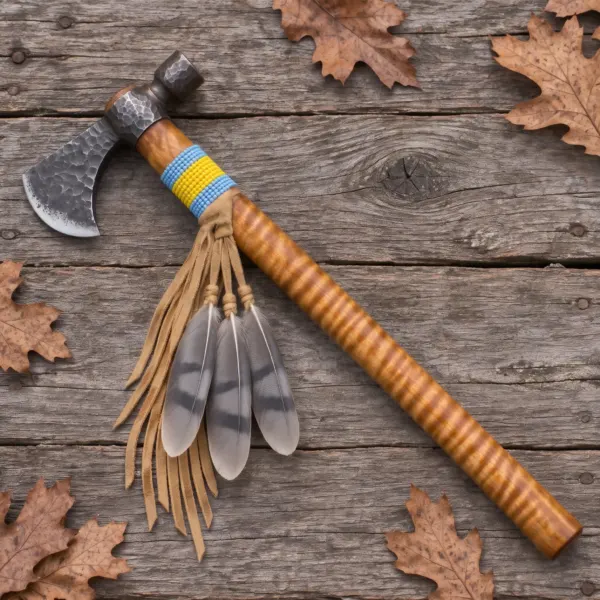 New
Bearfence Pipe Tomahawk, Curly Maple
3 in blade · Maple
Pipe Tomahawk with a pipe tomahawk head with a turned bowl on the poll, hand-forged in high-carbon steel, on curly maple.
$510.00Free US shipping -
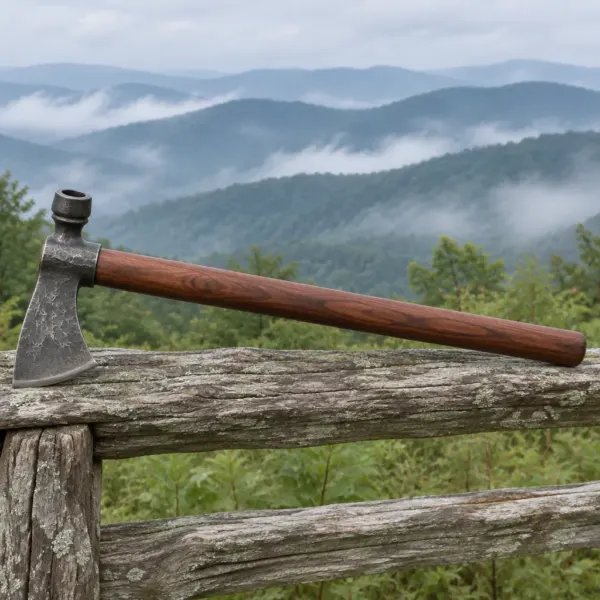 New
Cable Gap Pipe Tomahawk, Black Cherry
3 in blade · Cherry
Pipe Tomahawk with a pipe tomahawk head with a turned bowl on the poll, hand-forged in high-carbon steel, on black cherry.
$445.00Free US shipping -
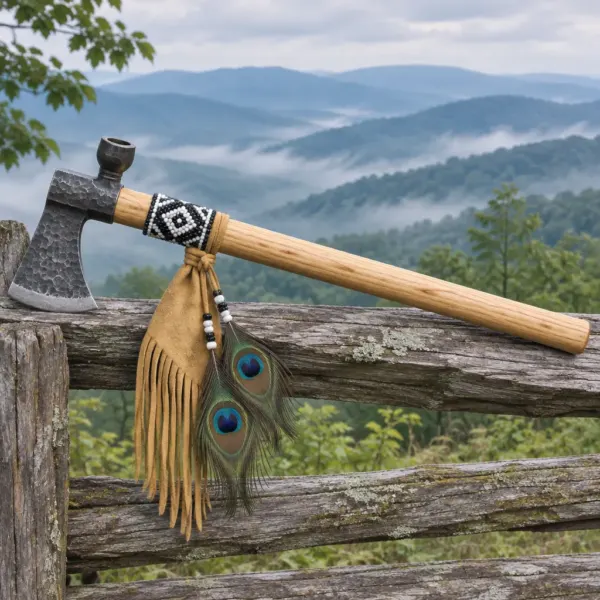 New
Yellow Branch Pipe Tomahawk, Hickory
3 in blade · Hickory
Pipe Tomahawk with a pipe tomahawk head with a turned bowl on the poll, hand-forged in high-carbon steel, on hickory.
$495.00Free US shipping
Keep Reading

What Is a Damascus Knife? Pattern Welded Steel, Wootz and Fakes
Pattern welded steel, the wootz blades that gave it a name, how the pattern is forged and etched, and how to tell real Damascus from a printed fake.
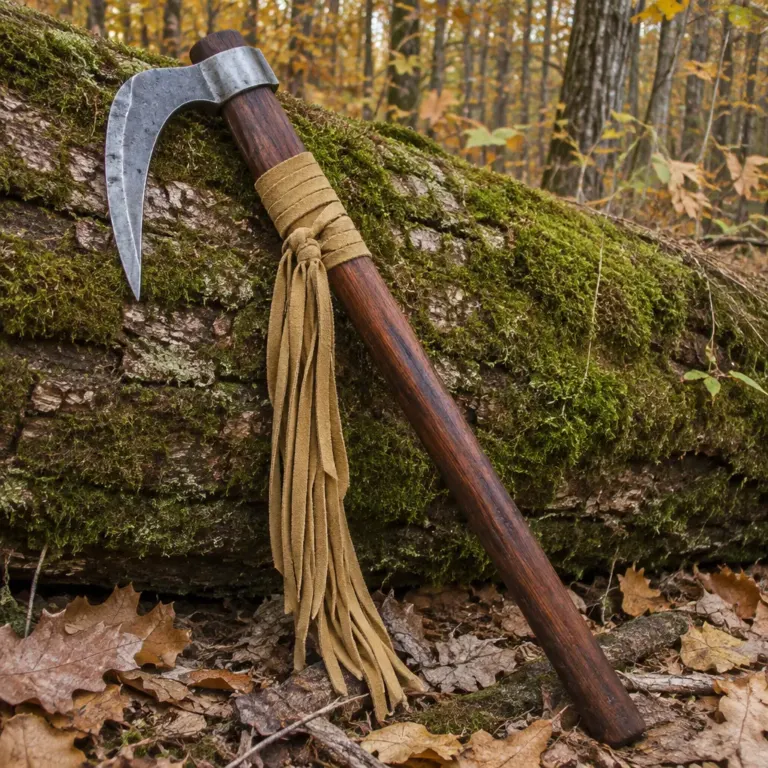
Viking Weapons: Axes, Spears, the Seax, Swords and Shields
What Vikings really carried: the spear, the axe, the seax, the sword and the round shield, and who could afford what.

Types of Spears: Boar Spear, Lance, Pike, Javelin and More
Boar spear, hunting spear, lance, pike, javelin and atlatl dart: how each type of spear was built and used, and how to choose one now.