Viking Weapons: Axes, Spears, the Seax, Swords and Shields
Viking weapons have been dressed up by a century of movies, so here is the plain version. The Viking Age ran from the late 700s to the middle of the 1000s, and what a Norseman carried depended mostly on what he could afford. A farmer had a spear, a shield and very likely an axe. A wealthy man added a sword and a mail shirt. Horns on the helmet were never on the list. Our bearded axes and spears follow the old outlines.
Who Carried What
By custom, every free Norse man was expected to own weapons and could carry them at all times. That did not mean every man owned a sword. Iron and steel took real labor to make, so the cheaper weapons were the common ones. The spear and the round shield were the basics. The axe was everywhere because it was also a household tool. The seax, a single edged knife, ranged from a belt knife to something close to a short sword. Bows of yew, ash or elm were used for hunting and for war.
The sword sat at the top of the pile, along with mail and a helmet. A real Viking helmet was a rounded iron cap. The only well preserved Viking Age helmet ever found, from Gjermundbu in Norway, has a guard around the eyes and no horns at all. The horns arrived in the 1800s, mostly by way of painters and opera costumes.
The Axe
The axe was one of the most common Viking hand weapons, partly because nearly every farm already had one. The same head that split firewood in the morning could go to a fight in the afternoon, which is a level of multitasking most modern tools only claim.
The bearded axe
The skeggøx, or bearded axe, has a lower edge that hangs below the rest of the head. That gives a long cutting edge on a light head, and the beard can hook a shield rim and drag it down. It is the shape most people picture when they think of a Viking axe.
The Dane axe
The Dane axe was a two handed weapon with a haft of about 3 to 4 feet for fighting and a broad head with an 8 to 12 inch edge. It spread across Europe from the 10th century, and the English housecarls who fought at Hastings in 1066 used the same weapon against the Normans.
The broad axe
In the later Viking Age some fighting axes, called breiðöx or broad axes, carried crescent edges up to about 18 inches long.
One thing the Norse never made was a double bit battle axe. None has been found. For the story of fighting axes before and after the Vikings, read our guide to battle axe types.
The Spear
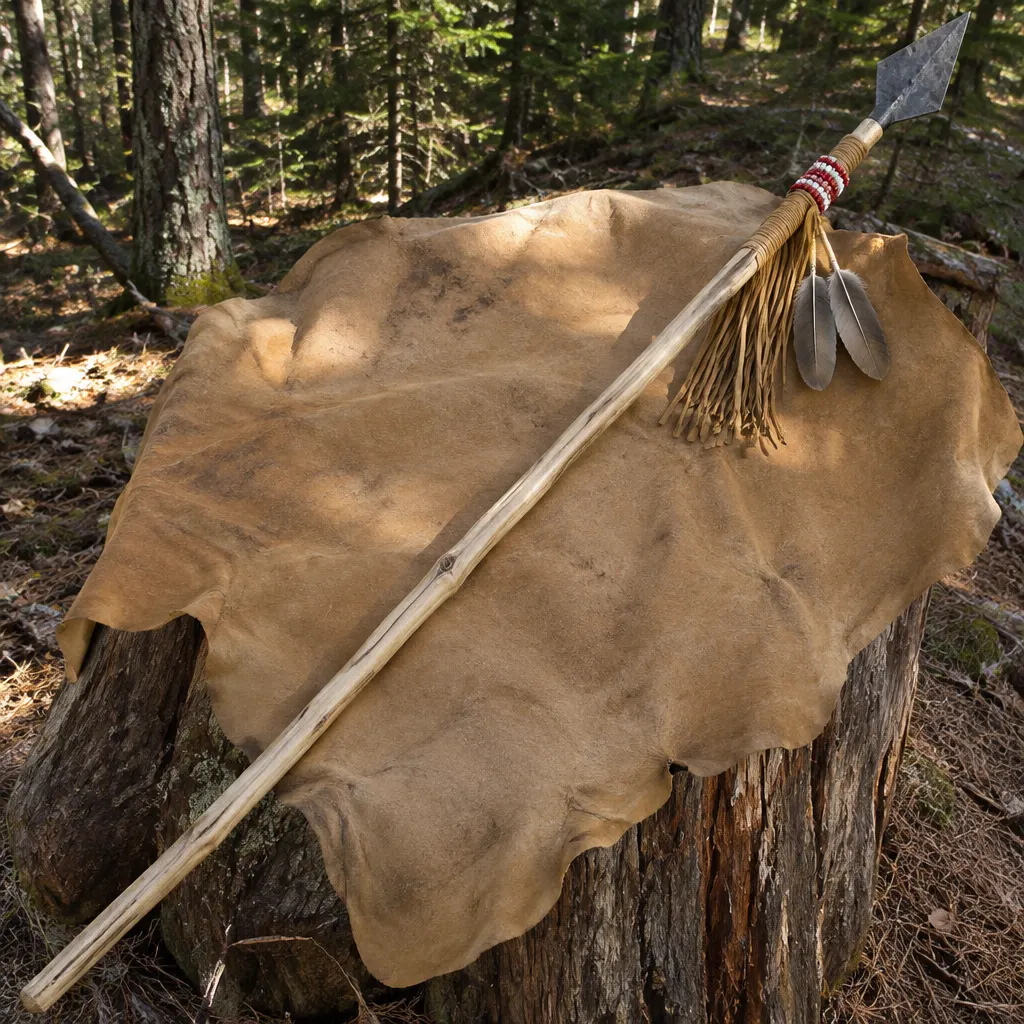
If you had to name one Viking weapon, it should be the spear. It was the most common weapon among ordinary farmers. Shafts were usually ash, about 2 to 3 meters long, which is roughly 6.5 to 10 feet. Heads ran from about 8 to 24 inches and tended to get longer later in the period. Light, narrow heads were made for throwing. Heavier, broader heads were made for thrusting, and some of the big ones could cut as well. The sagas also mention spears with small wings at the base of the head, called krókspjót, or hooked spears.
The Seax
The seax is a single edged knife, and the Vikings knew it best in its broken back form, where the spine runs straight and then angles down sharply to the point. Small ones were everyday knives that any village smith could make. Large ones were effectively swords, and many have long tangs that suggest a two handed grip. Most of the big examples come from Viking settlements in England and Ireland. We do not make a seax. A plain hand forged fixed blade does the same everyday jobs a small seax did.
The Sword
The Viking sword was double edged, with a blade of up to about 35 inches, and it was expensive. The Laxdæla saga values one sword at half a crown, which it puts at sixteen milk cows. Forging one could take a smith up to a month. The best known are the Ulfberht swords, marked VLFBERHT on the blade and made of steel with more carbon in it than many swords of the time. We do not make swords. Axes, spears and knives keep us busy enough.
One saga prices a sword at sixteen milk cows. Most men carried a spear.
The Shield
The round shield was the most common piece of protection a Viking owned. Finds range from about 18 to 47 inches across, with 30 to 35 inches the most usual size. The sagas talk about linden wood, but the shields found in graves are mostly fir, alder and poplar. A round iron boss in the center covered the hand grip, and the rim was often edged with leather.
Viking Weapons at a Glance
| Weapon | Made of | Used for | Worth knowing |
|---|---|---|---|
| Spear | Iron head on an ash shaft of 2 to 3 m | Thrusting and throwing | The most common weapon of ordinary farmers |
| Axe | Iron head on a wooden haft | Cutting and hooking | Doubled as a household tool |
| Seax | Single edged blade | Everyday cutting, large ones for fighting | Big ones were close to swords |
| Sword | Double edged steel blade up to about 35 in | Close fighting | One saga puts it at sixteen milk cows |
| Round shield | Wooden planks with an iron boss | Defense | Most often 30 to 35 in across |
How Our Forged Axes and Spears Compare
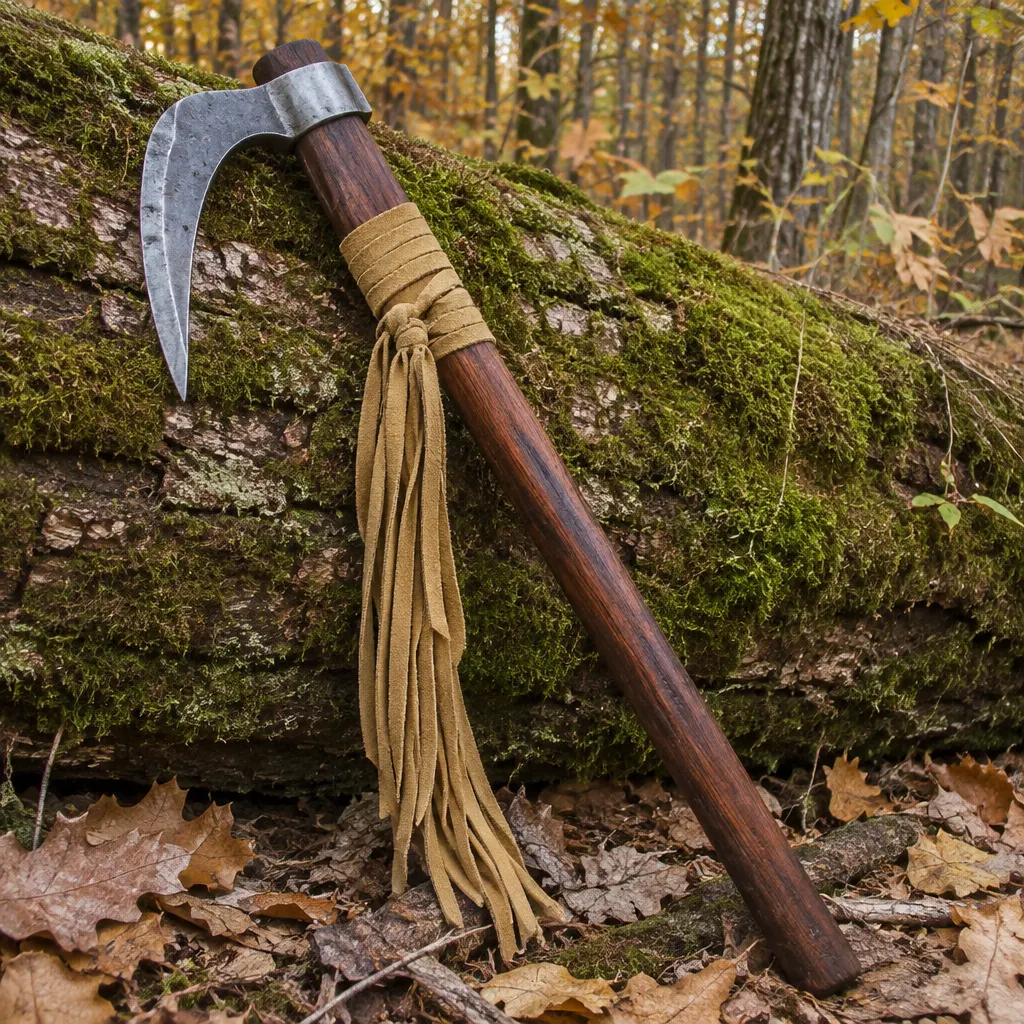
We forge axes and spears that borrow the Viking outline, but we will not pretend they are museum copies. Viking axe heads were iron, often with a steel edge welded in. Ours are hand forged high carbon steel, set on straight hardwood hafts.
- Ironweed Hammered Bearded Axe, Rosewood: 24 inches and 36 ounces with a 5 inch edge, long enough to get both hands on.
- Noontootla Bearded Hawk, Black Cherry: 19 inches and 27 ounces, a one handed bearded head with a long hooked bit.
- Charlies Bunion Bearded Hatchet, Black Cherry: 15 inches and 25 ounces, the bearded outline at belt size.
Our spears are closer kin to the Viking spear than most people expect, since a socketed iron head on a wooden shaft has not changed much in a thousand years. The Pickle Branch Hand-Forged Spear, White Ash has an 8.75 inch leaf shaped point with a forged socket on an ash shaft, 67 inches overall. The Rocktown Short Hunting Spear, Hickory has a broad 7.25 inch point with cross lugs at the base, which look a good deal like the wings on a krókspjót. Our spears run 42 to 72 inches overall, shorter than a Viking war spear, because they are sized for the wall and the woods rather than a shield wall.
Care is the same for all of them. Dry the steel, oil it lightly and give the wood some oil now and then so it does not dry out and crack. Our knife care guide covers the details.
Questions and Answers
What weapons did Vikings use most?
The spear, the axe and the round shield. The spear was the most common weapon among ordinary farmers, and the axe doubled as a tool. Swords were costly and carried mainly by wealthier men.
Did Vikings use double headed axes?
No. No double bit axe has been found from the Viking Age. Norse axes were single bit, including the bearded axe and the Dane axe.
What is a seax?
A single edged knife used across early medieval northern Europe. The Viking form is the broken back seax, which ranges from an everyday knife to a blade close to a short sword.
Did every Viking have a sword?
No. Swords were expensive and mostly owned by wealthier men. One saga values a sword at sixteen milk cows. Most fighters relied on a spear, an axe and a shield.
How big was a Viking shield?
Most were about 30 to 35 inches across, though finds range from about 18 to 47 inches. They were round, made of wooden planks, with an iron boss in the center.
Did Vikings wear horned helmets?
No. The horns came along in the 1800s through art and opera costumes. The one well preserved Viking Age helmet, from Gjermundbu in Norway, is a rounded iron cap with a guard around the eyes.
Pieces that go with this guide: Ironweed Hammered Bearded Axe, Rosewood, Noontootla Bearded Hawk, Black Cherry, Charlies Bunion Bearded Hatchet, Black Cherry, Pickle Branch Hand-Forged Spear, White Ash and Rocktown Short Hunting Spear, Hickory.
Keep exploring
Shop by collection
- Native American-Style Knives
- Fixed Blade Knives
- Signature Collection
- EDC Knives
- Tomahawks & Axes
- Bearded Axes
- Throwing Axes and Tomahawks
- Tomahawks
- Double Bit Axes
- Axes & Hatchets
- Hunting & Skinning Knives
- Gut Hook Knives
- Skinning Knives
- Pocket Knives
- Antler and Bone Handle Knives
- Camp & Bushcraft Knives
- Neck Knives & Small Fixed Blades
- Bowie Knives
- Daggers
- Boot Knives
- Ring Pommel Knives
- Heritage Tools
- Fire Starting Kits
- Leather Awls
- Ulu Knives
- Gift Sets & Combos
- Damascus Knives
- War Clubs
- Spears & Lances
- Shop everything
Bearded Axes and Spears
Forged bearded axes and spears on hardwood shafts.
-
 New
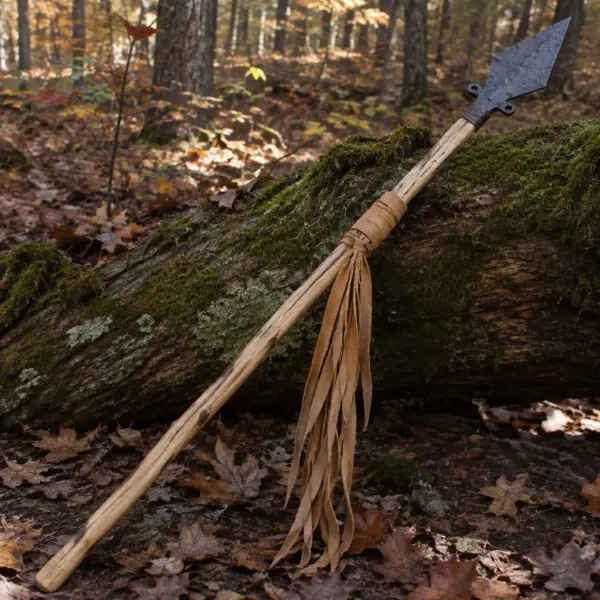
Rocktown Short Hunting Spear, Hickory
7.25 in blade · Hickory
Short Hunting Spear with a broad spear point with a forged socket and cross lugs, hand-forged in high-carbon steel, on hickory.
$360.00Free US shipping -
 New
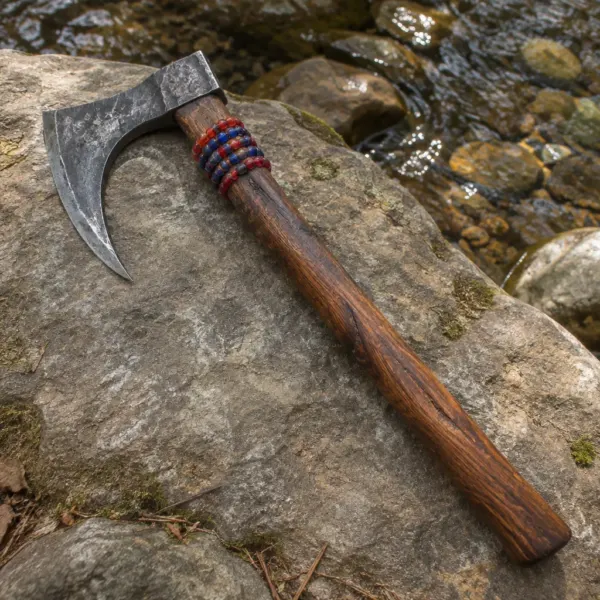
Charlies Bunion Bearded Hatchet, Black Cherry
4.25 in blade · Cherry
Bearded Hatchet with a bearded hatchet head with a long hooked bit, hand-forged in high-carbon steel, on black cherry.
$250.00Free US shipping -
 New
Needmore Feathered Lance, Curly Maple
10 in blade · Maple
Feathered Lance with a long narrow lance point with a forged socket, hand-forged in high-carbon steel, on curly maple.
$560.00Free US shipping -
 New
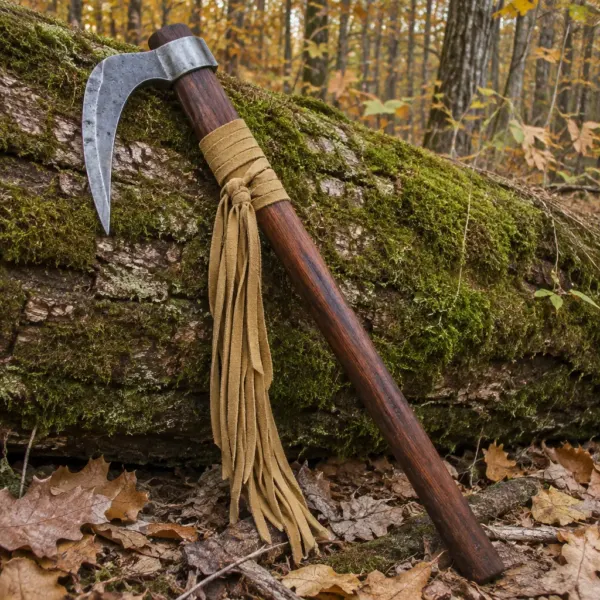
Noontootla Bearded Hawk, Black Cherry
4 in blade · Cherry
Bearded Hawk with a bearded hawk head with a long hooked bit, hand-forged in high-carbon steel, on black cherry.
$295.00Free US shipping
Keep Reading

Types of Spears: Boar Spear, Lance, Pike, Javelin and More
Boar spear, hunting spear, lance, pike, javelin and atlatl dart: how each type of spear was built and used, and how to choose one now.

Gifts for Men Who Have Everything: Knives, Hawks and Outdoor Gear by Budget
Hand forged knives, tomahawks and fire kits sorted by budget, with real prices, for the man whose drawer is already full of gadgets.

How to Close a Pocket Knife Safely, Lock by Lock
Step by step closing for slip joint, friction folder, lockback and liner lock knives, with the mistakes that cut fingers.