What Is a Gut Hook? What It Does and How to Use One
A gut hook is a small, sharpened hook ground into the spine of a hunting knife, just behind the point. You use it to open the belly hide of an animal without cutting into the gut underneath. It is a simple idea that hunters still argue about, which is about par for hunters.
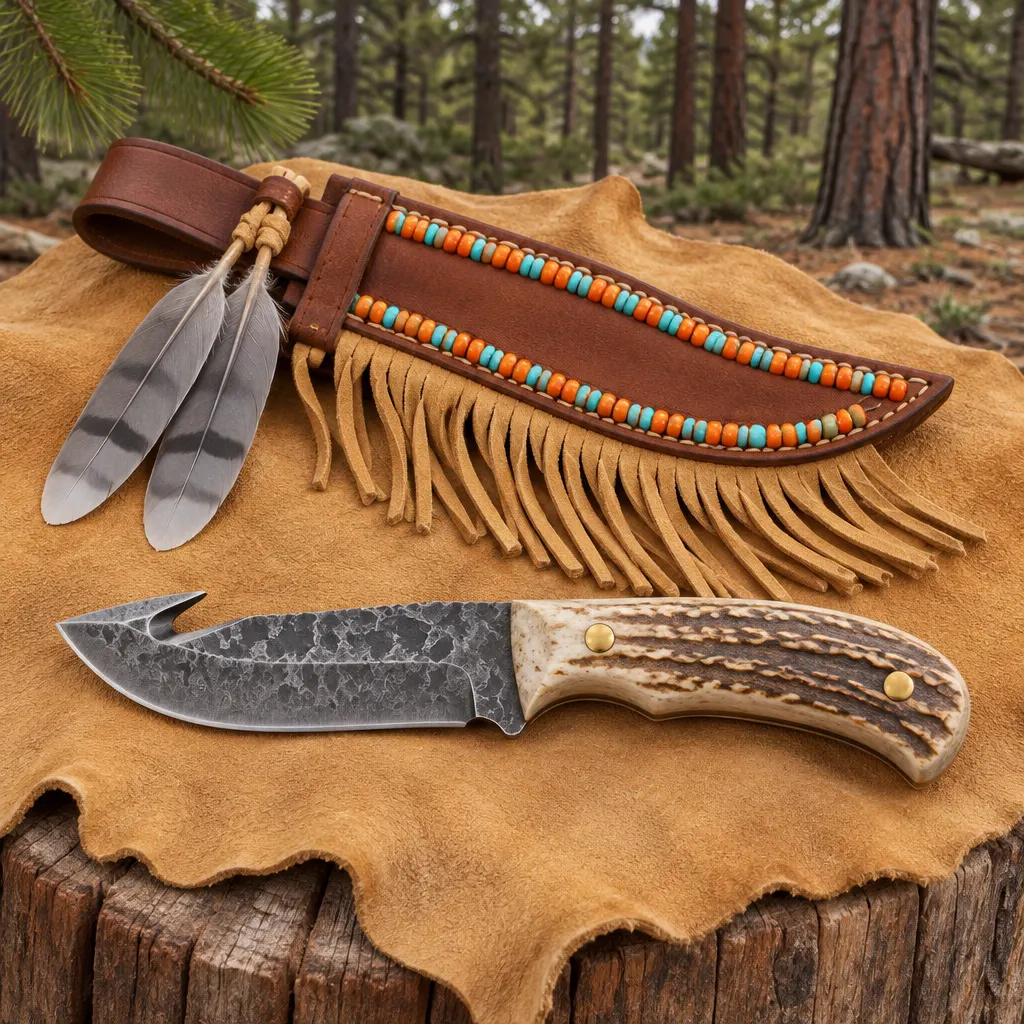
What Is a Gut Hook?
Look at the spine of a gut hook knife and you will see a curved notch just behind the point. The inside of that curve is sharpened. The rest of the spine is not. That is the whole tool. It rides on the back of a normal blade, so you get a skinning edge on one side and a hook on the other, and no extra gadget rattling around in your pack.
The name is a little misleading. The hook does not cut the guts. Its whole job is to keep the blade away from them.
What a Gut Hook Does
When you open a deer with an ordinary blade, the point and edge are working right above the stomach and intestines. One slip and you have punctured the paunch, which makes the job messier and can taint the meat. A gut hook changes the angle of attack. The hook slides under the hide, the hide feeds into the curve, and the sharpened inside cuts it from underneath while the rounded back of the hook rides over whatever is below. You cut hide and very little else.
Hunters also use the hook to open the hide along the legs before skinning, and in a pinch to cut cord or string. It is not a skinning tool, though. Once the belly is open, you turn the knife over and get on with the main edge.
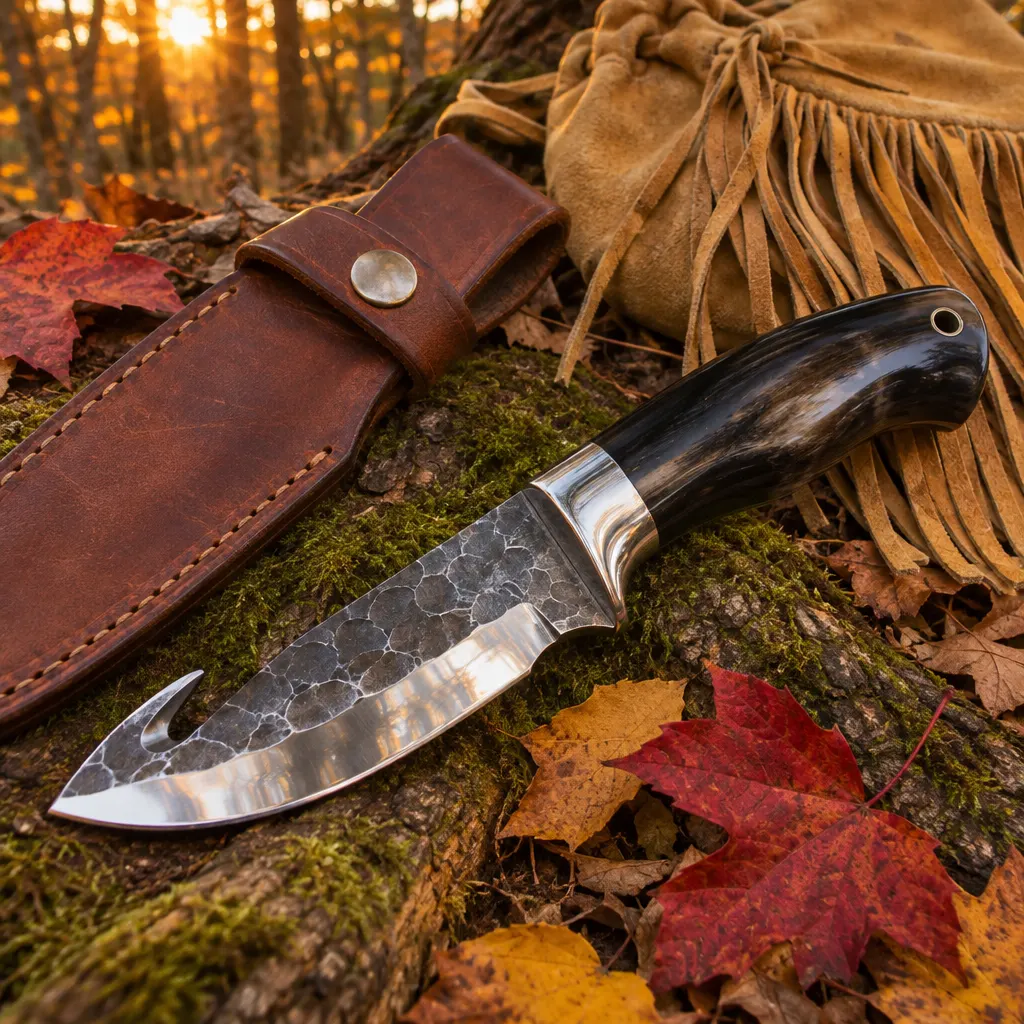
How to Use a Gut Hook
- Make a starting cut. Pinch up the hide on the belly and use the tip of the main blade to make a short cut through the hide only.
- Turn the knife over. Hold it with the edge up and the spine down, and slip the hook into the opening so it sits under the hide.
- Pull steadily. Draw the knife toward you along the center line of the belly. Keep a shallow angle and lift slightly so the hook stays just under the hide.
- Let the hook do the work. Steady pressure, not force. If it stalls, the hook is dull or packed with hair. Clear it and carry on.
- Switch to the main edge. Once the belly is open, turn the knife back over and finish field dressing as normal.
Practice the motion before opening day on something cheaper than a deer. The first time should not be in the dark with your hands shaking.
Pros and Cons of a Gut Hook
| Pros | Cons |
|---|---|
| Opens the belly quickly and cleanly | Harder to sharpen than a straight edge |
| Lower risk of puncturing the stomach or intestines | Can catch on hide during long skinning strokes |
| No extra tool to carry | No smooth spine near the tip for thumb pressure |
| Works with gloves on and in poor light | Removes some steel from the tip area |
The honest summary: a gut hook makes one job easier and every other job very slightly worse. If you field dress several deer a season, that one job may well be worth it. If you dress one deer every other year, a steady hand and two fingers under the hide to guide a normal blade will do the same thing, just a bit slower.
A gut hook makes one job easier and every other job very slightly worse.
Gut Hook Knife or a Separate Tool?
You can get the same result from a separate zipper style tool, or from a skinning knife and careful fingers. A gut hook knife simply puts the hook where your hand already is. Our gut hook knives include full size fixed blades such as the Tapoco Gut Hook Skinner, with a 4.75 inch blade and deer antler scales, the Deer Camp Hammered Gut Hook Skinner, a 4 inch drop point with a black buffalo horn handle, and the Fires Creek Skinning Knife with Gut Hook, a 4.5 inch drop point skinner in cow horn.
If you would rather carry a folder, the Whitetail Gut Hook Folder puts a 3.5 inch drop point and a hook in a rosewood handle that rides in a leather pouch. And if you decide you do not want a hook at all, our plain skinning knives sit right next door. Nobody will report you.
What to Look For in a Gut Hook Knife
Start with the knife under the hook. A gut hook rides on a skinner or a drop point, and that blade does most of the work, so judge it first: a blade of about 4 to 5 inches, a full tang, a handle you can hold when it is wet and a sheath that keeps the knife in place. Then look at the hook. It should be cleanly ground, sharp all the way around the inside of the curve and set far enough back from the point that the tip is still useful. A hook with a rough or uneven edge tears hide instead of cutting it, and it will not get better with age.
How to Sharpen a Gut Hook
A gut hook will not sharpen on a flat stone. You need something round that fits inside the curve, such as a tapered diamond rod, a thin ceramic rod or a small round file of the right diameter. Find the existing bevel on the inside of the hook, lay the rod against it at the same angle and push through the curve, rolling the rod slightly so you cover the whole edge. A few strokes is usually enough. Then lay the side of the blade flat on a fine stone and give it a light pass to remove the burr.
The main edge sharpens the usual way. Our guide on how to sharpen a hand-forged knife covers that from start to finish.
Caring for a Gut Hook Knife
The hook collects hair, fat and blood in a spot you cannot reach with a thumb. Rinse it, scrub the inside of the curve with an old toothbrush and dry it completely. Our gut hook knives are hand-forged high-carbon steel, so a thin coat of oil afterward keeps rust away. Store the knife out of its leather sheath, since leather holds moisture and carbon steel does not appreciate it.
If you are putting together a full kit for the season, the best hunting knife guide covers blade shapes, lengths and how a gut hook fits alongside a skinner and a caper.
Questions and answers
What is a gut hook used for?
Opening the belly hide of a deer or other game without cutting into the stomach or intestines. It is also handy for opening the hide along the legs before skinning.
Do I really need a gut hook?
No. Plenty of hunters field dress with a plain blade and two fingers guiding it. A gut hook makes the job faster and lowers the risk of a punctured paunch, which matters more if you dress several animals a season.
How do you sharpen a gut hook?
With a round tool that fits the curve, such as a tapered diamond rod, a ceramic rod or a small round file. Follow the existing bevel inside the hook, then take the burr off with a light pass of the blade flat on a fine stone.
Is a gut hook knife good for skinning?
The main blade is, since most gut hook knives are built on a skinner. The hook itself is for opening the hide, not skinning, and it can catch on the hide during long strokes.
Why is it called a gut hook?
Because it is used to open the gut cavity. The name makes it sound more aggressive than it is. The hook cuts hide and keeps the blade away from the guts.
Can a folding knife have a gut hook?
Yes. Folding gut hook knives work the same way and ride in a pocket or a belt pouch. A fixed blade is easier to clean, since there is no pivot for blood and hair to work into.
Pieces that go with this guide: Limestone Cove Gut Hook Skinner, Black Walnut, Whitetail Field Dressing Trio in Leather Roll and Tapoco Gut Hook Skinner, Deer Antler.
Keep exploring
Shop by collection
- Native American-Style Knives
- Fixed Blade Knives
- Signature Collection
- EDC Knives
- Tomahawks & Axes
- Bearded Axes
- Throwing Axes and Tomahawks
- Tomahawks
- Double Bit Axes
- Axes & Hatchets
- Hunting & Skinning Knives
- Gut Hook Knives
- Skinning Knives
- Pocket Knives
- Antler and Bone Handle Knives
- Camp & Bushcraft Knives
- Neck Knives & Small Fixed Blades
- Bowie Knives
- Daggers
- Boot Knives
- Ring Pommel Knives
- Heritage Tools
- Fire Starting Kits
- Leather Awls
- Ulu Knives
- Gift Sets & Combos
- Damascus Knives
- War Clubs
- Spears & Lances
- Shop everything
Gut Hook Knives
Hand-forged skinners with a sharpened gut hook on the spine and a leather sheath.
-
 New
Tapoco Damascus Gut Hook Skinner, Deer Antler
4.75 in blade · Antler
Damascus gut hook skinner with a 4.75 in hand forged blade, whitetail deer antler scales and a beaded, fringed leather sheath with feathers.
$375.00Free US shipping -
 New
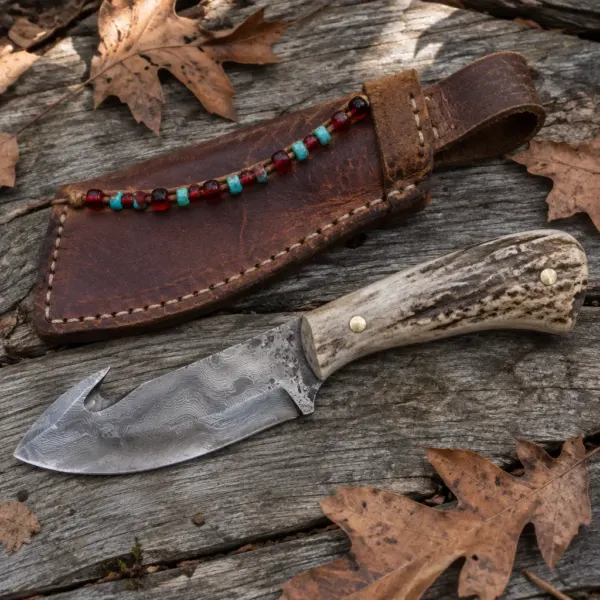
Cane Creek Falls Gut Hook Skinner, Elk Antler
4 in blade · Antler
Gut Hook Skinner with a 4 in hand-forged blade, elk antler scales and a beaded leather sheath. A gut hook knife for opening and skinning deer cleanly.
$270.00Free US shipping -
 New
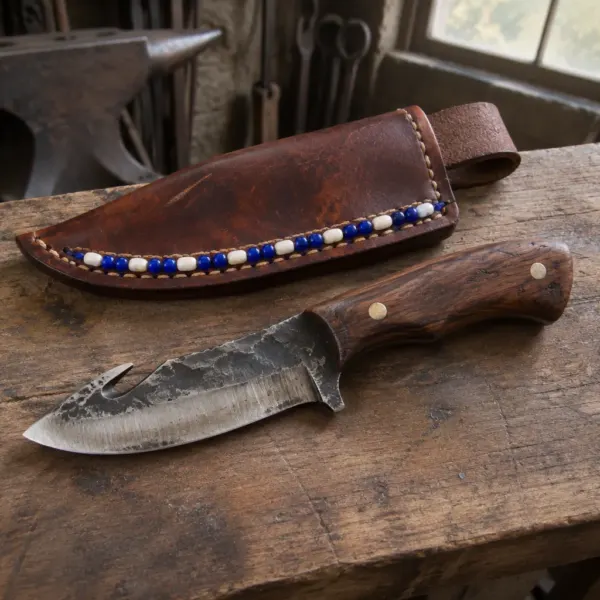
Limestone Cove Gut Hook Skinner, Black Walnut
4.25 in blade · Black walnut
Gut Hook Skinner with a 4.25 in hand-forged blade, black walnut scales and a beaded leather sheath. A gut hook knife for opening and skinning deer cleanly.
$235.00Free US shipping -
 New
Tapoco Gut Hook Skinner, Deer Antler
4.75 in blade · Antler
Gut Hook Skinner with a 4.75 in hand-forged blade, whitetail deer antler scales and a beaded, fringed sheath with feathers.
$290.00Free US shipping

Keep Reading
How to Choose a Tomahawk: Head Shapes, Haft Length and Weight
Head shape, haft length and weight: what matters for camp work, what matters for throwing and what matters on the wall.
Tomahawk vs Hatchet: What Is the Difference?
They look alike, but the eye, the haft and the weight are different. Here is how to tell them apart and which one suits your work.

How to Throw a Tomahawk: Distance, Grip and Rotation
A safe setup, the right distance, a relaxed grip and one clean rotation. Everything a beginner needs for the first stick.