The Best Hunting Knife for Deer, Elk and Hog: How to Choose
The best knife for hunting is the one you can control with cold, wet hands at last light, with an animal on the ground and nobody around to pass you anything. That usually means a short, simple fixed blade, not the biggest knife in the case. Here is how to pick one for deer, elk and hog.
What Makes a Good Hunting Knife
Field dressing and skinning are close, careful work. Control matters far more than size, and a 4 inch blade you can steer beats an 8 inch blade you have to wrestle. The big knives look great in photos. The small ones do the work.
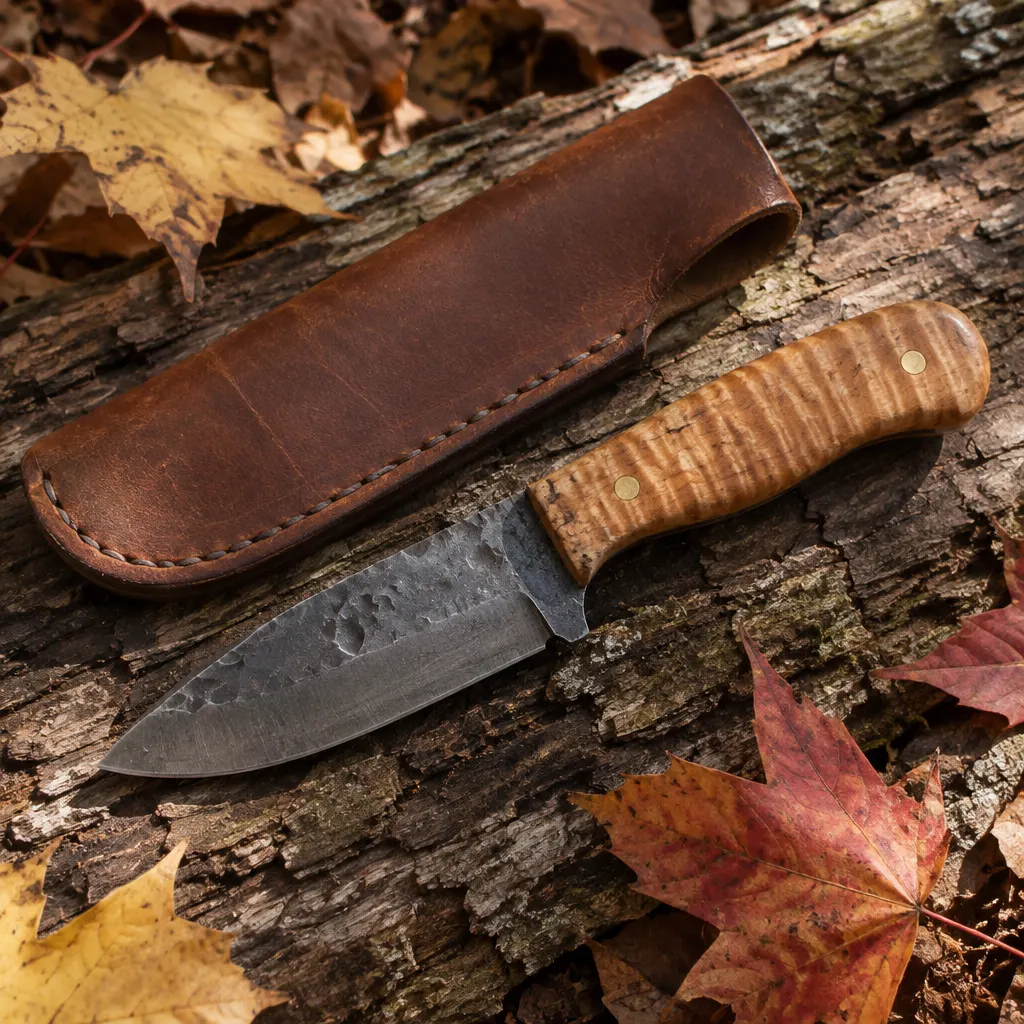
Look for a full tang, a handle that stays put in your hand when it is wet, a blade shape with enough belly to skin and a sheath that holds the knife securely. Everything past that is taste. Our hunting knives are built around those basics, then dressed up in antler, horn and hardwood.
Blade Shape
Shape matters more than length. Each of the common hunting shapes is good at something, and our guide to skinning knife blade shapes goes into each one in more depth.
Drop point
The spine curves gently down to the point, which keeps the tip low and strong and leaves the edge a useful belly. A low tip is less likely to poke into the gut while you open a deer. It is the safest choice if you want one knife for everything. The Hiawassee Drop Point Hunting Knife, with a 4.25 inch blade, is a typical size.
Clip point
The front of the spine is cut away to form a finer, sharper tip. It is good for detail work and piercing, but that thinner tip is easier to damage against bone. Hunters who like a clip point tend to like it a lot, and they are welcome to it.
Trailing point and upswept skinners
The edge sweeps up above the line of the spine, which gives a long belly for long skinning strokes. These are specialists, at their best once the animal is hanging. The Nolichucky Trailing Point Skinner has a 5.5 inch blade for big hides.
Gut hook
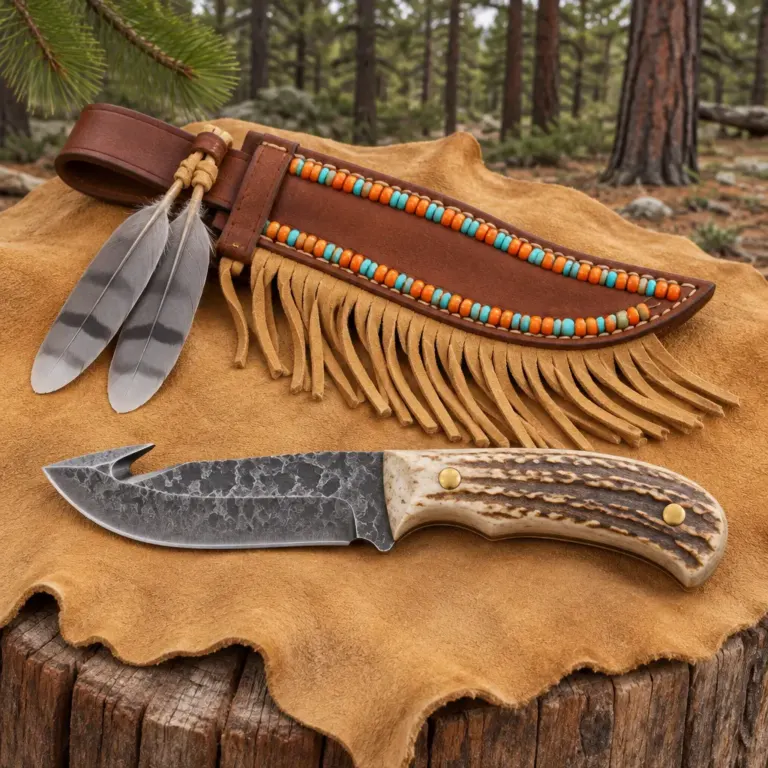
A gut hook is a sharpened hook on the spine that opens the belly hide without cutting into the gut. Some hunters swear by it and others never touch it. Our guide on what a gut hook is lays out both sides.
Caping knife
A short, slim blade with a fine point for working around the eyes, ears and lips when you are saving a cape for a mount. The Pecks Corner Caping Knife has a 3 inch blade. You do not need one unless you are caping, and if you are caping, you really do.
How Long Should a Hunting Knife Be?
Shorter than most people think. Long blades look impressive in a display case and get in the way inside a body cavity. Use this as a starting point.
| Game | Blade length | Why |
|---|---|---|
| Birds and small game | 3 to 4 in | Small, precise cuts |
| Deer and antelope | 3.5 to 4.5 in | Enough edge to skin, short enough to control inside the cavity |
| Elk | 4 to 5 in, plus a second knife | A big animal means a lot of hide and a lot of cutting |
| Wild hog | 4.5 to 6 in, stiff blade | Thick hide and tough shoulders |
A 4 inch blade you can steer beats an 8 inch blade you have to wrestle.
Steel
Hunting knives come in two broad families. Stainless steel resists rust and asks less of you. High-carbon steel takes a very keen edge and is easy to touch up in the field with a small stone, but it will rust if you put it away wet. With use it darkens to a gray patina, which many owners come to like and which helps protect the steel.
Our hunting knives are hand-forged high-carbon steel, because a hunting knife gets sharpened often and carbon steel makes that easy. The deal is simple. Wipe the blade clean and dry after the job, put a thin coat of oil on it and store it out of the leather sheath. Do that and the knife will outlast the truck you drove to the lease.
Handle, Tang and Sheath
A full tang, with the blade steel running the whole length of the handle, is the strongest build and the one to look for on a hunting knife. Handle material is partly looks and partly grip. Antler has natural texture. Hardwood scales are warm and easy to hold. Polished horn looks superb and gets slicker when wet, so a guard or a good swell at the front of the handle helps.
The sheath matters more than people expect. A fitted leather belt sheath with a high belt loop keeps the knife where you can reach it without it digging in when you sit in a stand for hours. If the knife slides out when you turn the sheath upside down, fix that before the season, not during it.
The Best Knife for Deer, Elk and Hog
Deer
A drop point of about 4 inches does everything a whitetail needs, from field dressing to skinning at the meat pole. If you want one knife and nothing else, this is it. Add a gut hook if you like the idea of unzipping the belly, and a caping knife if a buck is going on the wall.
Elk
An elk is big enough that one knife turns into a long night. Carry a 4 to 5 inch drop point for the main work and a second knife as a spare, because hair and hide dull an edge faster than you would believe. Add a larger blade or a saw for the quarters. Many elk hunters break the animal down where it falls without gutting it at all, which makes a sharp, controllable knife even more important.
Hog
Wild hogs are hard on knives. The hide is thick, and mature boars carry a plate of gristle over the shoulders that hunters call the shield. A stiff blade of 4.5 to 6 inches with a strong point works best for the skinning. Once the hog is on the table, a broad trade style blade such as the Craggy Pinnacle Trade Butcher Knife, at 6.5 inches, earns its keep cutting up the meat.
One Knife or a Set?
For most deer hunters, one good drop point is enough. A set makes sense when the jobs split apart: a blade for opening and skinning, a smaller one for caping and close work, and something sturdier for joints. A set also keeps a spare edge in the pack, which matters on elk.
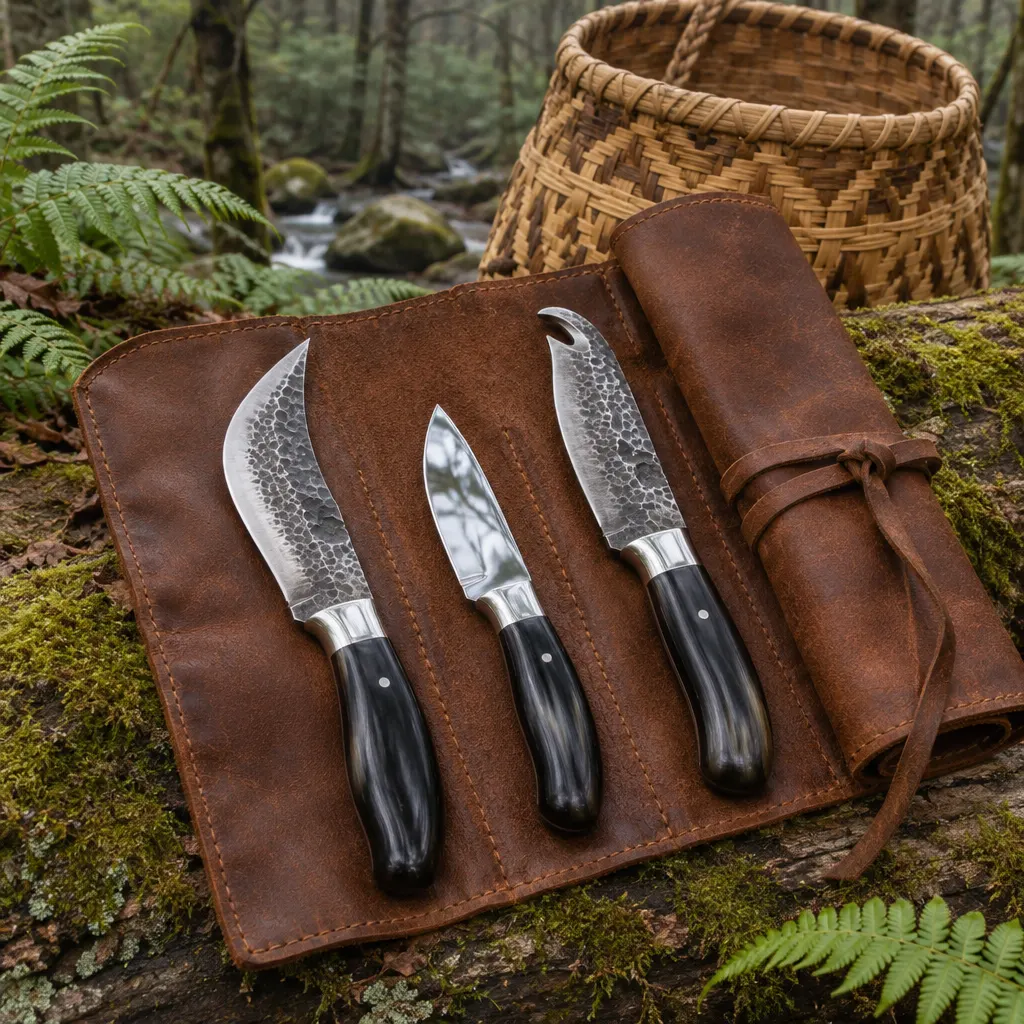
The Whitetail Field Dressing Trio puts a skinner, a caper and a gut hook in one leather roll. The Stone Door Hunting Knife Gift pairs a 4.25 inch skinner with a 2.75 inch caping knife in a double sheath and can be engraved on request. Sets like these live in our gift sets collection, which is also where people tend to shop when they are buying for a hunter rather than for themselves. For skinners on their own, browse the skinning knives.
Questions and answers
What is the best blade length for a hunting knife?
For deer and similar game, 3.5 to 4.5 inches. Elk and hogs can justify a little more, up to 5 or 6 inches, but longer blades are harder to control inside the body cavity.
Is a drop point or a clip point better for hunting?
The drop point, for most hunters. Its lower, thicker tip is less likely to puncture the gut or snap on bone. A clip point gives a finer tip for detail work and suits hunters who want more precision.
What knife do I need to field dress a deer?
One sharp fixed blade of about 4 inches with a drop point is enough. A gut hook makes opening the belly quicker, and a caping knife only matters if you plan to mount the head.
Is high-carbon steel good for a hunting knife?
Yes. It takes a keen edge and is easy to sharpen in the field. It needs wiping dry and a light coat of oil after use, because it will rust if it is put away wet.
Do I need a gut hook?
No, but some hunters like one. It opens the hide quickly without cutting into the stomach. The trade off is that it is harder to sharpen and can catch on the hide during skinning.
What size knife do I need for elk?
A 4 to 5 inch fixed blade for the main work, plus a spare knife, since hide and hair dull an edge fast on an animal that big. A saw or a larger blade helps with the quarters.
Pieces that go with this guide: Hiawassee Drop Point Hunting Knife, Curly Maple, Nolichucky Trailing Point Skinner, Black Cherry and Whitetail Field Dressing Trio in Leather Roll.
Keep exploring
Shop by collection
- Native American-Style Knives
- Fixed Blade Knives
- Signature Collection
- EDC Knives
- Tomahawks & Axes
- Bearded Axes
- Throwing Axes and Tomahawks
- Tomahawks
- Double Bit Axes
- Axes & Hatchets
- Hunting & Skinning Knives
- Gut Hook Knives
- Skinning Knives
- Pocket Knives
- Antler and Bone Handle Knives
- Camp & Bushcraft Knives
- Neck Knives & Small Fixed Blades
- Bowie Knives
- Daggers
- Boot Knives
- Ring Pommel Knives
- Heritage Tools
- Fire Starting Kits
- Leather Awls
- Ulu Knives
- Gift Sets & Combos
- Damascus Knives
- War Clubs
- Spears & Lances
- Shop everything
Hand-Forged Hunting Knives
Drop point hunters, skinners and caping knives with full tangs and leather belt sheaths.
-
 New
Amicalola Damascus Skinning Knife, Elk Antler
4.75 in blade · Antler
Damascus skinning knife with a 4.75 in upswept hand forged blade, elk antler scales and a beaded, fringed buckskin sheath.
$385.00Free US shipping -
 New
Tapoco Damascus Gut Hook Skinner, Deer Antler
4.75 in blade · Antler
Damascus gut hook skinner with a 4.75 in hand forged blade, whitetail deer antler scales and a beaded, fringed leather sheath with feathers.
$375.00Free US shipping -
 New
Cherokee Creek Damascus Trailing Point Skinner, Deer Antler
5.5 in blade · Antler
Damascus trailing point skinner with a 5.5 in hand forged blade, whitetail deer antler scales and a beaded brown leather sheath.
$410.00Free US shipping -
 New
Junaluska Damascus Elk Antler Knife, Drop Point
5 in blade · Antler
Damascus drop point hunting knife with a 5 in hand forged blade, an elk antler crown handle and a leather sheath with a feather and bead thong.
$390.00Free US shipping


Keep Reading
What Is a Gut Hook? What It Does and How to Use One
What the hook on the spine of a hunting knife is for, how to use it on a deer, how to sharpen it and whether you need one at all.
How to Choose a Tomahawk: Head Shapes, Haft Length and Weight
Head shape, haft length and weight: what matters for camp work, what matters for throwing and what matters on the wall.
Tomahawk vs Hatchet: What Is the Difference?
They look alike, but the eye, the haft and the weight are different. Here is how to tell them apart and which one suits your work.