Camp Axe vs Hatchet: Which One to Carry Camping
A hatchet is a one hand tool for kindling and camp chores. A camp axe has a longer handle and a heavier head, and you swing it with two hands to chop and split real firewood. Which one belongs on your trip depends mostly on how far you walk from the truck.
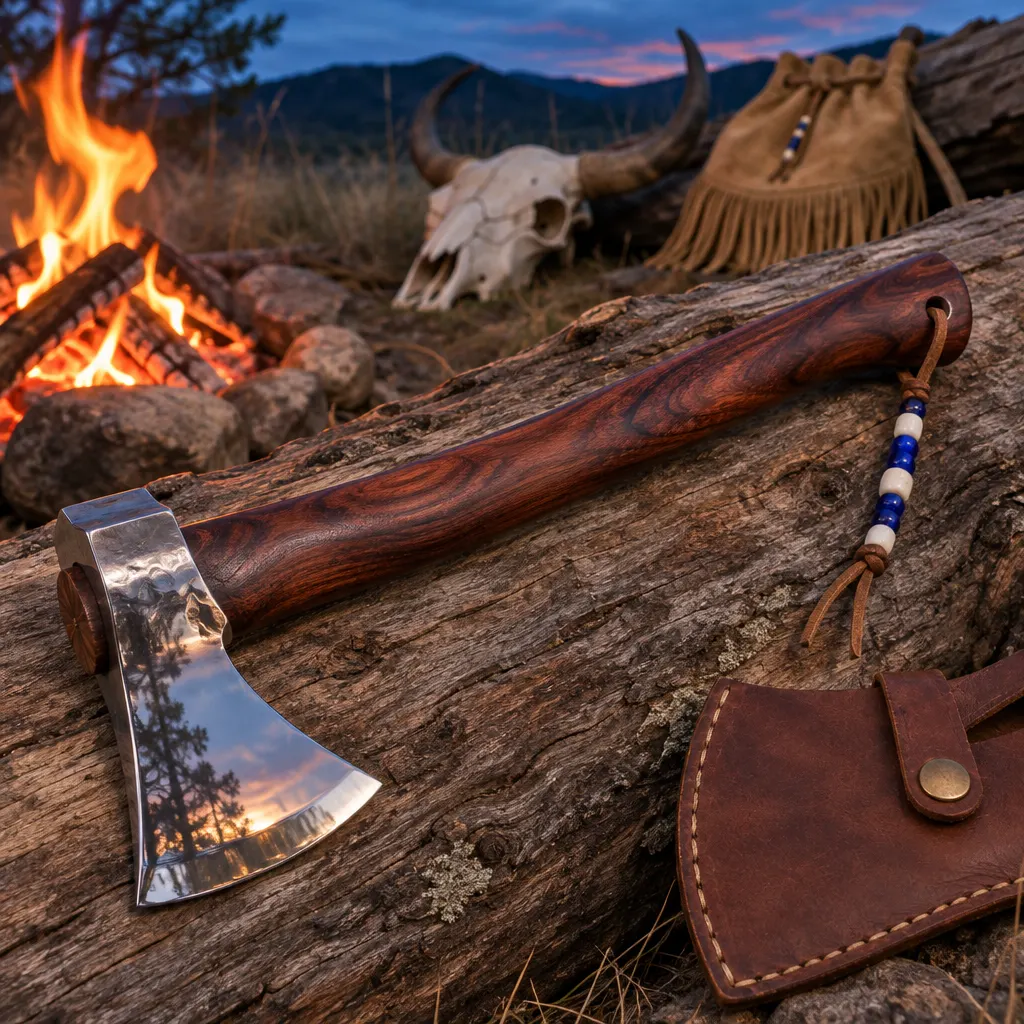
The Short Version
Here is how the two usually compare. These are typical ranges across the trade, not rules.
| Hatchet | Camp axe | |
|---|---|---|
| Overall length | About 12 to 17 in | About 19 to 28 in |
| Typical weight | About 1 to 1.75 lb | About 2 to 4 lb |
| Grip | One hand | Two hands, or one for light work |
| Best at | Kindling, stakes, small limbs, carving | Bucking limbs, splitting rounds, clearing deadfall |
| Carry | Belt or side of a pack | Strapped to a pack or in the vehicle |
| Room to swing | Very little | A clear circle around you |
What Makes a Hatchet a Hatchet
A hatchet is a short axe made for one hand. Most have a handle somewhere around 12 to 16 inches and a head with a flat poll you can use as a hammer. You hold it close, choke up for fine work and keep your other hand well out of the way.
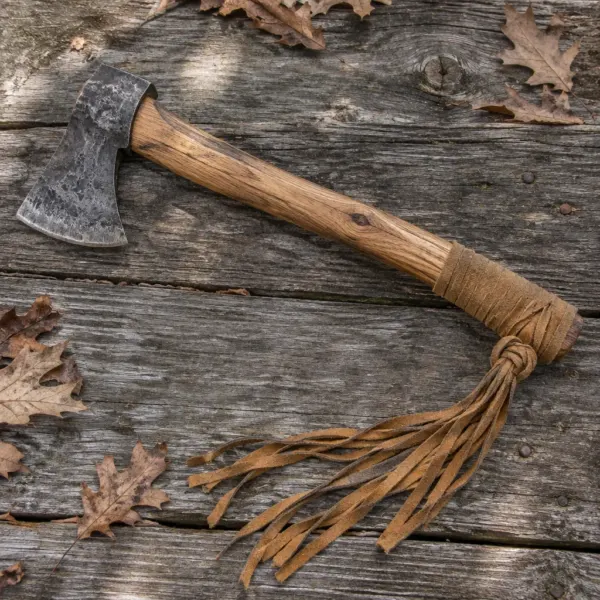
Ours run 13 to 17 inches overall and are listed from 18 to 28 ounces. The Harper Creek Camp Hatchet, White Oak is a fair example: 15 inches, 25 oz, a convex bit and a leather edge cover with a tie thong.
What a hatchet does well
- Splitting kindling and small splits of firewood.
- Driving tent stakes with the poll.
- Limbing small branches off a downed tree.
- Carving feather sticks and notches when you choke up behind the head.
Where a hatchet runs out
A hatchet does not have the reach or the mass for anything thick. You can get through a six inch log with one. You will also have plenty of time to think about your choices while you do it.
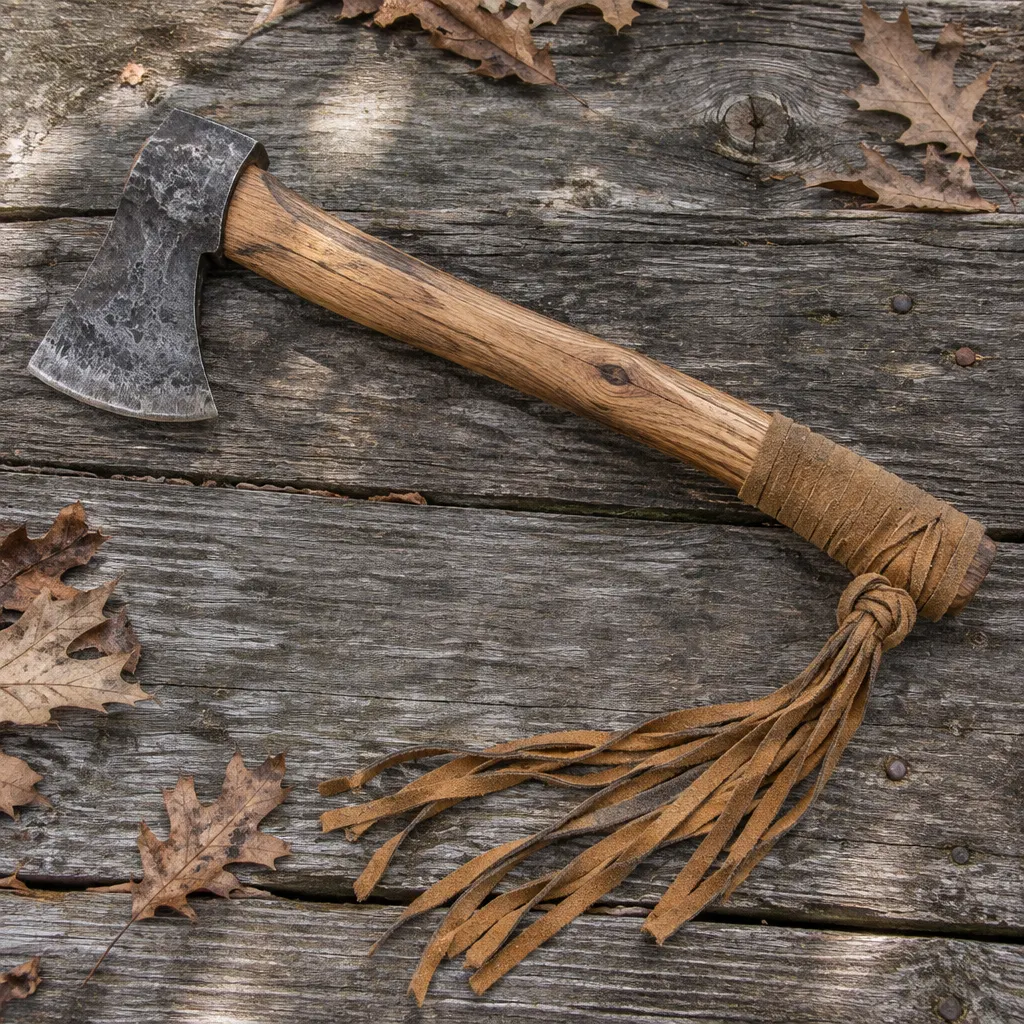
What Makes a Camp Axe a Camp Axe
A camp axe sits between the hatchet and a full size felling axe. The handle is long enough for a two hand swing, usually somewhere from 19 to 28 inches, and the head is heavier. The US Forest Service ax manual describes a 2.25 pound head on a 26 inch handle as a good lightweight camping axe, which is about the size most people picture.
The extra length does a lot of the work for you. A longer arc means more speed at the head, so a camp axe bites deeper per swing than a hatchet of the same weight. It also means you need a clear circle around you and both feet planted.
In our shop the High Knob Mirror Camp Axe, Rosewood is 20 inches overall and listed at 32 oz. The Walnut Mountain Hand-Forged Axe, Hickory is a small forest axe pattern at 26 inches and 48 oz, for people who burn a lot of wood and do not mind carrying it.
What a camp axe does well
- Bucking downed limbs into fire lengths.
- Splitting rounds for the evening fire.
- Clearing deadfall off a trail or a campsite.
- Any job where a hatchet would take ten minutes and a sore wrist.
Chopping vs Splitting
Chopping is cutting across the grain, like taking a limb off a fallen tree. Splitting is driving the head down along the grain so the wood comes apart. Different head shapes favor each job.
A thin bit bites deep across the grain and chops well, but it can stick in a round you are trying to split. A head with thicker cheeks pushes the wood apart and splits better, but it chops slower. Most hatchets lean toward the splitting side, because their main job is kindling. Camp axes vary, so look at the head from the top before you buy. If splitting is most of what you do, our guide to felling axe vs splitting axe goes into head shapes in more detail.
You can get through a six inch log with a hatchet. You will have plenty of time to think while you do.
Weight and Carry
Every ounce counts when it is on your back. A backpacker has no business with a three pound axe. A car camper with a fire ring and a pile of oak has no business trying to process it with a one pound hatchet either.
Ways to carry each one
- On the belt: a hatchet in a sheath with a belt loop rides on the hip. The Hartford Hatchet with Leather Sheath, White Ash comes in a fitted leather belt sheath with a wide loop.
- On the pack: strap a hatchet or small camp axe to the side of a pack, head down and edge covered.
- In the vehicle: a longer camp axe lives in the truck or the gear bin. Nobody hikes with a 26 inch axe for fun.
Whatever you carry, keep the edge cover on until you use it. Every axe and hatchet we sell ships with a leather cover over the bit.
Safety Is Different With Each
People assume the hatchet is the safe choice because it is small. It is not that simple. A short handle means a glancing blow ends up close to your knee or shin. Kneel when you split with a hatchet, so a miss goes into the block or the ground and not into your leg.
With a camp axe the risk is the arc. Check for branches overhead, keep people well back and split on a solid block so the bit does not travel on into the dirt. One buried rock costs you an evening of sharpening.
So Which One Should You Carry?
- Backpacking or hiking in: a hatchet, or a belt axe like the Wesser Belt Axe, White Oak at 13 inches and 21 oz. Small fire, light pack.
- Canoe trips and short walks from the car: a camp axe around 20 inches. Enough reach for real wood without the weight of a full axe.
- Car camping with a big fire: a camp axe for the logs and a hatchet for kindling. Yes, both. They do different jobs.
- Bushcraft and carving: a hatchet you can choke up on, such as the Woodsmoke Hammered Camp Hatchet, Leather Wrap, 14 inches and 22 oz with a leather wrapped grip.
If you like the look of a straight haft and a lighter head, our tomahawk vs hatchet guide covers that choice. Browse the camp hatchets and the full axes and hatchets range to compare sizes side by side.
Questions and answers
Is a hatchet or an axe better for camping?
For most camping, a hatchet. It is light, handles kindling and stakes, and fits on a belt or a pack. If you burn big wood or camp from a vehicle, a camp axe earns its weight.
What size axe is best for camping?
A camp axe somewhere around 19 to 26 inches is the usual pick. That is long enough for a two hand swing and light enough to carry from the car to the site. For backpacking, drop down to a hatchet or a belt axe.
Can a hatchet split firewood?
Yes, small firewood and kindling. Set the piece on a block, start the bit in it and drive it through. For big rounds you want an axe or a maul.
How heavy is a camp axe?
Most camp axes weigh roughly 2 to 4 pounds in total. Hatchets usually come in under 2 pounds. Our camp hatchets are listed between 18 and 28 oz.
What is the difference between a camp axe and a hatchet?
Mostly length and weight. A hatchet is a short axe for one hand. A camp axe has a longer handle and a heavier head for two hand chopping. The head shapes overlap a good deal.
Pieces that go with this guide: Harper Creek Camp Hatchet, White Oak, High Knob Mirror Camp Axe, Rosewood, Walnut Mountain Hand-Forged Axe, Hickory, Hartford Hatchet with Leather Sheath, White Ash, Wesser Belt Axe, White Oak and Woodsmoke Hammered Camp Hatchet, Leather Wrap.
Keep exploring
Shop by collection
- Native American-Style Knives
- Fixed Blade Knives
- Signature Collection
- EDC Knives
- Tomahawks & Axes
- Bearded Axes
- Throwing Axes and Tomahawks
- Tomahawks
- Double Bit Axes
- Axes & Hatchets
- Hunting & Skinning Knives
- Gut Hook Knives
- Skinning Knives
- Pocket Knives
- Antler and Bone Handle Knives
- Camp & Bushcraft Knives
- Neck Knives & Small Fixed Blades
- Bowie Knives
- Daggers
- Boot Knives
- Ring Pommel Knives
- Heritage Tools
- Fire Starting Kits
- Leather Awls
- Ulu Knives
- Gift Sets & Combos
- Damascus Knives
- War Clubs
- Spears & Lances
- Shop everything
Hand-Forged Camp Hatchets and Axes
Camp hatchets, belt axes and camp axes with hickory, oak, ash and rosewood handles.
-
 New
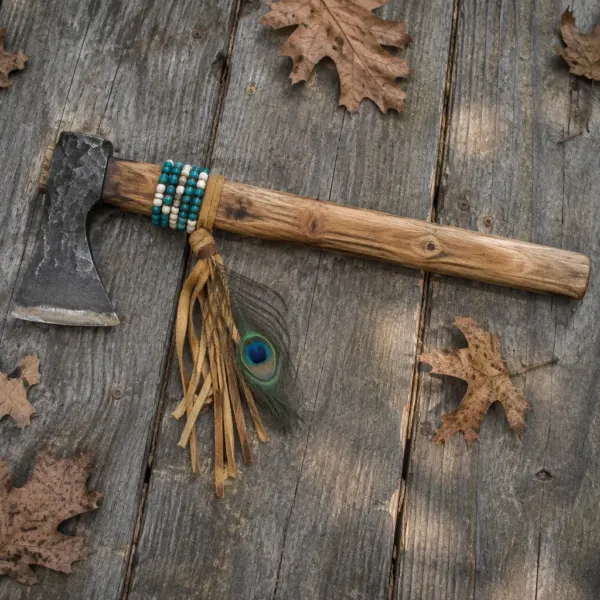
Humpback Rocks Carving Axe, White Oak
4.25 in blade · White oak
Carving Axe with a carving axe head with a long straight edge and a single bevel, hand-forged in high-carbon steel, on white oak.
$265.00Free US shipping -
 New
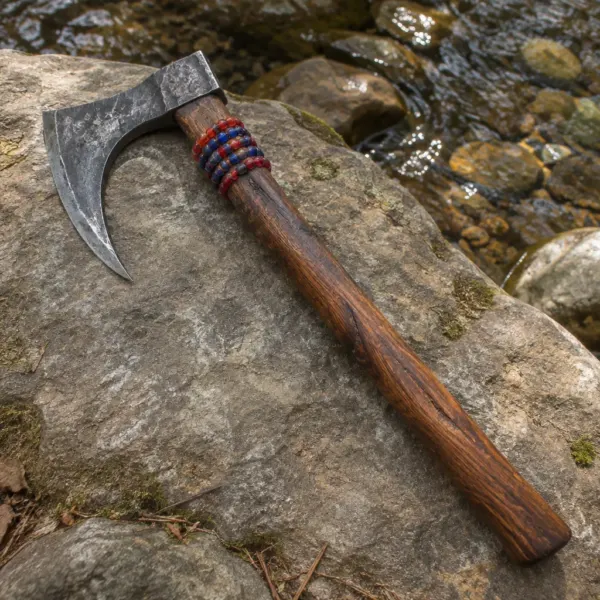
Charlies Bunion Bearded Hatchet, Black Cherry
4.25 in blade · Cherry
Bearded Hatchet with a bearded hatchet head with a long hooked bit, hand-forged in high-carbon steel, on black cherry.
$250.00Free US shipping -
 New
Harper Creek Camp Hatchet, White Oak
3.75 in blade · White oak
Camp Hatchet with a camp hatchet head with a convex bit, hand-forged in high-carbon steel, on white oak.
$215.00Free US shipping -
 New
Wesser Belt Axe, White Oak
3.25 in blade · White oak
Belt Axe with a small belt axe head with a flat poll, hand-forged in high-carbon steel, on white oak.
$210.00Free US shipping
Keep Reading

What to Put in a Fire Starter Kit (and What to Leave Out)
Spark source, char cloth, tinder, a tin that stays dry and a backup flame: what goes in a fire starter kit and how to keep it working.
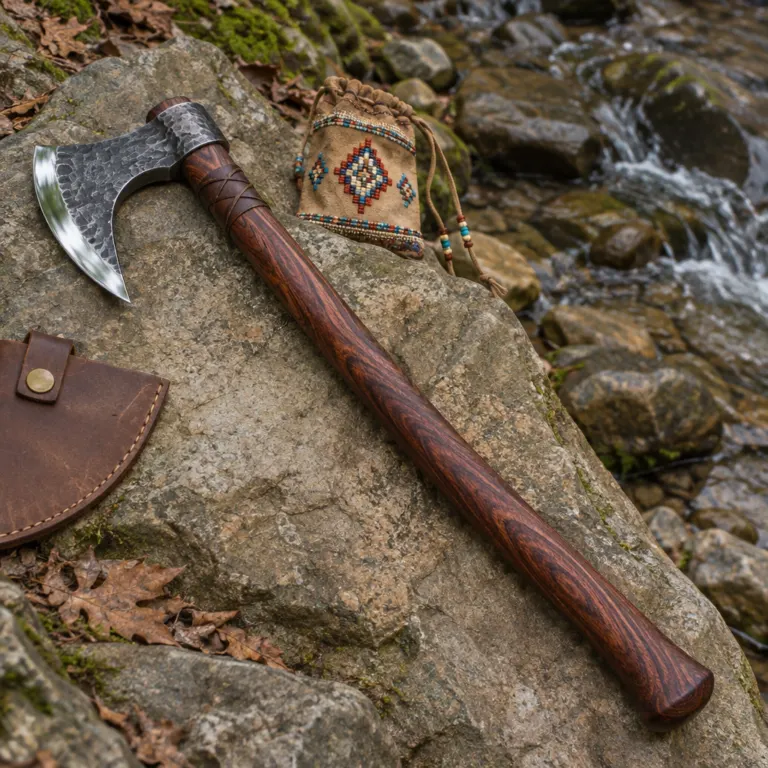
Battle Axe Types Through History, From the Francisca to the Tomahawk
The francisca, the bearded axe, the Dane axe, the poleaxe and the tomahawk, plus the truth about double bit axes.
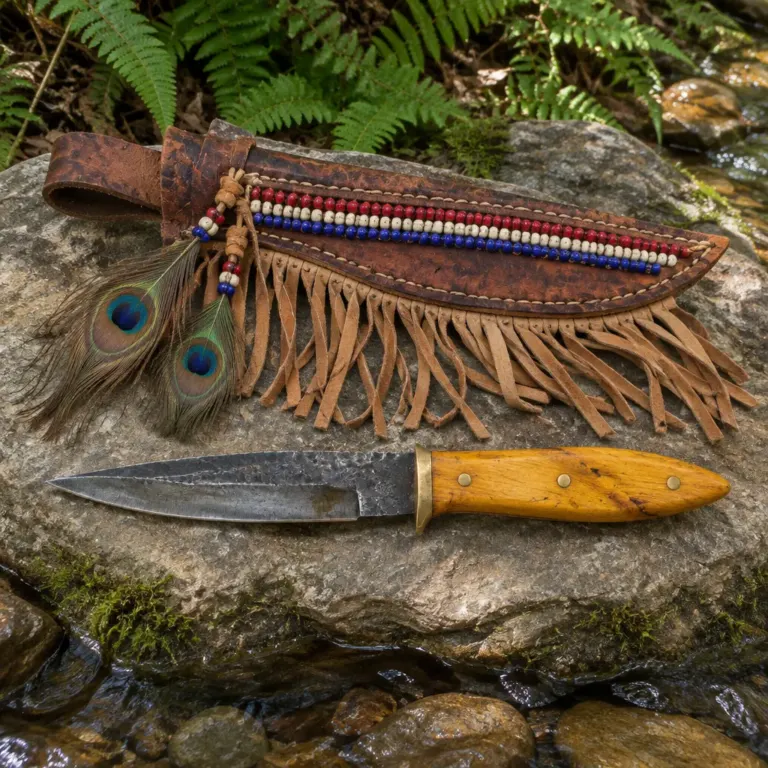
How to Carry a Boot Knife: Sheaths, Carry Options and Fit
What a boot knife is, the ways to wear one, what to look for in a sheath and why the law comes first.