Felling Axe vs Splitting Axe: Head Shape, Weight and Handle
A felling axe cuts across the grain to bring a tree down. A splitting axe drives along the grain to break a round apart. From across the yard they look alike. In the wood they behave nothing alike. Here is how to tell them apart and which one the job in front of you wants.
The Difference at a Glance
These are typical figures for full size axes, not rules. Makers vary, and so do the people swinging them.
| Felling axe | Splitting axe | |
|---|---|---|
| Main job | Chopping across the grain: felling, limbing, bucking | Splitting rounds along the grain |
| Head shape | Thin bit with slim cheeks that taper slowly | Wide wedge with thick or swelled cheeks |
| Edge | Thinner and keener | Thicker and blunter |
| Head weight | About 3 to 4 lb on a full size axe | About 3 to 6 lb, with mauls at 6 to 8 lb |
| Handle | About 28 to 36 in on a full size axe | Similar, from short hatchets up to about 36 in |
| Sticks in a round? | Often | Rarely |
| Chops a limb? | Well | Badly |
Head Geometry Is the Real Difference
Look down at an axe head from the top, through the eye, and you can see the whole story.
The felling axe head
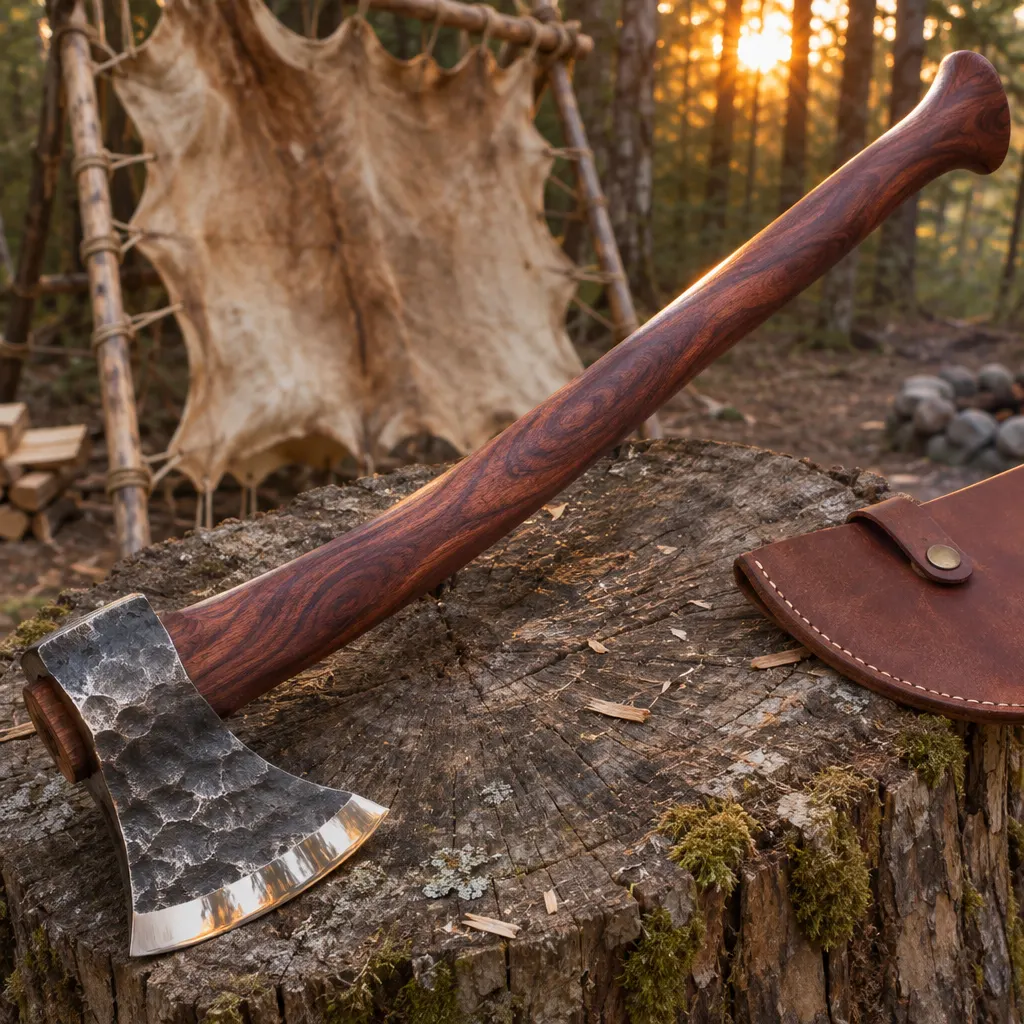
A felling axe has a fairly narrow bit and cheeks that taper slowly from the edge back toward the eye. That slim profile lets the edge sink deep across the fibers of a trunk. Each pair of swings takes out a chip. Do that in the right places and the tree comes down, ideally where you planned.
The splitting axe head
A splitting axe is a wedge with a handle. The cheeks flare out quickly, often with a swell behind the edge, so once the edge starts a crack the head forces the two halves apart. It does not need to cut deep. It needs to push.
The splitting maul
A maul is the splitting axe’s bigger and less patient cousin. It has a heavy head and a flat sledge face on the back for driving wedges. It is slow and tiring, and it will split almost anything you can stand on a block.
What happens when you swap them
Try to split a knotty round with a felling axe and the thin bit sinks in and sticks. Now you are splitting a round and rescuing an axe at the same time. Try to fell a tree with a splitting axe and the fat head bounces and bruises the wood instead of cutting it. Both will get there eventually. Neither will make you look good doing it.
Weight and Handle Length
A heavier head does more work per swing and tires you out sooner. The US Forest Service ax manual gives 3 to 3.5 pounds as a good starting weight for a working axe head, and suggests a handle that reaches from the ground to your hip as a starting point for length. For splitting, the same manual suggests a single bit head of 5.75 pounds on a 44 inch handle.
Longer handles add head speed and reach. Shorter handles add control. For felling, a long handle lets you swing through a big trunk from a safe stance. For splitting, a long handle also keeps a glancing blow farther from your feet, which your feet will appreciate.
Double bit axes
A double bit axe has two edges on one head. Woodsmen often kept one edge thin for clean chopping and the other a little thicker for knots and rough work. At heart it is a felling tool. Our Balsam Gap Hammered Double-Bit Axe is a full size double bit pattern, 28 inches overall and listed at 52 oz.
A felling axe stuck in a round means you are splitting wood and rescuing an axe at the same time.
Which Axe for Which Job
- Felling a standing tree: a felling axe. Or a chainsaw, if you have one and know how to use it. We will not be offended.
- Limbing a downed tree: a felling axe or a camp axe.
- Bucking logs to length: a felling axe, or a saw, which is usually faster.
- Splitting a pile of seasoned rounds: a splitting axe or a maul.
- Making kindling: a hatchet. Our camp axe vs hatchet guide covers that end of the woodpile.
Where Our Axes Fit
Straight talk. We hand forge trade axes, belt axes, camp axes and hatchets. They are traditional patterns with forged heads and hardwood handles, made one at a time. We do not make production splitting mauls. If you have two cords of oak to split before winter, a plain 6 or 8 pound maul is the right tool, and we will not pretend otherwise.
Here is what we do make that fits this topic:
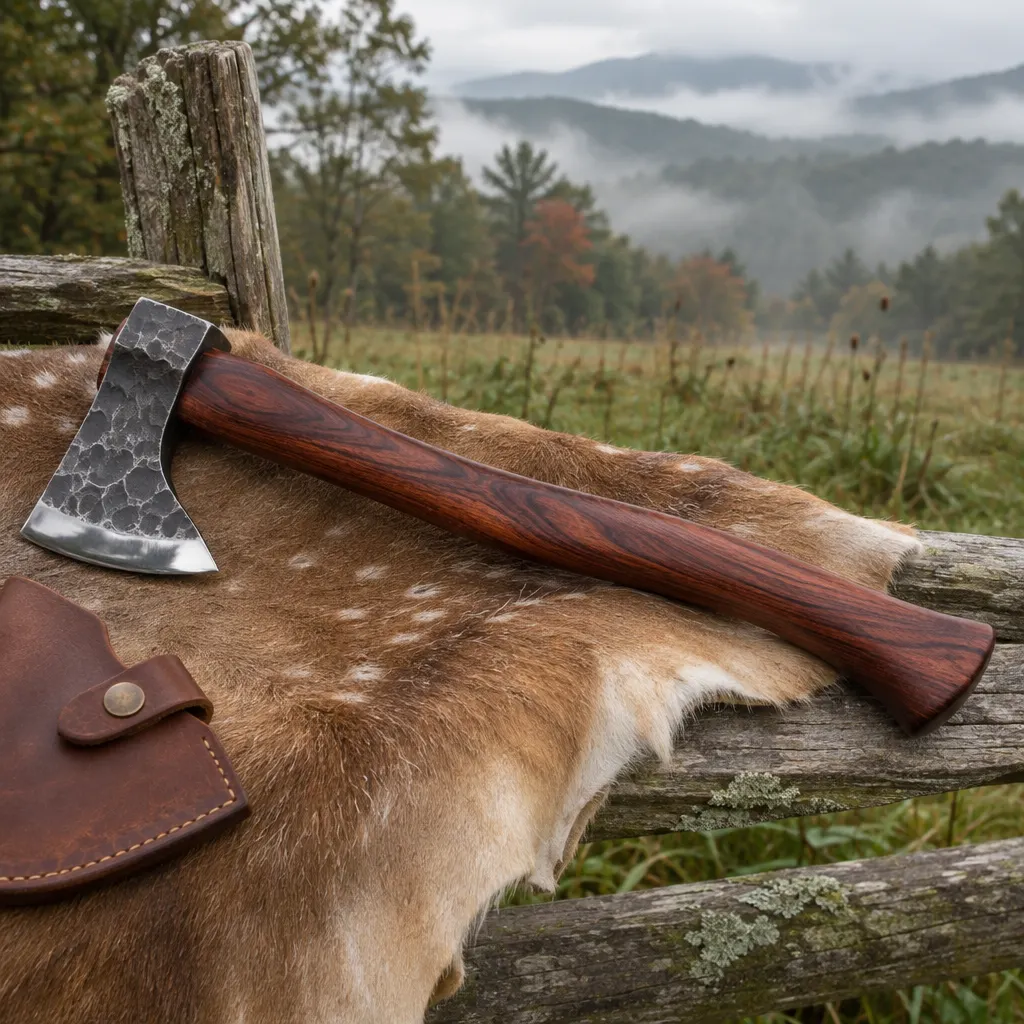
- Ridge Runner Hammered Felling Axe, Rosewood: a felling axe head, 30 inches overall with a 4.5 inch edge, listed at 56 oz. At that length it is a light felling pattern, handy for limbing and clearing and easy enough to carry.
- Walnut Mountain Hand-Forged Axe, Hickory: a small forest axe pattern with a slightly flared bit, 26 inches overall and 48 oz.
- Balsam Gap Hammered Double-Bit Axe: a full size double bit head on a rosewood handle.
- High Knob Mirror Camp Axe, Rosewood: a 20 inch camp axe at 32 oz, for limbing and light splitting at camp.
- Kindling Hammered Splitting Hatchet, Rosewood: a wedge shaped splitting head on a 15 inch handle. It splits kindling, not cordwood. The name was a hint.
You can see the rest of the range in axes and hatchets, and the smaller patterns in camp hatchets.
Caring for Either Axe
Keep the edge covered when the axe is not working. Wipe the head dry after use and give it a light coat of oil, since high carbon steel rusts. Store it out of the rain, not leaning in a wet woodpile. Check that the head is tight before every session, because a loose head on a long swing is a bad surprise for everyone nearby. The knife care guide applies to axe heads as well.
One more thing. Do not hammer steel wedges with the back of a hand forged trade or camp axe. The eye was not built for that. Use a maul or a sledge.
Questions and answers
What is the difference between a felling axe and a splitting axe?
A felling axe has a thin bit for cutting across the grain, so it chops deep. A splitting axe has a wide, wedge shaped head that forces wood apart along the grain. One chops and the other splits.
Can you use a felling axe to split wood?
You can on small, straight grained rounds. On bigger or knotty rounds the thin head tends to stick. A splitting axe or a maul does that job with less fuss.
Can you cut down a tree with a splitting axe?
Badly. The thick head does not bite deep, so you work much harder for every chip. Use a felling axe or a saw.
How heavy should a splitting axe be?
Splitting axes commonly carry heads of about 3 to 6 pounds, and mauls about 6 to 8 pounds. Heavier splits more per swing and wears you out sooner. Pick a weight you can swing accurately for an hour.
What length handle is best for a felling axe?
Full size felling axes usually have handles of about 28 to 36 inches. A Forest Service rule of thumb is a handle that reaches from the ground to your hip, then adjust for your height and reach.
Is a maul better than a splitting axe?
For big, knotty or stringy rounds, yes. The heavier head and sledge face power through and can drive wedges. For smaller rounds and a lighter day’s work, a splitting axe is quicker and easier on you.
Pieces that go with this guide: Ridge Runner Hammered Felling Axe, Rosewood, Walnut Mountain Hand-Forged Axe, Hickory, Balsam Gap Hammered Double-Bit Axe, High Knob Mirror Camp Axe, Rosewood and Kindling Hammered Splitting Hatchet, Rosewood.
Keep exploring
Shop by collection
- Native American-Style Knives
- Fixed Blade Knives
- Signature Collection
- EDC Knives
- Tomahawks & Axes
- Bearded Axes
- Throwing Axes and Tomahawks
- Tomahawks
- Double Bit Axes
- Axes & Hatchets
- Hunting & Skinning Knives
- Gut Hook Knives
- Skinning Knives
- Pocket Knives
- Antler and Bone Handle Knives
- Camp & Bushcraft Knives
- Neck Knives & Small Fixed Blades
- Bowie Knives
- Daggers
- Boot Knives
- Ring Pommel Knives
- Heritage Tools
- Fire Starting Kits
- Leather Awls
- Ulu Knives
- Gift Sets & Combos
- Damascus Knives
- War Clubs
- Spears & Lances
- Shop everything
Hand-Forged Axes and Hatchets
Felling, forest, trade and camp axe patterns with hickory, ash, oak and rosewood handles.
-
 New
Humpback Rocks Carving Axe, White Oak
4.25 in blade · White oak
Carving Axe with a carving axe head with a long straight edge and a single bevel, hand-forged in high-carbon steel, on white oak.
$265.00Free US shipping -
 New
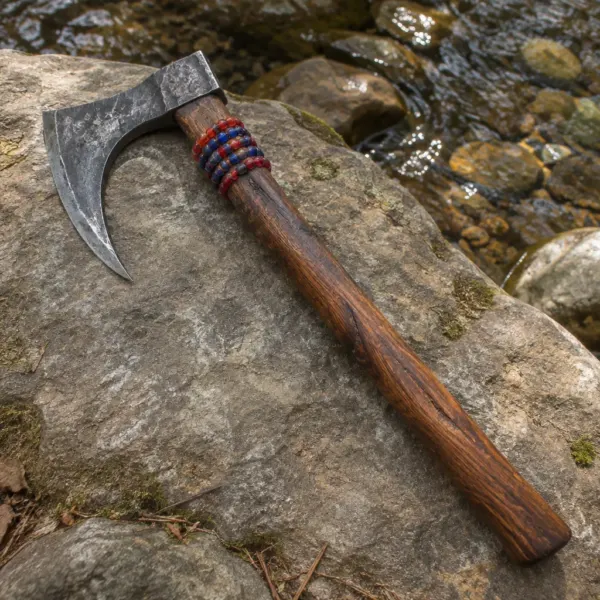
Charlies Bunion Bearded Hatchet, Black Cherry
4.25 in blade · Cherry
Bearded Hatchet with a bearded hatchet head with a long hooked bit, hand-forged in high-carbon steel, on black cherry.
$250.00Free US shipping -
 New
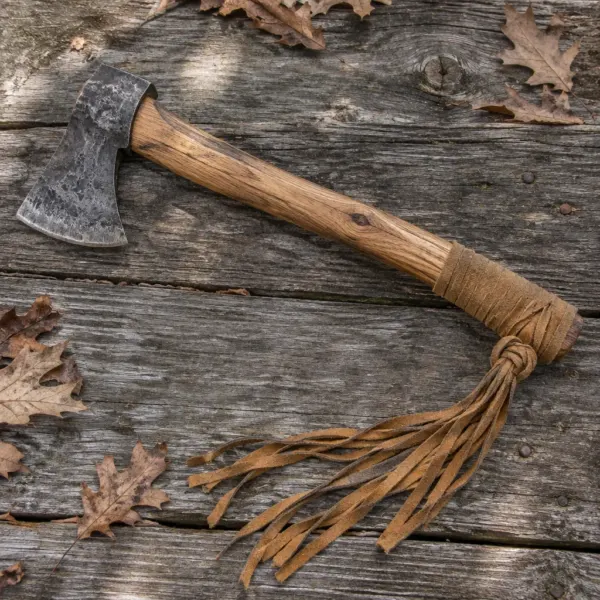
Harper Creek Camp Hatchet, White Oak
3.75 in blade · White oak
Camp Hatchet with a camp hatchet head with a convex bit, hand-forged in high-carbon steel, on white oak.
$215.00Free US shipping -
 New
Wesser Belt Axe, White Oak
3.25 in blade · White oak
Belt Axe with a small belt axe head with a flat poll, hand-forged in high-carbon steel, on white oak.
$210.00Free US shipping
Keep Reading

Ulu Knife History: The Woman’s Knife of the Arctic
Where the crescent knife came from, who used it, what it was made of before steel and how it became a kitchen favorite far from the Arctic.

Hatchet vs Axe: Which One You Need, Plus Maul vs Axe
One hand or two, short handle or long, and when a maul beats both. How to choose between a hatchet and an axe.
Pipe Tomahawk History: Trade, Diplomacy and How They Were Made
Where the pipe tomahawk came from, why it mattered in trade and treaty making, how smiths built one, and how to display one now.