What to Put in a Fire Starter Kit (and What to Leave Out)
A fire starter kit is a small tin or pouch that holds everything you need to get from a cold fire ring to a real flame, without relying on the lighter that ran dry in your glove box three summers ago. Here is what to put in a fire starter kit, why each piece earns its place, and how to keep the whole thing working when the weather turns.
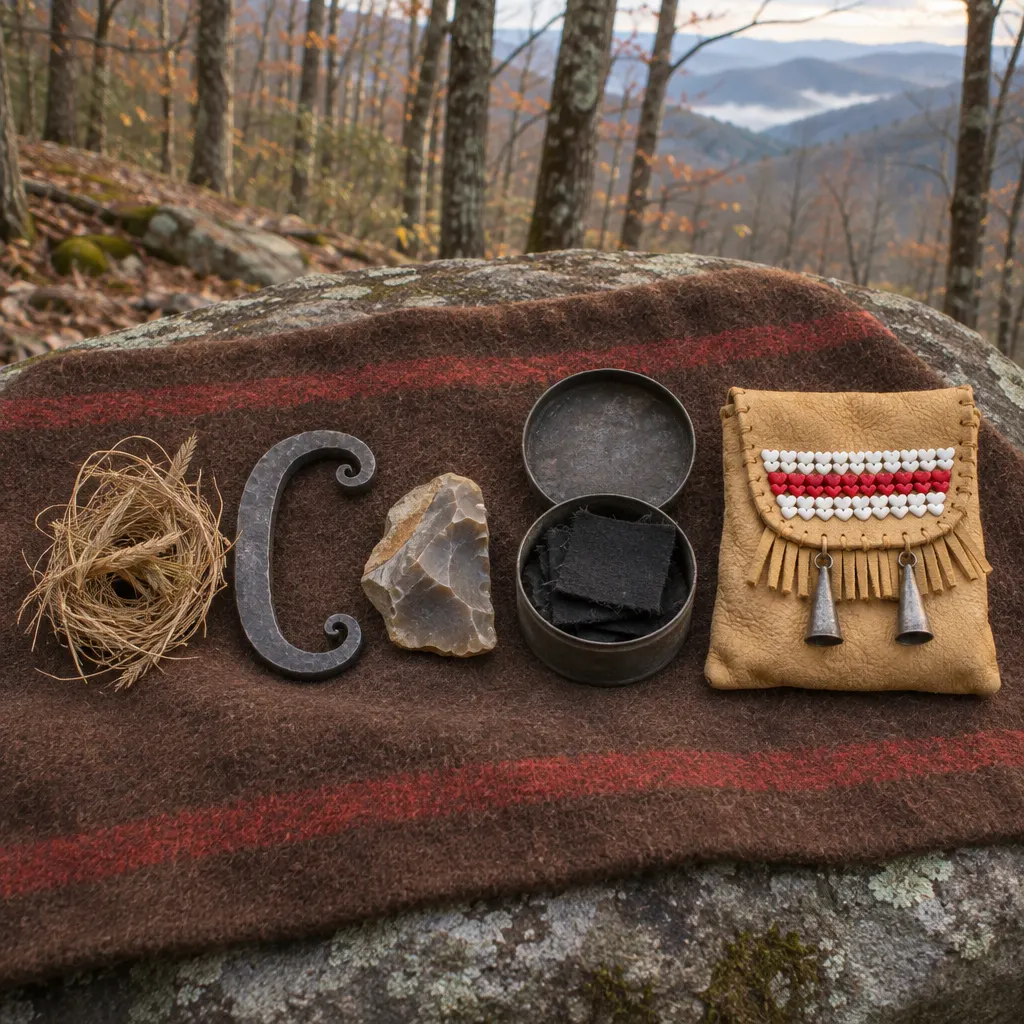
The Short List
A good kit covers four jobs: making a spark or flame, catching it, growing it into fire and keeping all of it dry. Pack this and you are covered:
- A spark source: a hardened steel striker with flint, a ferro rod, or both.
- Something to catch a spark: char cloth, or a natural catch like charred punkwood or tinder fungus.
- Tinder: fine, dry material that turns an ember or spark into flame.
- A fire extender: fatwood or cotton balls worked with petroleum jelly, for wet days.
- A backup flame: a lighter or stormproof matches.
- A container: a metal tin with a tight lid, a pouch, or both.
- A small knife: for feather sticks, shavings and scraping a ferro rod.
Everything else is a nice extra. If your kit gets so big it needs its own backpack, it has stopped being a kit.
Spark Sources
Flint and steel
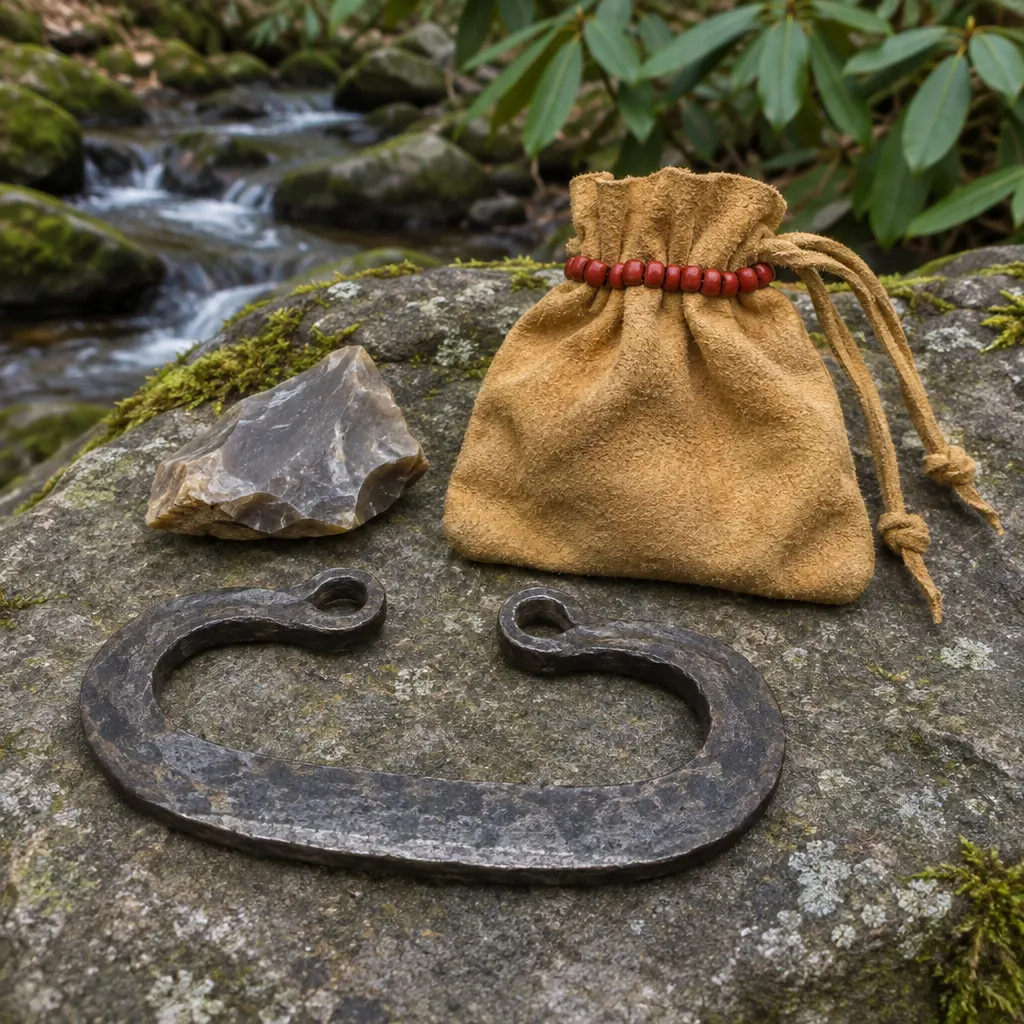
The oldest method still in common use. A hardened high carbon steel striker scrapes tiny particles of steel off on the sharp edge of a flint, and those particles burn as they fall. The sparks are small and fairly cool, so they need char cloth or another good catch to land on. In return you get a tool with nothing to wear out except the flint edge, which you can chip fresh. The full technique is in our guide on how to use flint and steel.
Ferro rod
A ferro rod is a bar of ferrocerium, a man made alloy of rare earth metals, mainly cerium, mixed with iron. Scrape it hard with the spine of a knife or a striker and it throws a shower of much hotter sparks than flint and steel. Those sparks will light fluffed cotton, dry grass and fine shavings directly, with no char cloth needed. Many new rods come with a dark coating that you have to scrape off before the first good spark. A ferro rod also works after it gets wet, once you wipe it off.
A backup flame
Carry a lighter or a few stormproof matches as well. Traditional skills are worth having, but pride is a poor heat source when your hands are numb. Matches go in a sealed container. A lighter should be checked now and then, since they have a habit of leaking in pockets.
Char Cloth and Other Spark Catchers
Char cloth
Char cloth is pure cotton or linen that has been heated in a closed tin until it turns black without burning away. It catches a flint spark and holds a slow glowing ember long enough for you to fold it into tinder. It has to be natural fiber. Polyester melts instead of charring, and the middle of a sleet storm is a poor time to find out your old shirt was a blend. Keep it in a sealed tin, because damp char cloth is about as useful as no char cloth.
Natural catches
Before woven cloth was easy to come by, people used what grew nearby. Dry, crumbly punkwood from a rotten log takes a spark once it is charred. Tinder fungus, the hoof shaped bracket fungus that grows on birch and beech, can be processed into amadou, a soft felt that catches sparks well. Chaga, the black lump that grows on birch, will also hold an ember. These are worth learning, but carry char cloth so you are not hunting for fungus in the dark.
A spark is easy. Catching it and growing it into flame is the whole skill.
Tinder and Kindling
Tinder is where most fires fail. It has to be fine, dry and plentiful. Here is how the common choices compare:
| Tinder | Lights from | Notes |
|---|---|---|
| Char cloth | Flint and steel or ferro rod | Holds an ember. Keep it sealed in a tin. |
| Jute twine, fluffed out | Ferro rod, or an ember folded in | Cheap and light. Pull the fibers apart until it looks like a bird’s nest. |
| Cotton balls with petroleum jelly | Ferro rod or flame | Burns slowly, long enough to dry and light damp kindling. Carry them in a small bag. |
| Fatwood shavings | Ferro rod or flame | Resin soaked pine. Lights even when the weather is damp. |
| Birch bark | Ferro rod or flame | The oils in the bark burn when wet. Peel it from fallen trees, not living ones. |
| Shredded cedar or juniper bark | An ember in a tinder nest | Free on the trail. Rub it between your palms until it is fluffy. |
Kindling and feather sticks
Have pencil thin dry sticks ready before you strike anything. If everything around you is wet, split a dead branch and carve feather sticks from the dry wood inside, curling thin shavings down the stick without cutting them off. A small fixed blade makes this easy. Our neck knives are a good size for it, and a neck knife is hard to leave behind because it hangs around your neck. The guide what is a neck knife explains how to wear one.
Storage: Tin, Pouch or Both
A small metal tin with a tight lid does two jobs. It keeps char cloth and tinder dry, and it doubles as the charring tin when you need to make more char cloth over the coals. Add a zip bag inside for anything that hates water.
A leather or buckskin pouch carries the striker and flint and keeps them from rattling around your pack. Our kits pair the two. The Conasauga Flint and Steel Kit, Beaded Pouch holds a hardened C-shaped striker, a piece of natural flint and a small tin with a starter supply of char cloth inside a beaded buckskin pouch.
Carbon steel rusts, so wipe your striker dry after use and give it a light coat of oil now and then. A rusty striker still sparks, but a clean one sparks better.
Kits and Strikers From Our Shop
If you would rather start with the hard part already forged, here is how our pieces fit into a kit:
- Complete kits: the Conasauga Flint and Steel Kit, Beaded Pouch and the Rock Spring Flint and Steel Kit each come with a hand forged striker, flint and char cloth in a buckskin pouch. Add tinder and a backup lighter and you are done.
- Strikers on their own: the Big Frog Flint and Steel Striker, C-Shaped comes with flint and a small drawstring pouch. The Jacks River Fire Steel Striker, Oval is a closed oval that hangs on a buckskin thong with a piece of flint.
- With a knife: the Plainville Knife Gift for Men: Neck Knife and Fire Steel pairs a drop point neck knife with a C-shaped fire steel and a beaded pouch for the steel and flint.
- The full possibles bag: the Holly Spring Possibles Set: Trade Knife, Fire Steel and Awl rolls a trade knife, a fire steel and an awl into one buckskin tool roll.
The rest of our strikers are in Fire Starting Kits, and awls, hide tools and carving knives sit alongside them in Heritage Tools.
Practice Before You Need It
A kit you have never used is a theory. Light a fire with it in the backyard on a calm day. Then try it in wind, then with cold hands, then with tinder you gathered yourself. You will learn which tinder works for you and how many strikes your char cloth really takes.
Check the kit at the start of each season. Replace the char cloth you used, top up the cotton balls, test the lighter and look the striker over for rust. Five minutes at the kitchen table saves a long, cold evening later.
Questions and answers
What is the most reliable fire starter?
In dry, calm weather a lighter is hard to beat. In wet weather a ferro rod is more dependable, because it sparks after a soaking. That is why a good kit carries more than one way to make fire.
How do you keep a fire starter kit dry?
Use a metal tin with a tight lid for char cloth and tinder, and put a zip bag inside it or around it. Keep the kit inside your pack rather than in an outside pocket. Store matches in their own sealed container.
Is flint and steel better than a ferro rod?
They are different tools. A ferro rod throws hotter sparks and lights more kinds of tinder. Flint and steel needs char cloth or a natural catch, but the striker lasts a lifetime and it is a skill worth having. Plenty of people carry both.
Does a ferro rod work when wet?
Yes. Wipe it dry on your clothes and strike it. Your tinder is the part that has to stay dry, so protect that first.
What makes a good fire starter kit gift?
A complete flint and steel kit with a forged striker, flint and char cloth in a pouch is a gift people actually use. Add a bundle of jute twine and a small tin so it is ready on day one.
Pieces that go with this guide: Conasauga Flint and Steel Kit, Beaded Pouch, Rock Spring Flint and Steel Kit, Big Frog Flint and Steel Striker, C-Shaped, Jacks River Fire Steel Striker, Oval, Plainville Knife Gift for Men: Neck Knife and Fire Steel and Holly Spring Possibles Set: Trade Knife, Fire Steel and Awl.
Keep exploring
Shop by collection
- Native American-Style Knives
- Fixed Blade Knives
- Signature Collection
- EDC Knives
- Tomahawks & Axes
- Bearded Axes
- Throwing Axes and Tomahawks
- Tomahawks
- Double Bit Axes
- Axes & Hatchets
- Hunting & Skinning Knives
- Gut Hook Knives
- Skinning Knives
- Pocket Knives
- Antler and Bone Handle Knives
- Camp & Bushcraft Knives
- Neck Knives & Small Fixed Blades
- Bowie Knives
- Daggers
- Boot Knives
- Ring Pommel Knives
- Heritage Tools
- Fire Starting Kits
- Leather Awls
- Ulu Knives
- Gift Sets & Combos
- Damascus Knives
- War Clubs
- Spears & Lances
- Shop everything
Fire Starting Kits
Hand forged fire steels with flint, char cloth tins and buckskin pouches.
-
 New
Newfound Mountain Fire Steel Striker
2.75 in blade · One-piece forged steel
Fire Steel Striker: c-shaped fire steel, hand-forged and hardened high-carbon steel.
$80.00Free US shipping -
 New
Conasauga Creek Flint and Steel Kit
2.75 in blade · One-piece forged steel
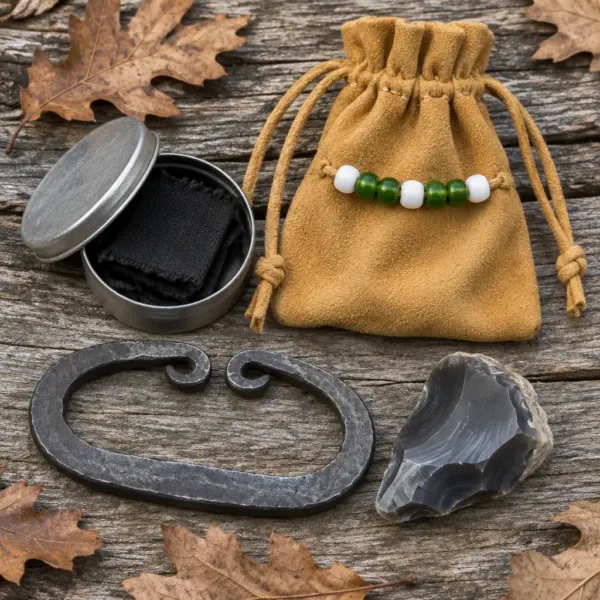
Flint and Steel Kit: oval fire steel, hand-forged and hardened high-carbon steel, with flint and char cloth. A complete flint and steel kit with a hand-forged fire striker.
$135.00Free US shipping -
 New
Bears Den Fire Steel Striker
3 in blade · One-piece forged steel
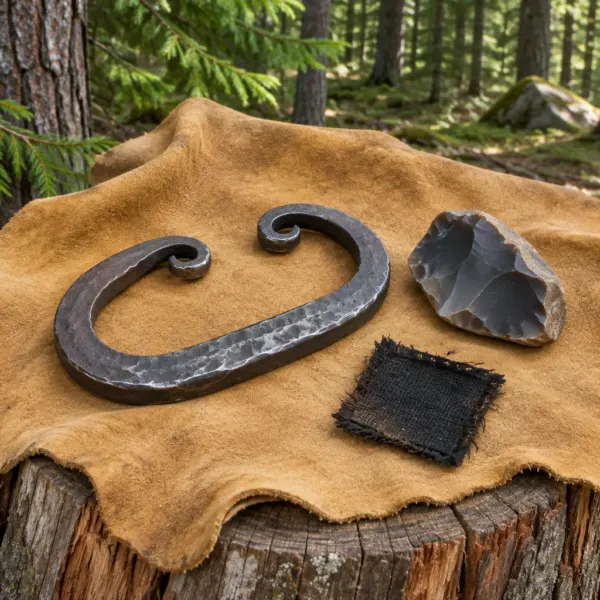
Fire Steel Striker: c-shaped fire steel, hand-forged and hardened high-carbon steel.
$80.00Free US shipping -
 New
Rock Spring Flint and Steel Kit
3 in blade · One-piece forged steel
Flint and Steel Kit: oval fire steel, hand-forged and hardened high-carbon steel, with flint and char cloth. A complete flint and steel kit with a hand-forged fire striker.
$135.00Free US shipping
Keep Reading
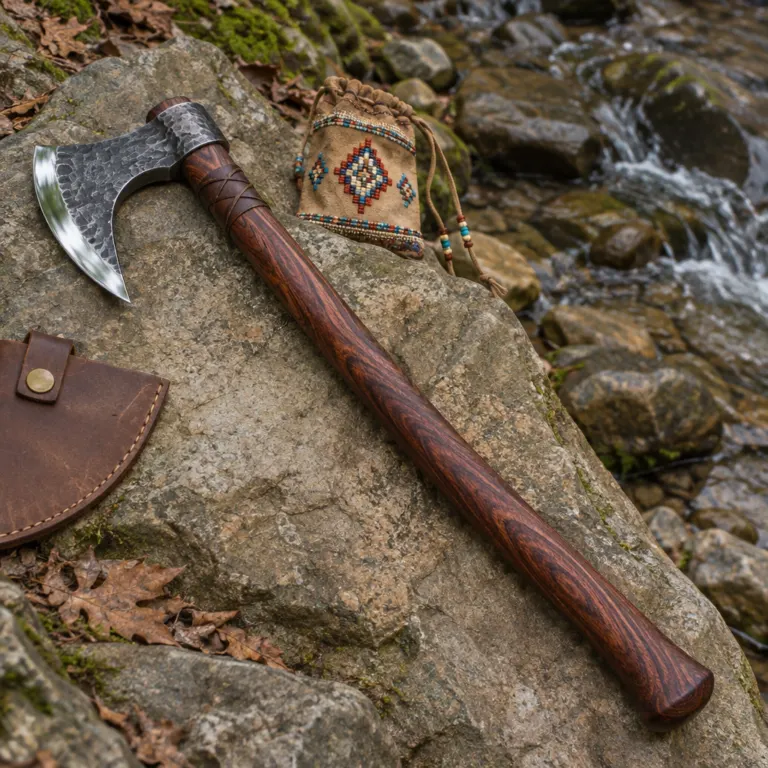
Battle Axe Types Through History, From the Francisca to the Tomahawk
The francisca, the bearded axe, the Dane axe, the poleaxe and the tomahawk, plus the truth about double bit axes.
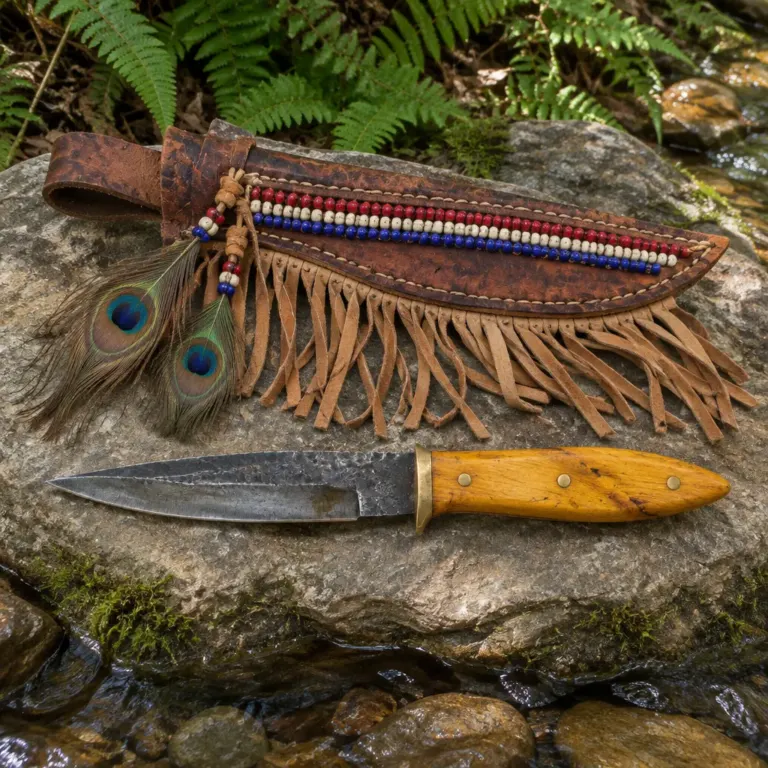
How to Carry a Boot Knife: Sheaths, Carry Options and Fit
What a boot knife is, the ways to wear one, what to look for in a sheath and why the law comes first.

How to Sharpen a Pocket Knife: Angle, Stones and Small Blades
The angle to hold, the strokes to use and how to handle short, curved and multi blade folders without losing a fingertip.