Hatchet vs Axe: Which One You Need, Plus Maul vs Axe
A hatchet is an axe you swing with one hand. An axe proper is swung with two. That settles most of the hatchet vs axe question, and the rest comes down to weight, edge and what you plan to cut. Get it wrong and you spend Saturday arguing with a log. Here is how to choose between them, plus the maul vs axe question for the woodpile. Our axes and hatchets cover the whole range.
The Short Answer
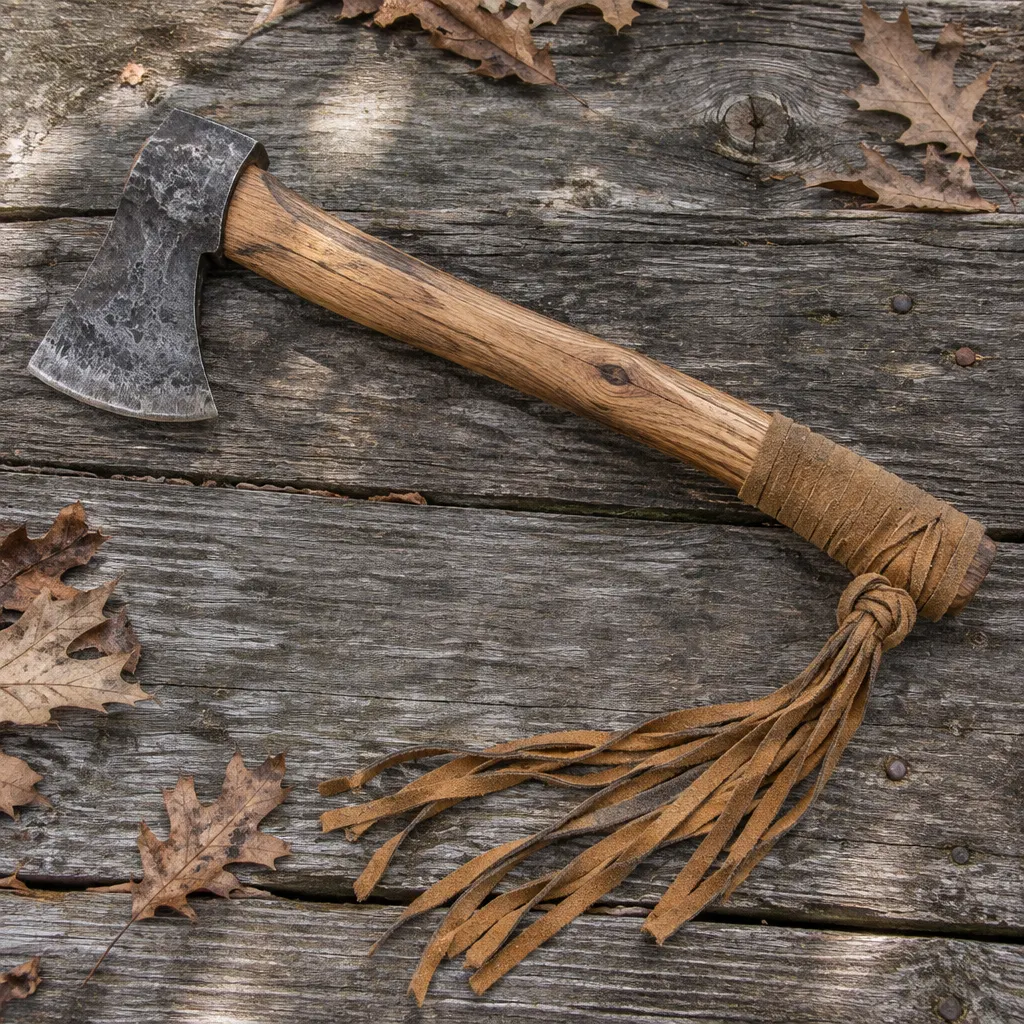
A hatchet has a short handle and a small head, and you use it in one hand for light, close work like kindling and camp chores. A full size felling axe is a different animal. The U.S. Forest Service’s axe manual gives a full size single bit axe a handle of 30 to 36 inches and a head of 3 to 6 pounds. It takes two hands and a long swing.
Between those two sits a whole family of belt axes, trade axes and small forest axes, roughly 13 to 28 inches long. That middle ground is where most people who camp should be shopping, though nobody ever tells them.
A hatchet on a big round is mostly a way to get tired.
Hatchet vs Axe Side by Side
| Hatchet | Axe | |
|---|---|---|
| Grip | One hand | Two hands |
| Length | 13 to 17 inches overall on our camp hatchets | 30 to 36 inch handle on a full size felling axe |
| Weight | 18 to 28 ounces in all on our camp hatchets | 3 to 6 pounds for the head alone on a felling axe |
| Best for | Kindling, small limbs, stakes, camp chores | Felling, limbing, bucking and splitting rounds |
| Swing | Short and close to your legs | Long arc that needs clear space |
When a Hatchet Is the Right Tool
A hatchet earns its keep around the fire. It splits kindling from small splits, trims limbs up to about wrist thickness, shapes tent stakes and, if the poll is flat, knocks them in. It fits in a pack and does not need much room to swing.
The Harper Creek Camp Hatchet, White Oak is a typical camp hatchet: 15 inches overall and 25 ounces, with a convex bit and a leather edge cover. For kindling, the Kindling Hammered Splitting Hatchet, Rosewood has a wedge shaped head built to pop small splits apart, at 15 inches and 26 ounces. The rest of our camp hatchets include bearded and trade patterns.
A hatchet has one danger people underrate. Because the swing is short, a glancing blow ends up near your shin or knee. Kneel when you split, work on a chopping block and keep your free hand off the piece you are hitting.
When You Need an Axe
If the wood is thicker than your thigh, or you are felling a tree, you want two hands on a long handle. The long arc puts real speed into the head, and speed does the cutting. A hatchet on a big round is mostly a way to get tired.
The Walnut Mountain Hand-Forged Axe, Hickory is a small forest axe at 26 inches and 48 ounces, a handy size for a cabin or a truck. The Ridge Runner Hammered Felling Axe, Rosewood is a full felling axe at 30 inches and 56 ounces.
The middle ground: belt axes and trade axes
For camping, a belt axe or a trade axe often beats both ends of the scale. The Wesser Belt Axe, White Oak is 13 inches and 21 ounces with a flat poll. The Jennings Creek Trade Axe, White Ash is 19 inches and 36 ounces, long enough to get a second hand on it for heavier cuts. If you are weighing a hawk against a hatchet as well, read our guide to tomahawk vs hatchet.
What to Look For When You Buy
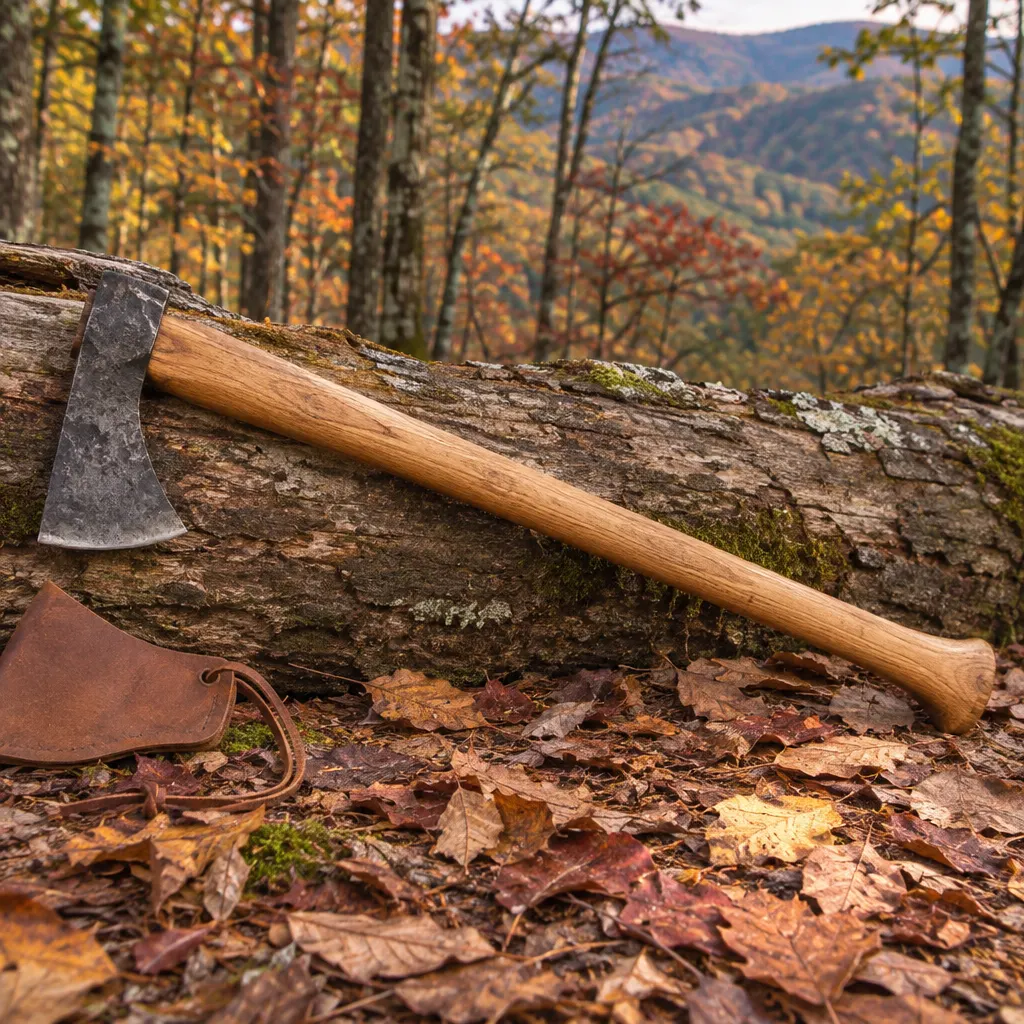
Whichever you choose, the checks are the same. Sight down the handle first. The grain should run along its length, not across it, because grain that runs out the side is where a handle breaks. Then look at the head where it sits on the handle. It should be tight with no gap or wobble, and it should line up straight with the handle rather than leaning off to one side.
Next, look at the edge cover, because you will use it more than you expect. Every axe and hatchet in our shop ships with a leather or buckskin edge cover, most with a tie thong and some with a snap strap. The heads on our axes and hatchets are hand forged high carbon steel, which takes a working edge quickly and touches up well on a stone or a file. It also rusts if you leave it wet, so dry the head after use and wipe on a little oil before it goes back in the cover.
Maul vs Axe
The maul vs axe question belongs to the woodpile, and the two tools work in opposite ways. An axe has a thin, sharp bit that slices into wood across the grain. That is how you fell and limb a tree. A splitting maul has a fat, wedge shaped head of about 6 to 8 pounds, a blunt edge and a flat back like a sledgehammer, usually on a long handle. It does not slice. It bursts a round apart along the grain.
A splitting axe sits between them, with a wedge shaped head of about 3 to 6 pounds. It is quicker to swing than a maul and splits better than a felling axe, which tends to stick in the round and stay there while you lever it out.
Which one for firewood?
- Big, knotty or wet rounds: a maul. The weight does the work when the grain fights back.
- Straight grained rounds of medium size: a splitting axe, which is quicker and easier on your back over a long afternoon.
- Kindling and small splits: a hatchet, kneeling at a block.
- Felling and limbing: an axe. A maul is the wrong tool for anything across the grain.
A plain word from the shop: we do not sell splitting mauls. A maul is a simple, heavy hardware store tool, and that is where you should buy one. Our closest piece is the splitting hatchet above, which is made for kindling, not for a cord of oak rounds. And never drive steel wedges with the back of an ordinary axe. The eye is not built for it and can spread or crack. Use a sledge.
Safety for Both
- Check that the head is tight on the handle before every use.
- Clear the swing. Look up and behind you for branches, and keep people well back from the full arc of the swing.
- Wear boots and eye protection when you split.
- Keep the edge cover on whenever the tool is not in your hand.
- Stop when you are tired. That is when the glancing blows happen.
Questions and Answers
What is the difference between a hatchet and an axe?
A hatchet is a small one handed axe with a short handle, used for light work like kindling and camp chores. An axe has a long handle and a heavier head and is swung with two hands for felling, limbing and splitting.
Can you cut down a tree with a hatchet?
A sapling, yes. Anything bigger is slow, tiring and less safe, because the short swing keeps the edge close to your body. Use an axe or a saw.
Is a maul better than an axe for splitting wood?
For big or knotty rounds, yes. The heavy wedge bursts the wood apart where an axe would stick. For straight grained medium rounds, a splitting axe is often quicker.
How long is a hatchet handle?
Short enough to use in one hand. Our camp hatchets measure 13 to 17 inches overall.
What size axe is best for camping?
For most camping, a belt axe, trade axe or small forest axe between about 13 and 26 inches. It handles firewood and limbs without the weight of a full felling axe.
Can you split wood with a hatchet?
Kindling and small splits, yes. Full size rounds need a splitting axe or a maul.
Pieces that go with this guide: Harper Creek Camp Hatchet, White Oak, Kindling Hammered Splitting Hatchet, Rosewood, Wesser Belt Axe, White Oak, Jennings Creek Trade Axe, White Ash, Walnut Mountain Hand-Forged Axe, Hickory and Ridge Runner Hammered Felling Axe, Rosewood.
Keep exploring
Shop by collection
- Native American-Style Knives
- Fixed Blade Knives
- Signature Collection
- EDC Knives
- Tomahawks & Axes
- Bearded Axes
- Throwing Axes and Tomahawks
- Tomahawks
- Double Bit Axes
- Axes & Hatchets
- Hunting & Skinning Knives
- Gut Hook Knives
- Skinning Knives
- Pocket Knives
- Antler and Bone Handle Knives
- Camp & Bushcraft Knives
- Neck Knives & Small Fixed Blades
- Bowie Knives
- Daggers
- Boot Knives
- Ring Pommel Knives
- Heritage Tools
- Fire Starting Kits
- Leather Awls
- Ulu Knives
- Gift Sets & Combos
- Damascus Knives
- War Clubs
- Spears & Lances
- Shop everything
Axes and Hatchets
Camp hatchets, belt axes, trade axes and full size axes.
-
 New
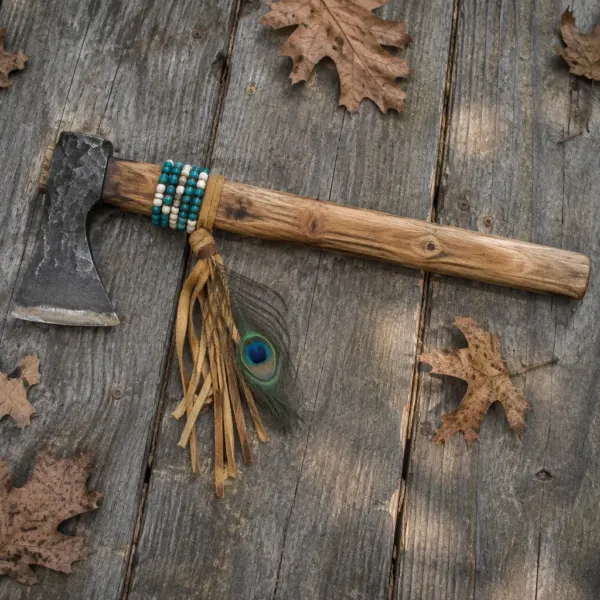
Humpback Rocks Carving Axe, White Oak
4.25 in blade · White oak
Carving Axe with a carving axe head with a long straight edge and a single bevel, hand-forged in high-carbon steel, on white oak.
$265.00Free US shipping -
 New
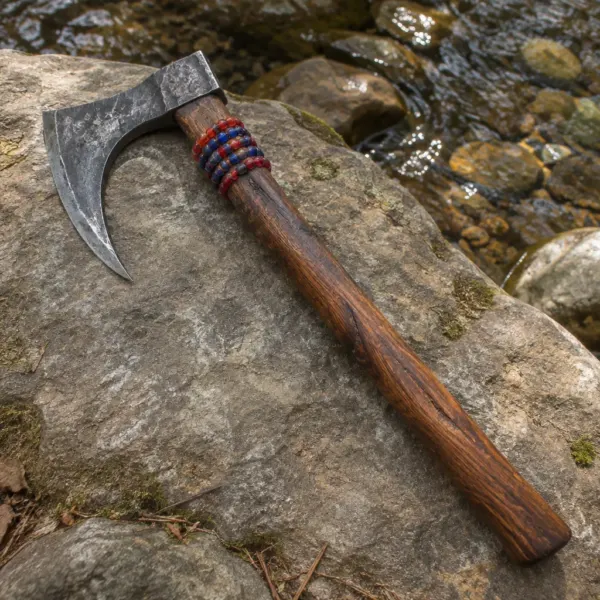
Charlies Bunion Bearded Hatchet, Black Cherry
4.25 in blade · Cherry
Bearded Hatchet with a bearded hatchet head with a long hooked bit, hand-forged in high-carbon steel, on black cherry.
$250.00Free US shipping -
 New
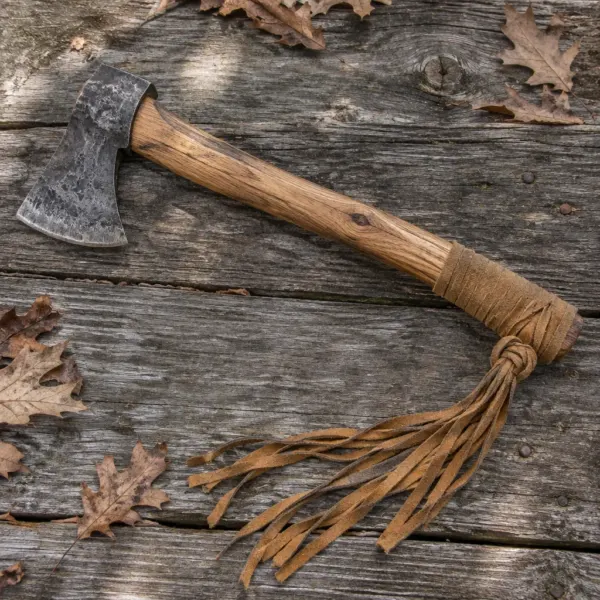
Harper Creek Camp Hatchet, White Oak
3.75 in blade · White oak
Camp Hatchet with a camp hatchet head with a convex bit, hand-forged in high-carbon steel, on white oak.
$215.00Free US shipping -
 New
Wesser Belt Axe, White Oak
3.25 in blade · White oak
Belt Axe with a small belt axe head with a flat poll, hand-forged in high-carbon steel, on white oak.
$210.00Free US shipping
Keep Reading
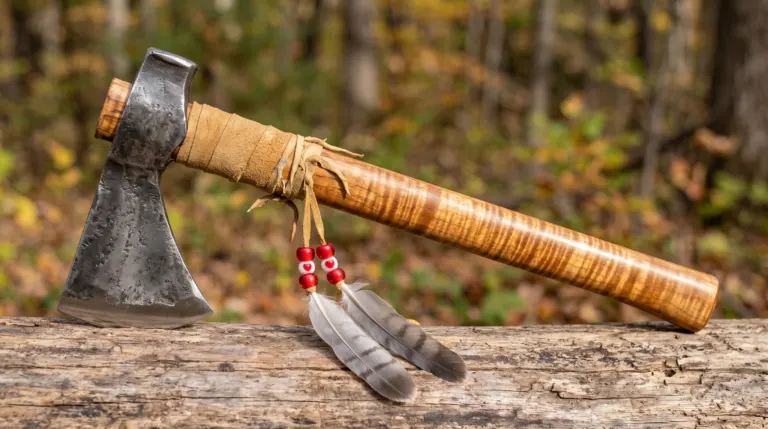
Pipe Tomahawk History: Trade, Diplomacy and How They Were Made
Where the pipe tomahawk came from, why it mattered in trade and treaty making, how smiths built one, and how to display one now.

What Is a Damascus Knife? Pattern Welded Steel, Wootz and Fakes
Pattern welded steel, the wootz blades that gave it a name, how the pattern is forged and etched, and how to tell real Damascus from a printed fake.
Viking Weapons: Axes, Spears, the Seax, Swords and Shields
What Vikings really carried: the spear, the axe, the seax, the sword and the round shield, and who could afford what.