Backyard Axe Throwing: How to Build a Target and Set Up a Safe Lane
Backyard axe throwing does not need a venue or a man in a plaid shirt reading you a waiver. It needs a target that holds a blade and a patch of ground where a bad throw lands in the grass instead of on somebody. Here is how to set up both.
Pick the Right Spot
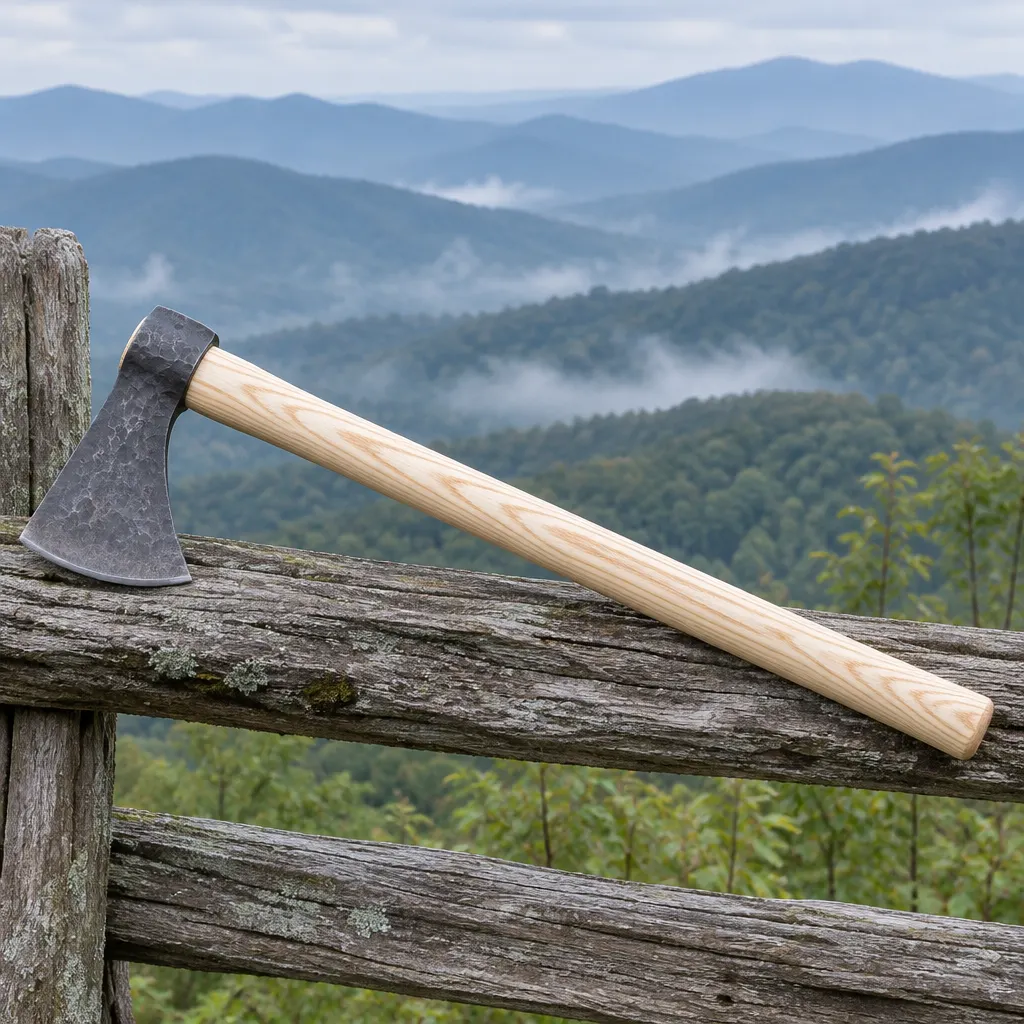
Look for flat, level ground with nothing behind the target that you would mind hitting. A grass or dirt bank behind the target is ideal. A wooden fence is fine if it has a backer. Your neighbor’s truck is not. Keep the lane away from paths, gates and doors, so nobody can wander into it while a throw is in the air.
For length, plan for the throwing distance plus room behind the thrower. Venue rules give a useful yardstick. The World Axe Throwing League sets its hatchet line 12 feet from the target and its big axe line at 15 feet, and asks for lanes at least 15 and 20 feet long. Leave width as well, because axes that miss do not always miss straight.
Two Kinds of Axe Throwing Target
An axe throwing target is simply wood that lets a blade in and holds on to it. There are two ways to get there, and both work in a yard.
The plank target
This is what you see at venues. Softwood boards, usually 2x10s or 2x12s, stand on end side by side against a plywood backer. The grain runs up and down, so the edge of the axe lands along the grain and sinks in. When the middle board wears out, you unscrew it and fit a new one, and the rest of the target carries on.
The end grain round
This is a thick slice cut across a log, with the end grain facing you. The blade slips between the fibers and the wood closes around it. A good round lasts a long time and forgives a lot. The catch is finding one big enough and getting it home, since a 2 foot round of green poplar does not ride well in a hatchback.
| Plank target | End grain round | |
|---|---|---|
| Wood | Pine, spruce or poplar boards, 2×10 or 2×12 | Cottonwood, poplar, pine or willow, 6 to 10 inches thick |
| Mounting | Posts or an A-frame with a plywood backer | A tripod of poles, an A-frame or a pair of posts |
| Repairs | Swap the worn center board | Turn the round, replace it when the middle is chewed out |
| Best for | Hatchets and league style practice | Tomahawks and casual throwing |
How to Build a Plank Target
- Build the frame. Set two 4×4 posts in the ground or build a freestanding A-frame from 2x4s. Screw a sheet of 3/4 inch plywood across it as the backer.
- Add the boards. Stand softwood 2x10s or 2x12s on end across the backer with no gaps between them. The International Axe Throwing Federation spec uses 2x10s cut to 4 feet over a 4 by 4 foot backboard, which is a sensible size for a yard too.
- Fix them from the back. Drive screws through the backer into the boards, or hold them with cleats along the outer edges. Never put a screw or a nail in the face of the target. An axe will find it.
- Set the height. Put the center of the bullseye about 60 inches off the ground, which is where league targets have it.
- Draw the rings. Tie a string to a screw at the center and swing circles with a marker. A 7 inch bullseye inside rings of 17 and 27 inches is a common backyard layout. Then take the screw out.
- Wet it. Mist or hose the face before you throw. Damp wood grips the blade and lasts longer.
Building a log round target
Cut the round 6 to 10 inches thick from softwood, as wide as you can find and still lift. Mount it on a tripod of poles, an A-frame or a pair of posts, with the center at about chest height and the face tilted back very slightly. Hose it down before a session and turn it now and then so the wear spreads around the face.
Never put a screw or a nail in the face of the target. An axe will find it.
How Far to Stand
| What you throw | Rough starting distance |
|---|---|
| Hatchet, one rotation | About 12 feet |
| 18 to 19 inch tomahawk, one rotation | 12 to 13 feet |
| Tomahawk, two rotations | 20 to 22 feet |
| Big axe, league style | 15 feet |
Treat these as starting marks. Your arm length and release will move them a little. If the handle hits first, step back half a pace. If the top of the head hits first, step in half a pace. Our guide on how to throw a tomahawk covers the grip and release in detail, and it applies just as well to a hatchet.
Set Up a Safety Zone
This is the part people skip because it is boring. It is also the part that keeps backyard axe throwing a hobby instead of a story you tell in an emergency room.
- Mark a throwing line on the ground with a board, paint or a rope. Nobody crosses it while anyone is throwing.
- Nobody stands beside or behind the target. Spectators stay well behind the thrower.
- One thrower per target. If you build two targets, put a solid divider or plenty of distance between the lanes.
- Everyone walks up to retrieve together, after every axe has been thrown.
- Check that each head is tight before every session.
- Leave the beer in the cooler until the axes are put away. Venues with insurance can make their own choices.
- Check local ordinances and any homeowners association rules before you build. Some places have opinions about axes in the yard.
Our throwing pieces are sold to adults 18 and older only, and the person at the line should be an adult as well.
What to Throw
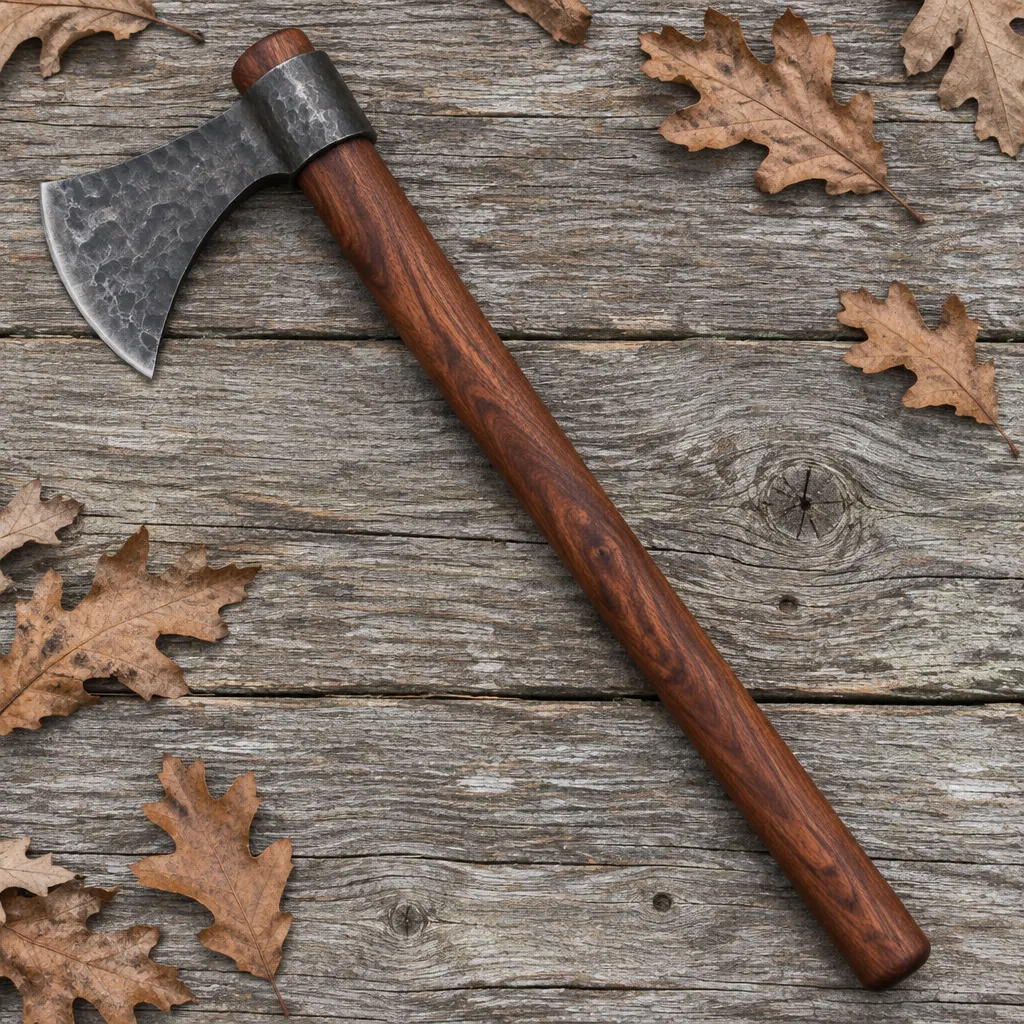
Throw plain pieces made for it. A throwing tomahawk with a straight, replaceable haft is the easiest thing to learn on and the cheapest to keep running, because a broken haft is a quick fix instead of a new axe. The Walker Falls Throwing Tomahawk is 19 inches and 22 ounces and the Snowbird Creek Throwing Tomahawk is 19 inches and 18 ounces, both with a balanced head on a white ash haft. The Brush Creek and the Aska do the same job on black cherry.
If you prefer a shorter piece, the Fox Squirrel Hammered Throwing Hatchet is 14 inches and 18 ounces and is our entry level axe for backyard targets. For something different, the Bear Creek Hammered Double-Bit Throwing Hawk has an edge on each side of the head, so pull it from the target with your hand well clear. Browse all of our throwing axes, and leave the beaded, pipe and spike pieces from our tomahawks collection on the wall where they belong. If you are still deciding on size and weight, the throwing hatchet guide goes through it.
Keeping the Target Going
Water is most of the maintenance. Hose the face before each session and give it a good soak now and then in dry weather. Turn a log round so the wear spreads, and swap the center plank on a board target as soon as it starts to crumble. If your target is portable, keep it out of the rain between sessions, since a waterlogged board goes soft and rots. Pick up the splinters around the target before somebody kneels on one.
Look after the axes as well. Sand any splinters out of the hafts, wipe the heads dry and oil them lightly before storing. A throwing edge only needs to be sharp enough to bite wood, so a few strokes with a file now and then keeps it working.
Questions and answers
What is the best wood for an axe throwing target?
Softwood. Pine, spruce or poplar boards for a plank target, or a cottonwood, poplar, pine or willow round for an end grain target. Avoid oak and other hardwoods, which bounce more axes than they hold.
How high should an axe throwing target be?
Put the center of the bullseye about 60 inches off the ground, roughly chest height on most adults. That matches league targets, so the habits you build in the yard carry over if you ever throw at a venue.
How far back do you stand for backyard axe throwing?
About 12 feet for a hatchet or an 18 to 19 inch tomahawk, and around 15 feet for a league style big axe. Adjust half a pace at a time until the axe lands edge first.
Do you need to soak an axe throwing target?
You do not need to soak it overnight, but wetting the face before each session helps a lot. Damp wood is softer, holds the blade better and splinters less. Just do not leave a portable target sitting in standing water.
Is backyard axe throwing legal?
There is no single answer. Rules vary by city, county and homeowners association, so check before you build. Keep the lane on your own land and point it away from roads, paths and neighbors.
What axe should a beginner throw?
A light, plain throwing hatchet or tomahawk with a straight handle, somewhere around 18 to 22 ounces. It is easy to control and easy to rehandle when you miss. Save the heavy and decorated pieces for later, or for the wall.
Pieces that go with this guide: Walker Falls Throwing Tomahawk, White Ash, Fox Squirrel Hammered Throwing Hatchet and Bear Creek Hammered Double-Bit Throwing Hawk.
Keep exploring
Shop by collection
- Native American-Style Knives
- Fixed Blade Knives
- Signature Collection
- EDC Knives
- Tomahawks & Axes
- Bearded Axes
- Throwing Axes and Tomahawks
- Tomahawks
- Double Bit Axes
- Axes & Hatchets
- Hunting & Skinning Knives
- Gut Hook Knives
- Skinning Knives
- Pocket Knives
- Antler and Bone Handle Knives
- Camp & Bushcraft Knives
- Neck Knives & Small Fixed Blades
- Bowie Knives
- Daggers
- Boot Knives
- Ring Pommel Knives
- Heritage Tools
- Fire Starting Kits
- Leather Awls
- Ulu Knives
- Gift Sets & Combos
- Damascus Knives
- War Clubs
- Spears & Lances
- Shop everything
Throwing Axes and Tomahawks
Balanced heads on straight hafts, made for the backyard target.
-
 New
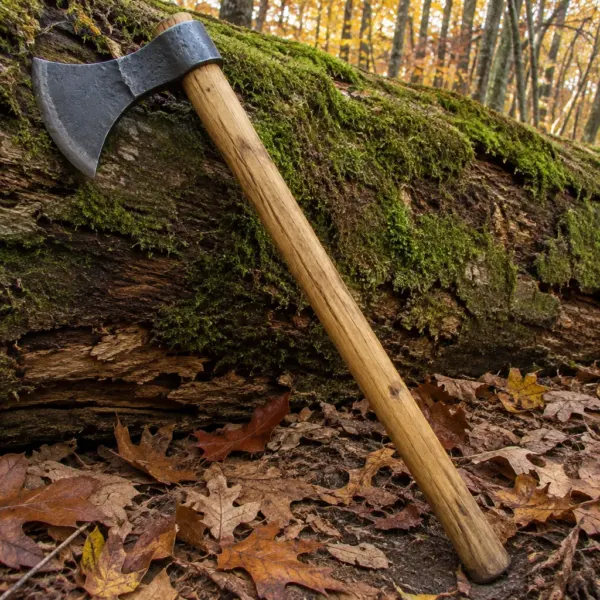
Hangover Lead Throwing Tomahawk, White Oak
3.25 in blade · White oak
Throwing Tomahawk with a balanced throwing hawk head with a tapered eye, hand-forged in high-carbon steel, on white oak. A balanced throwing tomahawk with a straight, replaceable haft.
$175.00Free US shipping -
 New
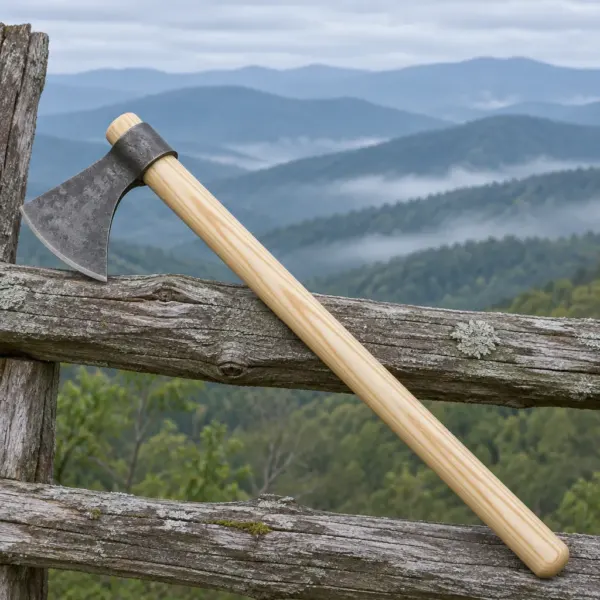
Walker Falls Throwing Tomahawk, White Ash
3.25 in blade · Ash
Throwing Tomahawk with a balanced throwing hawk head with a tapered eye, hand-forged in high-carbon steel, on white ash. A balanced throwing tomahawk with a straight, replaceable haft.
$170.00Free US shipping -
 New
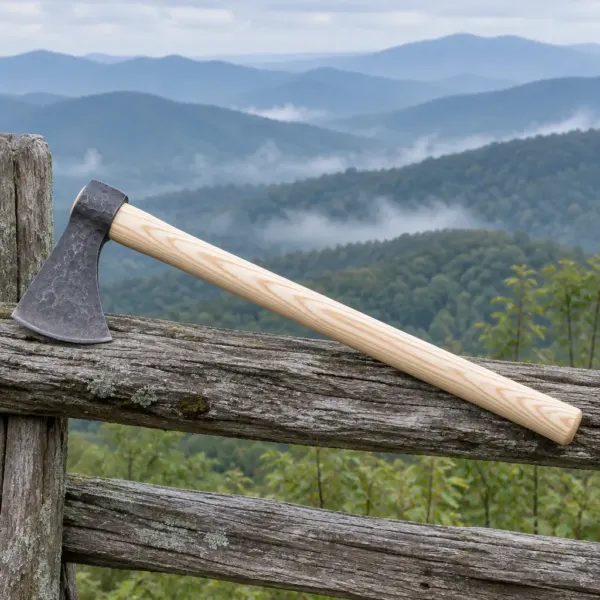
Snowbird Creek Throwing Tomahawk, White Ash
3.5 in blade · Ash
Throwing Tomahawk with a balanced throwing hawk head with a tapered eye, hand-forged in high-carbon steel, on white ash. A balanced throwing tomahawk with a straight, replaceable haft.
$185.00Free US shipping -
 New
Brush Creek Throwing Tomahawk, Black Cherry
3.25 in blade · Cherry
Throwing Tomahawk with a balanced throwing hawk head with a tapered eye, hand-forged in high-carbon steel, on black cherry. A balanced throwing tomahawk with a straight, replaceable haft.
$185.00Free US shipping
Keep Reading

Parts of a Knife: A Labeled Guide From Point to Pommel
Every part of a knife named and explained, from the point and spine to the choil, tang, pommel and sheath, with a labeled table to keep handy.

The Mohican War Club: Gunstock Clubs in History and on Film
The gunstock club from The Last of the Mohicans, the real history behind the shape, and how to pick one for a wall or a collection.

The Best Hunting Knife for Deer, Elk and Hog: How to Choose
Blade shape, length, steel and sheath for deer, elk and hog, and how to tell whether one good knife will do or a set is worth it.