Throwing Hatchet Guide: Weight, Handle Length and Where to Stand
A throwing hatchet is a small, plain axe made to turn once in the air and bury its edge in a log. Get the weight and the handle length right and most of the work is done. The rest is standing in the right spot and resisting the urge to throw it like the target owes you money.
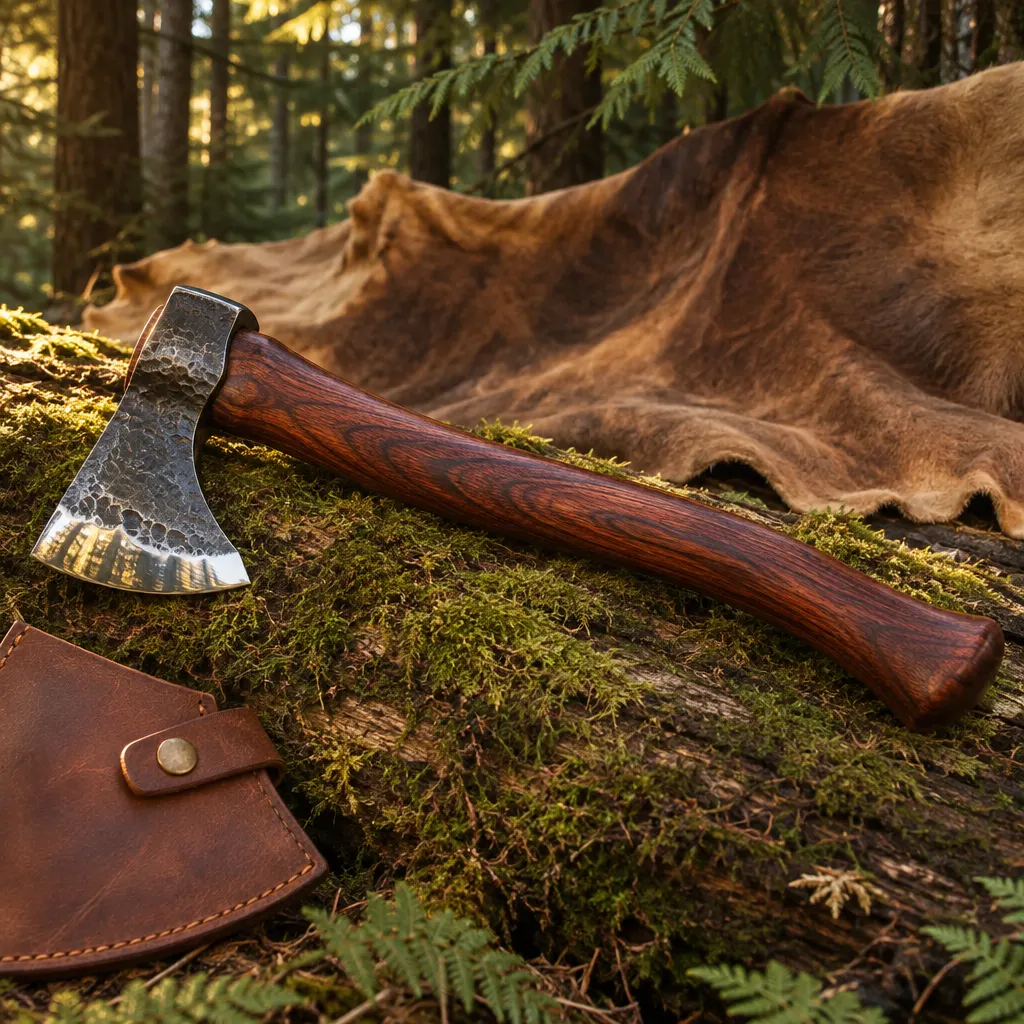
What Makes a Throwing Hatchet Different
Any hatchet will fly if you let go of it. Whether it sticks is another question. A throwing hatchet is built for the trip. The head is plain, with nothing on it that can snap off. The balance lets it rotate evenly, and the handle can be replaced when you miss the target and hit the frame instead. You will. Everyone does.
A camp hatchet is built for a different job. It carries more steel behind the edge so it can split, and it often has a flat poll for driving stakes. That extra mass is welcome on a chopping block and much less welcome when you are trying to time a rotation. That is why our throwing axes and tomahawks are the plainest pieces in the catalog.
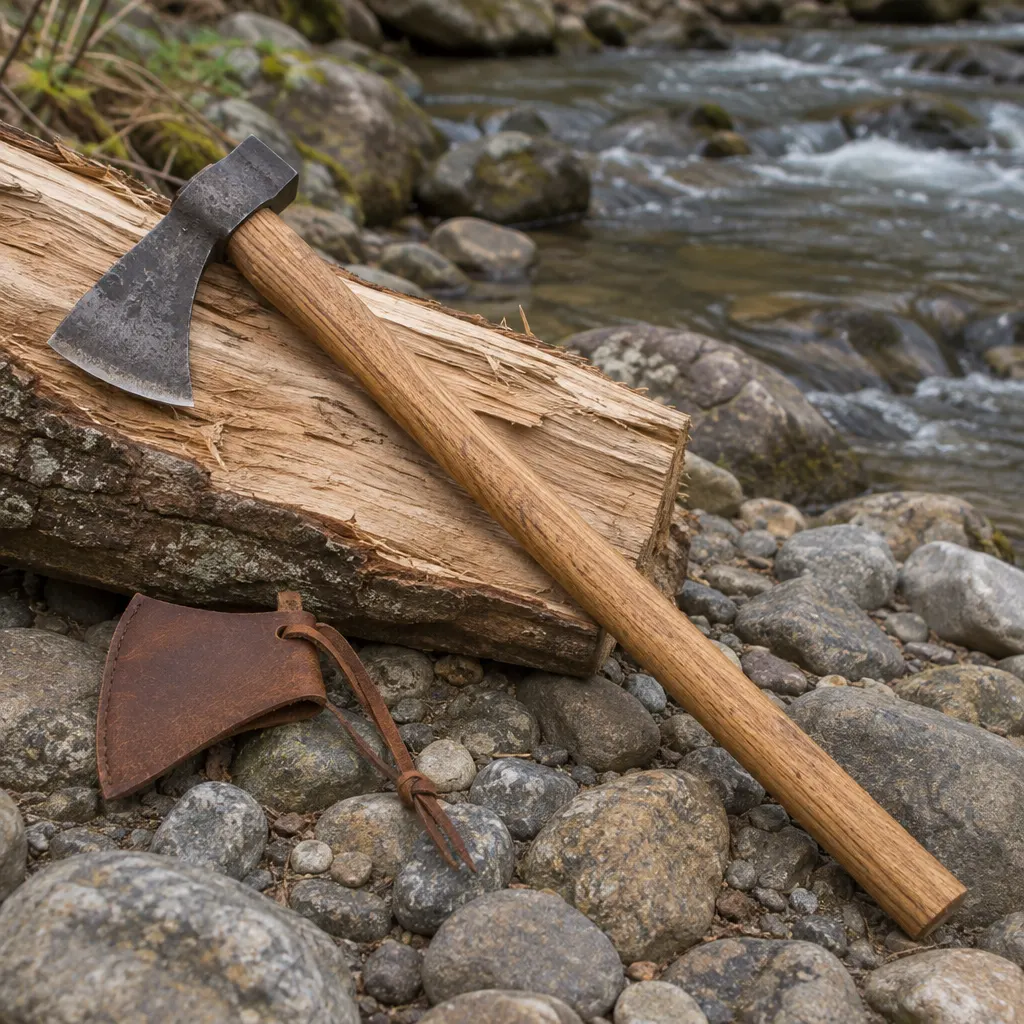
How Heavy Should a Throwing Hatchet Be?
Most adults do well with something between about 18 and 26 ounces all in. Go much lighter and the hatchet gets twitchy and bounces off on a slightly bad throw. Go much heavier and it sticks hard, but your shoulder starts filing complaints around the fortieth throw.
Our own throwing pieces sit at the lighter end of that range. The Fox Squirrel Hammered Throwing Hatchet weighs 18 ounces, the Hellbender Hammered Throwing Tomahawk 19 ounces and the Paint Rock Throwing Tomahawk 21 ounces. That is plenty of weight to bite into softwood without wearing you out by lunch.
Light or heavy for a beginner?
Start light. A lighter hatchet is easier to control, so you can repeat the same motion over and over, and repetition is the whole game. Once your release is consistent, try something heavier and see whether you like the way it hits. Plenty of good throwers never move up, and nobody hands out medals for suffering.
Handle Length and Rotation
The handle decides how fast the hatchet spins and how far back you need to stand. A short handle turns quickly, so it needs less distance to finish one rotation. A long haft turns slower and asks for more room. Neither is better. They just put you on different marks.
If you plan to throw in a league, read the rule book before you buy anything. The World Axe Throwing League, for example, limits a competition hatchet to 19 inches long with a cutting edge no longer than 4 inches. Nobody measures in the backyard, but that is a sensible size to aim for anyway. Here is how our throwing pieces compare.
| Piece | Overall length | Handle | Weight | Blade |
|---|---|---|---|---|
| Fox Squirrel Throwing Hatchet | 14 in | Rosewood, 13 in | 18 oz | 3 in |
| Del Rio Throwing Tomahawk | 16 in | Hickory, 15.5 in | 19 oz | 3 in |
| Hellbender Throwing Tomahawk | 16 in | Rosewood, 15 in | 19 oz | 3 in |
| Paint Rock Throwing Tomahawk | 17 in | Hickory, 16.5 in | 21 oz | 3.25 in |
| Hangover Lead Throwing Tomahawk | 19 in | White oak, 17 in | 18 oz | 3.25 in |
Where to Stand
For one full rotation, most people end up around 12 to 13 feet from the target with an 18 to 19 inch tomahawk, and a touch closer with a short hatchet. League lanes put the hatchet line at 12 feet, which tells you roughly where to start. Pace off five normal steps from the target, turn around and throw from there. Then let the hatchet tell you where you should have stood.
Reading a bad stick
- The handle hits first: the hatchet has not turned far enough. Step back half a pace.
- The top of the head hits first: it has turned too far. Step in half a pace.
- It hits flat on its side: your wrist is rolling. Keep the edge lined up with the target from start to finish.
Change one thing at a time. If you move your feet and change your grip on the same throw, you will never know which one fixed it. Our guide on how to throw a tomahawk covers the grip, the swing and the release step by step, and every word of it applies to a hatchet.
Grip and Release
Hold the handle near the end, firm enough to control it and loose enough to let it go. Think handshake, not hammer. Bring the hatchet straight back over your shoulder, swing forward in one smooth line and let go when your arm points at the target. Do not flick the wrist. The hatchet already knows how to rotate. Your job is to stop interfering with it.
Power is the most common mistake. A hard throw adds spin you did not ask for and wrecks your timing. Throw at about the pace you would toss a set of keys to a friend you actually like.
Power is the most common mistake. The hatchet already knows how to rotate.
The Right Target Wood
Soft, straight-grained wood holds a blade. Hard wood throws it back at you. Cottonwood, poplar, pine and willow are the usual choices. Oak looks tough and handsome, and it will bounce half your throws onto the grass.
You have two options. A thick slice of log with the end grain facing you lets the blade sink between the fibers and lasts a long time. A wall of softwood planks set on end is the venue style, and you can swap out the center board when it gets chewed up. Wet either one with a hose before you throw, since damp wood grips better and splinters less. If you want to build a proper setup, our backyard axe throwing guide walks through both targets and the safety zone around them.
Safety Before the First Throw
- Nobody stands beside or behind the target. Not even the friend who says he has good reflexes.
- Onlookers stay behind the thrower, well clear of the swing.
- One thrower per target. Everyone walks up together to pull blades, and only after every hatchet has been thrown.
- Check that the head is tight on the handle before each session and after any hard miss.
- Wear closed shoes. A dropped hatchet has no respect for sandals.
- Throw on your own land or at a range that allows it, and check local rules first.
Our throwing pieces are sold to adults 18 and older, and the same age limit is a good rule for who throws in your yard.
Throwing Hatchet or Camp Hatchet?
If you want one tool for the woodpile and the target, you will end up compromising on both. A camp hatchet such as the Woodsmoke Hammered Camp Hatchet is made for kindling, stakes and clearing around the fire ring. You can throw it, but missed throws are hard on any handle, and a camp hatchet handle is not something you want to replace every few weeks.
A throwing hatchet is cheap to keep running. When a haft cracks, you knock it out and fit a new one. Keep a hatchet from our camp hatchets range for the fire and a throwing piece for the target. The camp hatchet will thank you by staying sharp.
Caring for a Throwing Hatchet
Handles are consumable on a throwing hatchet. Sand out splinters as they appear, rub a little oil into the wood and keep a spare haft on hand. The heads are hand-forged high-carbon steel, so wipe off any moisture after a session at a wet target and give the steel a light coat of oil before you put it away.
Keep the edge keen enough to bite into wood and no sharper. A razor edge chips on bad throws and turns pulling the hatchet out of the target into a careful business. A few passes with a file or a coarse stone now and then is all a throwing edge needs.
Questions and answers
What is the best weight for a throwing hatchet?
For most adults, somewhere between 18 and 26 ounces all in. Beginners usually do better at the lighter end because a light hatchet is easier to repeat. Heavier hatchets stick hard but tire the arm quickly.
How far away do you stand to throw a hatchet?
Start at about 12 feet, or five normal paces, and adjust half a pace at a time. Short hatchets rotate faster and may need a little less room. An 18 to 19 inch tomahawk usually lands its single rotation at 12 to 13 feet.
Can you throw a regular camp hatchet?
You can, but it is not ideal. Camp hatchets carry more weight toward the edge and are built to split, and missed throws are hard on the handle. A dedicated throwing hatchet with a replaceable handle is cheaper to keep going.
Should a throwing hatchet be sharp?
Sharp enough to bite into wood, and nothing more. A very fine edge chips on bad throws and is a hazard when you pull the hatchet out of the target.
What wood is best for a hatchet throwing target?
Soft, straight-grained wood such as cottonwood, poplar, pine or willow. Use an end grain round or planks set on end, and wet the face before each session. Avoid oak and other hardwoods, which bounce more than they hold.
Is a throwing hatchet the same as a throwing tomahawk?
They are close cousins. Both are small one hand axes made to rotate and stick. A tomahawk usually has a straight haft that seats through the eye from the top, while a hatchet head is often fixed with a wedge. Either one throws well when the weight and length suit you.
Pieces that go with this guide: Fox Squirrel Hammered Throwing Hatchet, Del Rio Throwing Tomahawk, Hickory and Hangover Lead Throwing Tomahawk, White Oak.
Keep exploring
Shop by collection
- Native American-Style Knives
- Fixed Blade Knives
- Signature Collection
- EDC Knives
- Tomahawks & Axes
- Bearded Axes
- Throwing Axes and Tomahawks
- Tomahawks
- Double Bit Axes
- Axes & Hatchets
- Hunting & Skinning Knives
- Gut Hook Knives
- Skinning Knives
- Pocket Knives
- Antler and Bone Handle Knives
- Camp & Bushcraft Knives
- Neck Knives & Small Fixed Blades
- Bowie Knives
- Daggers
- Boot Knives
- Ring Pommel Knives
- Heritage Tools
- Fire Starting Kits
- Leather Awls
- Ulu Knives
- Gift Sets & Combos
- Damascus Knives
- War Clubs
- Spears & Lances
- Shop everything
Throwing Hatchets and Tomahawks
Plain, balanced heads on straight hafts, made to throw and easy to rehandle.
-
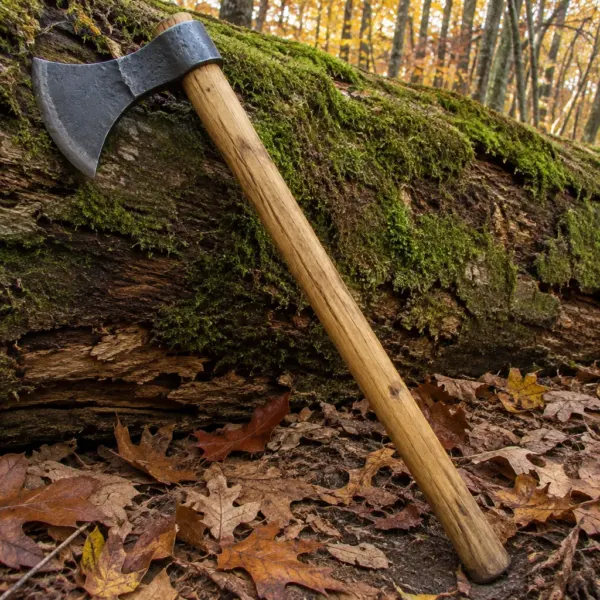 New
Hangover Lead Throwing Tomahawk, White Oak
3.25 in blade · White oak
Throwing Tomahawk with a balanced throwing hawk head with a tapered eye, hand-forged in high-carbon steel, on white oak. A balanced throwing tomahawk with a straight, replaceable haft.
$175.00Free US shipping -
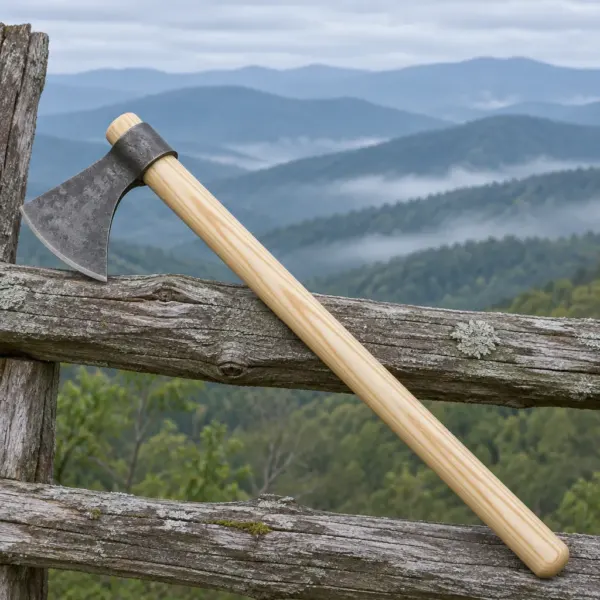 New
Walker Falls Throwing Tomahawk, White Ash
3.25 in blade · Ash
Throwing Tomahawk with a balanced throwing hawk head with a tapered eye, hand-forged in high-carbon steel, on white ash. A balanced throwing tomahawk with a straight, replaceable haft.
$170.00Free US shipping -
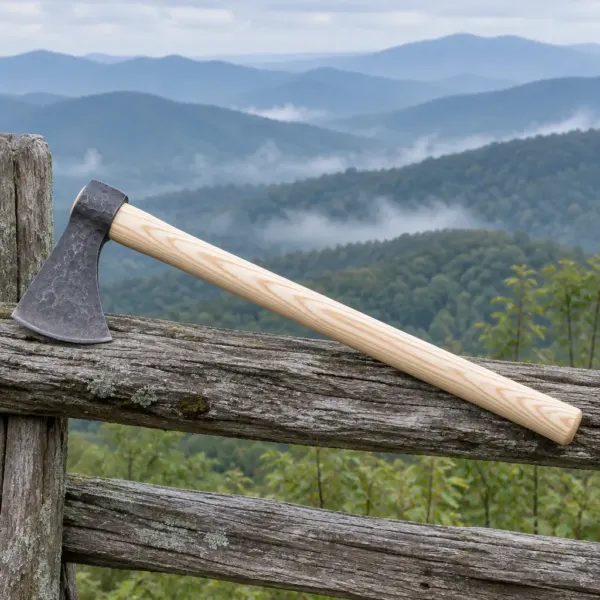 New
Snowbird Creek Throwing Tomahawk, White Ash
3.5 in blade · Ash
Throwing Tomahawk with a balanced throwing hawk head with a tapered eye, hand-forged in high-carbon steel, on white ash. A balanced throwing tomahawk with a straight, replaceable haft.
$185.00Free US shipping -
 New
Brush Creek Throwing Tomahawk, Black Cherry
3.25 in blade · Cherry
Throwing Tomahawk with a balanced throwing hawk head with a tapered eye, hand-forged in high-carbon steel, on black cherry. A balanced throwing tomahawk with a straight, replaceable haft.
$185.00Free US shipping
Keep Reading

Backyard Axe Throwing: How to Build a Target and Set Up a Safe Lane
How to build an axe throwing target, how far to stand, where nobody should stand and what to throw, for a lane in your own yard.

Parts of a Knife: A Labeled Guide From Point to Pommel
Every part of a knife named and explained, from the point and spine to the choil, tang, pommel and sheath, with a labeled table to keep handy.

The Mohican War Club: Gunstock Clubs in History and on Film
The gunstock club from The Last of the Mohicans, the real history behind the shape, and how to pick one for a wall or a collection.