How to Close a Pocket Knife Safely, Lock by Lock
Opening a pocket knife is the easy half. Closing it is where people get cut, usually because the fingers holding the handle are parked exactly where the edge is about to land. Here is how to close a pocket knife safely, one mechanism at a time, using knives from our pocket knives as examples.
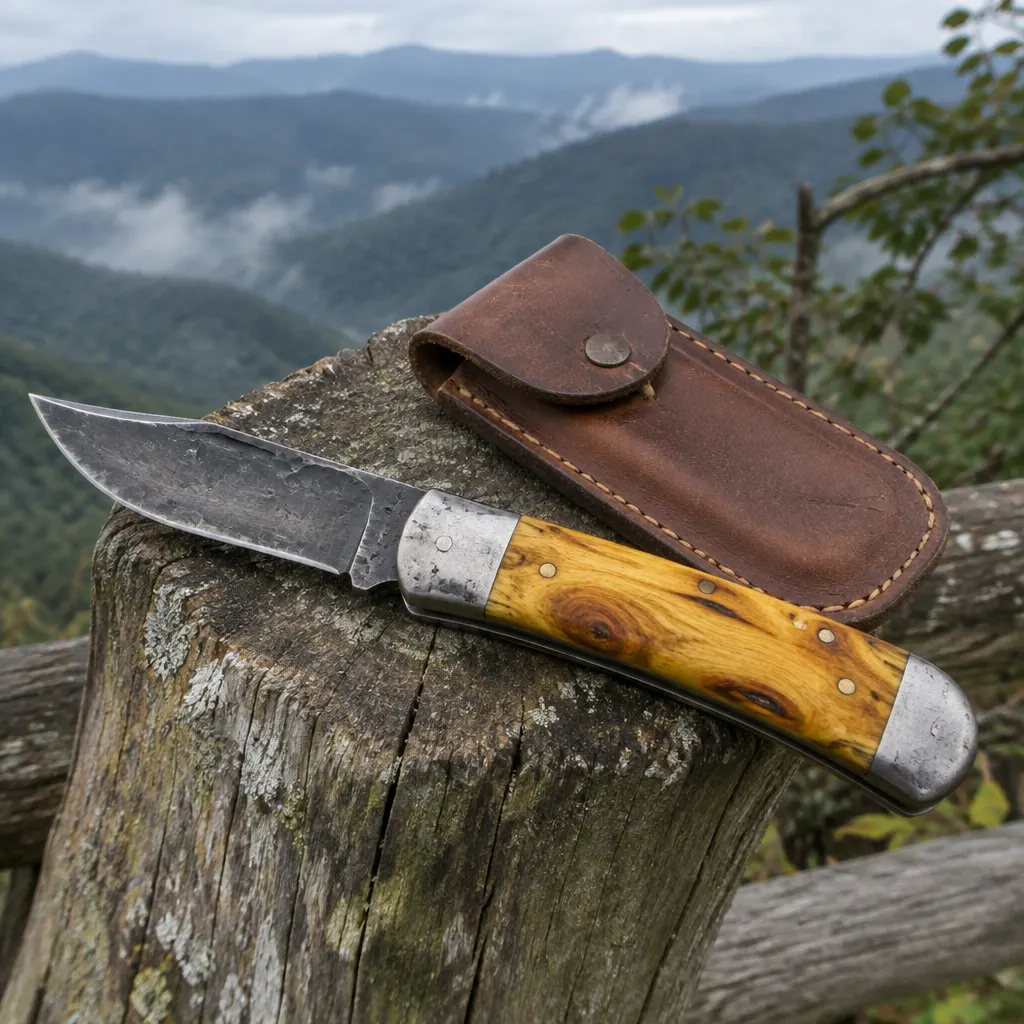
First, Work Out What You Are Holding
Every folding knife closes a little differently, so start by working out which type you have. Open the blade, then look at the back of the handle and inside the front of the frame. If you are still choosing a knife, our guide to the best EDC knife covers sizes and types.
| Type | What holds it open | How you release it | Example |
|---|---|---|---|
| Slip joint | A spring pressing on the tang, no lock | Push the blade past the spring | Mineral Bluff |
| Friction folder | Your thumb on the extended tang | Lift your thumb and fold | Sweetwater Gap |
| Lockback | A rocker bar dropped into a notch in the tang | Press the bar on the back of the handle | Armstrong Creek |
| Liner lock | A strip of the inner liner sprung in behind the tang | Push the liner aside with your thumb | Gray Fox |
Rules for Every Folding Knife
- Keep the fingers of the hand holding the handle on the sides of the handle, never across the slot the edge folds into.
- Push on the spine of the blade, which is the unsharpened back. Never push on the edge.
- Close the knife slowly and under control. Flicking a blade shut is hard on fingertips and hard on edges.
- Point the closing path away from your body and away from anyone standing near you.
- Wipe the blade clean and dry before you fold it, especially a carbon steel blade.
- On a knife with more than one blade, like the Cold Springs Creek Trapper Pocket Knife, Elk Antler, open and close one blade at a time.
- If it will not close, stop and find out why. Forcing it is how you end up shopping for bandages.
Push on the spine, never the edge, and keep your fingers out of the slot.
How to Close a Slip Joint Knife
A slip joint has no lock. A flat spring along the back of the handle presses on the blade’s tang and holds the blade open, closed and, on many knives, at a half stop in between. Traditional patterns like the trapper and the stockman are usually slip joints.
- Hold the handle in one hand with your fingers and thumb on the sides of the scales, clear of the slot.
- Lay the fingers of your other hand flat across the spine of the blade.
- Push the blade toward the handle. You will feel the spring resist, and many knives pause at a half stop at about ninety degrees.
- Keep pushing past the half stop. Near the end the spring takes over and pulls the blade shut.
- Let it close against your fingers on the spine rather than letting it snap. Your fingers ride on the dull back, so they stay out of harm’s way.
The Mineral Bluff Slip Joint Pocket Knife, Deer Antler is a single blade slip joint with a 3.25 inch drop point, which makes it a good knife to learn on.
How to Close a Friction Folder
The friction folder is the oldest and simplest kind of folding knife. There is no spring and no lock. The blade has an extended tang, a small lever that lies along the back of the handle when the knife is open, and your thumb on that lever is what keeps the blade open while you cut.
- Hold the handle by its sides with the edge pointing away from you.
- Lift your thumb off the tang.
- Push the spine of the blade toward the handle with your other hand. It swings freely, so guide it rather than letting it flop.
- Seat the blade in the handle. The tang now sticks up from the back of the handle, and that is normal.
Because nothing holds the blade, a friction folder can swing shut if you take your thumb off in the middle of a cut. Keep it on the tang until you are done. The Sweetwater Gap Friction Folder, Elk Antler and the Cheoah Bald Friction Folder, Osage Orange both work this way.

How to Close a Lockback
A lockback, also called a back lock, has a rocker bar running along the back of the handle. When the blade opens, the front of the bar drops into a notch in the tang and holds it there. You release it at the cutout in the back of the handle where the bar shows.
- Hold the handle in your dominant hand with your thumb or index finger over the release cutout.
- Press the bar down firmly. That lifts the front end of the bar out of the notch in the tang.
- With your other hand on the spine, rotate the blade a few degrees toward closed. Once it has moved past the notch, you can let go of the bar.
- Shift your grip so the fingers of the handle hand sit on the sides of the handle, clear of the slot.
- Fold the blade the rest of the way with pressure on the spine. Like a slip joint, a lockback has spring pressure at the end, so let it close against your hand instead of snapping.
The Armstrong Creek Lockback Pocket Knife, Osage Orange has a 3 inch clip point blade on this kind of lock.
How to Close a Liner Lock
On a liner lock, one of the steel liners inside the handle is cut and bent so that it springs across behind the tang when the blade opens. Open the blade, look into the front of the handle and you will see the end of the liner sitting against the tang.
Learn the two handed method first. The one handed version is quicker, but it puts your thumb in the blade’s path for a moment, and that moment is exactly what you are trying to avoid.
- Hold the handle in your dominant hand so your thumb can reach the end of the liner where it sits behind the blade.
- Push the liner sideways with your thumb until it clears the tang.
- With your other hand on the spine, rotate the blade a few degrees toward closed so the tang rests on the liner and holds it out of the way.
- Take your thumb out of the slot. This is the step people skip.
- Fold the blade the rest of the way with your other hand on the spine. Most liner locks have no backspring, so the blade swings freely until a small detent catches it in the closed position.
The Gray Fox Liner Lock, Horn and Red Comb opens on a thumb stud and closes this way, with the lock released by a push of the thumb.
Mistakes That Cut Fingers
- Wrapping your fingers around the handle the way you hold it to cut, so the slot sits right under them.
- Letting a slip joint or lockback snap shut. It can knock the edge against the inside of the handle and it can catch a fingertip on the way.
- Closing the knife against your leg or stomach, which feels handy right up to the moment it isn’t.
- Forcing a blade that will not move. On a lockback the bar is usually not pressed all the way. On any folder, dirt or rust in the pivot can bind it. Clean it, add a drop of oil and try again.
- Folding up a wet carbon steel blade. It rusts inside the handle where you cannot see it. Our knife care guide covers drying and oiling.
Questions and Answers
How do you close a pocket knife that has no lock?
That is a slip joint or a friction folder. Hold the handle by its sides, push on the spine and fold the blade in. A slip joint pulls itself shut near the end, so let it close against your fingers on the spine.
Why won’t my pocket knife close?
Usually the lock is not fully released, so press the lockback bar harder or push the liner further over. If that is not it, dirt, lint or rust may be binding the pivot. Clean it and oil it rather than forcing it.
Can you close a lockback with one hand?
Yes, with practice, by pressing the bar with your index finger and guiding the blade in with the same hand. Learn the two handed method first, and only go one handed once you can do it slowly.
What is a half stop on a pocket knife?
A flat spot on the tang of many slip joints that holds the blade at about ninety degrees. It gives you a pause so the blade does not swing straight onto your fingers while opening or closing.
Is it bad to snap a pocket knife shut?
Yes. It wears the spring, can knock the edge against the handle and is an easy way to cut a fingertip. Close it slowly. The knife is not in a hurry.
Which pocket knife is easiest for a beginner to close?
A lockback is a good place to start. It stays open while you cut, and closing it is a firm press on the bar with your fingers clear of the slot. Our EDC knives include lockbacks and slip joints in everyday sizes.
Pieces that go with this guide: Mineral Bluff Slip Joint Pocket Knife, Deer Antler, Cold Springs Creek Trapper Pocket Knife, Elk Antler, Sweetwater Gap Friction Folder, Elk Antler, Armstrong Creek Lockback Pocket Knife, Osage Orange and Gray Fox Liner Lock, Horn and Red Comb.
Keep exploring
Shop by collection
- Native American-Style Knives
- Fixed Blade Knives
- Signature Collection
- EDC Knives
- Tomahawks & Axes
- Bearded Axes
- Throwing Axes and Tomahawks
- Tomahawks
- Double Bit Axes
- Axes & Hatchets
- Hunting & Skinning Knives
- Gut Hook Knives
- Skinning Knives
- Pocket Knives
- Antler and Bone Handle Knives
- Camp & Bushcraft Knives
- Neck Knives & Small Fixed Blades
- Bowie Knives
- Daggers
- Boot Knives
- Ring Pommel Knives
- Heritage Tools
- Fire Starting Kits
- Leather Awls
- Ulu Knives
- Gift Sets & Combos
- Damascus Knives
- War Clubs
- Spears & Lances
- Shop everything
Pocket Knives
Slip joints, lockbacks, liner locks and friction folders.
-
 New
Tilson Gap Damascus Stockman Pocket Knife, Bison Horn
3.75 in blade · Buffalo horn
A three blade stockman pocket knife with a 3.75 in hand forged Damascus steel blade, polished black bison horn scales, steel bolsters and a fitted leather belt pouch.
$345.00Free US shipping -
 New
Haoe Damascus Lockback Pocket Knife, Ram Horn
3.75 in blade · Ram horn
A lockback pocket knife with a 3.75 in hand forged Damascus steel clip point, ridged ram horn scales and a fringed leather belt pouch with beadwork.
$345.00Free US shipping -
 New
Black Bear Damascus Clip Folder, Horn
4 in blade · Buffalo horn
A big lockback pocket knife with a 4 in hand forged Damascus steel clip point, filework on the spine, black buffalo horn handle and a black leather belt…
$340.00Free US shipping -
 New
Cataloochee Elk Damascus Lockback with Feathers
4 in blade · Buffalo horn
A large lockback pocket knife with a 4 in hand forged Damascus steel clip point, black buffalo horn handle, trade beads and two pigeon feathers, in a fringed…
$375.00Free US shipping


Keep Reading

Throwing Hatchet Guide: Weight, Handle Length and Where to Stand
How heavy a throwing hatchet should be, how long the handle, where to stand and what wood to throw at, before you buy one or build a target.

Backyard Axe Throwing: How to Build a Target and Set Up a Safe Lane
How to build an axe throwing target, how far to stand, where nobody should stand and what to throw, for a lane in your own yard.

Parts of a Knife: A Labeled Guide From Point to Pommel
Every part of a knife named and explained, from the point and spine to the choil, tang, pommel and sheath, with a labeled table to keep handy.