Types of Spears: Boar Spear, Lance, Pike, Javelin and More
The spear is about as simple as a weapon gets: a point on the end of a pole. People have been arguing about the details ever since. Here are the main types of spears and what each one was built to do.
Thrown or Held: The Two Big Families
Almost every spear falls into one of two groups. Thrusting spears stay in the hand. They are heavier, with stronger heads and thicker shafts, and they are used for stabbing, bracing and keeping something dangerous at a distance. Throwing spears leave the hand. They are lighter and balanced to fly point first.
The second split is foot or horse. Spears for soldiers and hunters on foot range from short to very long. Spears made for riders, the lances, are built around the speed of the horse.
Socket or tang
A spearhead is fixed to the shaft in one of two ways. A socket is a hollow cone on the back of the head that slips over the end of the shaft and is pinned or bound in place. A tang is a spike that goes into the shaft. A socket spreads the load over the end of the wood, which is why it is the usual choice on forged steel heads. Every spearhead we make is forged with a socket.
Types of Spears at a Glance
| Type | Held or thrown | Length | Head | Main use |
|---|---|---|---|---|
| Boar spear | Held | Short and stout | Broad blade with lugs or a crossbar behind it | Hunting large, dangerous game |
| Hunting spear | Mostly held, sometimes thrown | Varies | Leaf shaped or broad blade | Hunting |
| Lance | Held, from horseback | Long | Narrow point | Mounted combat |
| Pike | Held with both hands | About 10 to 23 ft | Small point | Infantry in close formation |
| Javelin | Thrown by hand | Short and light | Small, slim point | Hitting a target at range |
| Atlatl dart | Thrown with a spear thrower | About 4 to 9 ft | Small point, often fletched | Hunting at range |
Boar Spear
The boar spear is a short, heavy thrusting spear built for one dangerous job. Its mark is a pair of lugs, sometimes called wings, or a crossbar just behind the blade. They stop the spear from going in too deep, where it could stick or break, and they keep a wounded boar from forcing its way up the shaft toward the hunter. Anyone who has seen an angry boar understands why somebody thought of that.
Boar spears were used across medieval Europe, and surviving heads date back at least to the 1400s. A heavier relative, the bear spear, had a stouter shaft and a larger head.
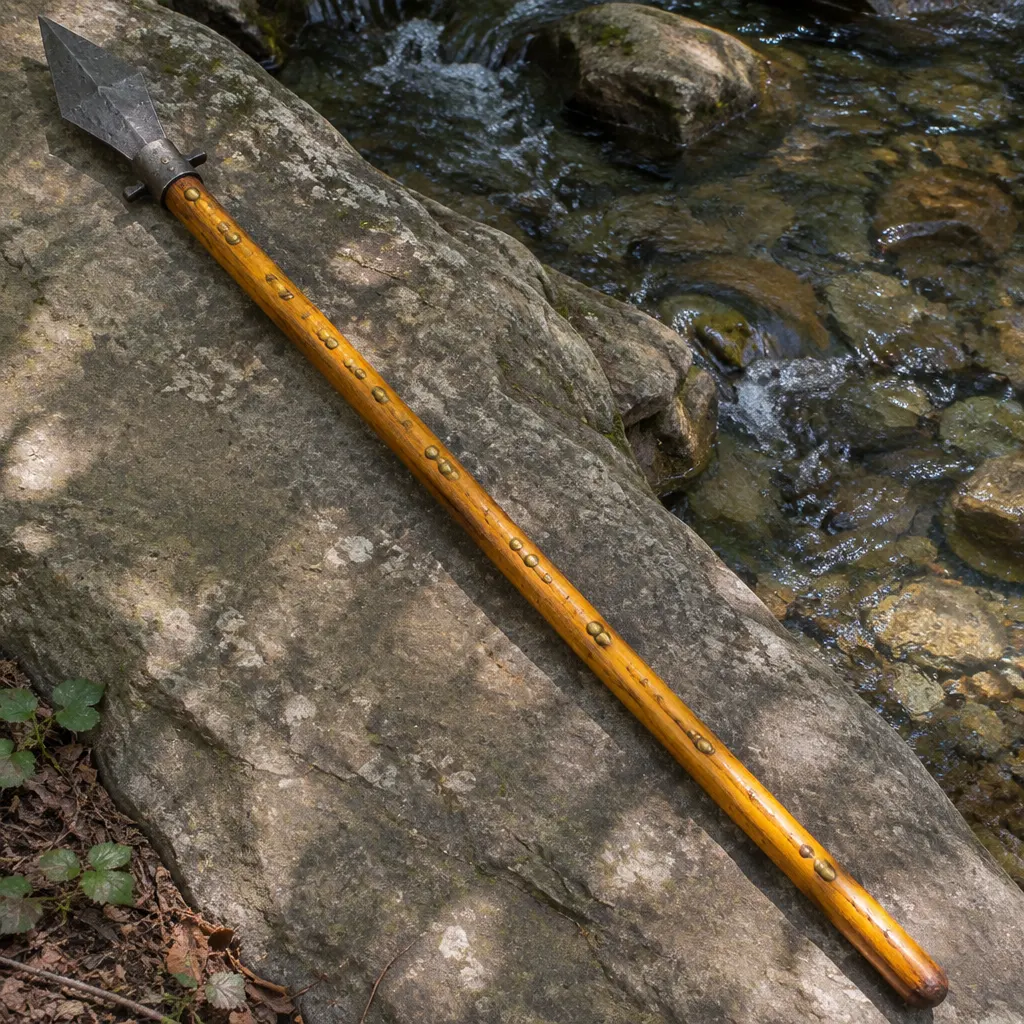
Our short hunting spears follow the boar spear idea and are sold as display and collector pieces. The Dismal Creek Short Hunting Spear, Osage Orange has a broad point with a forged socket and cross lugs, 49 inches overall. The Rocktown Short Hunting Spear, Hickory is 47 inches with a mirror polished head and a hickory shaft.
Hunting Spear
Hunting spear is a broad label. It covers most spears made for game rather than war: a leaf or broad blade on a shaft long enough to keep some distance from the animal and short enough to handle in brush. Many could be thrown in a pinch, but most were meant to stay in the hand.
The leaf shaped head is the classic form. It is widest in the middle and narrows to a point, so it pierces well and still cuts a wide channel. Our Pickle Branch Hand-Forged Spear, White Ash carries a leaf shaped head on a white ash shaft, 67 inches overall. The Sugar Grove Hand-Forged Spear, Osage Orange does the same on osage orange at 71 inches.
Lance
A lance is a spear for a rider. The horse supplies the speed, so the rider mostly has to aim and hold on. Medieval European knights learned to couch the lance, clamping it under the arm so the weight of horse and rider went into the point.
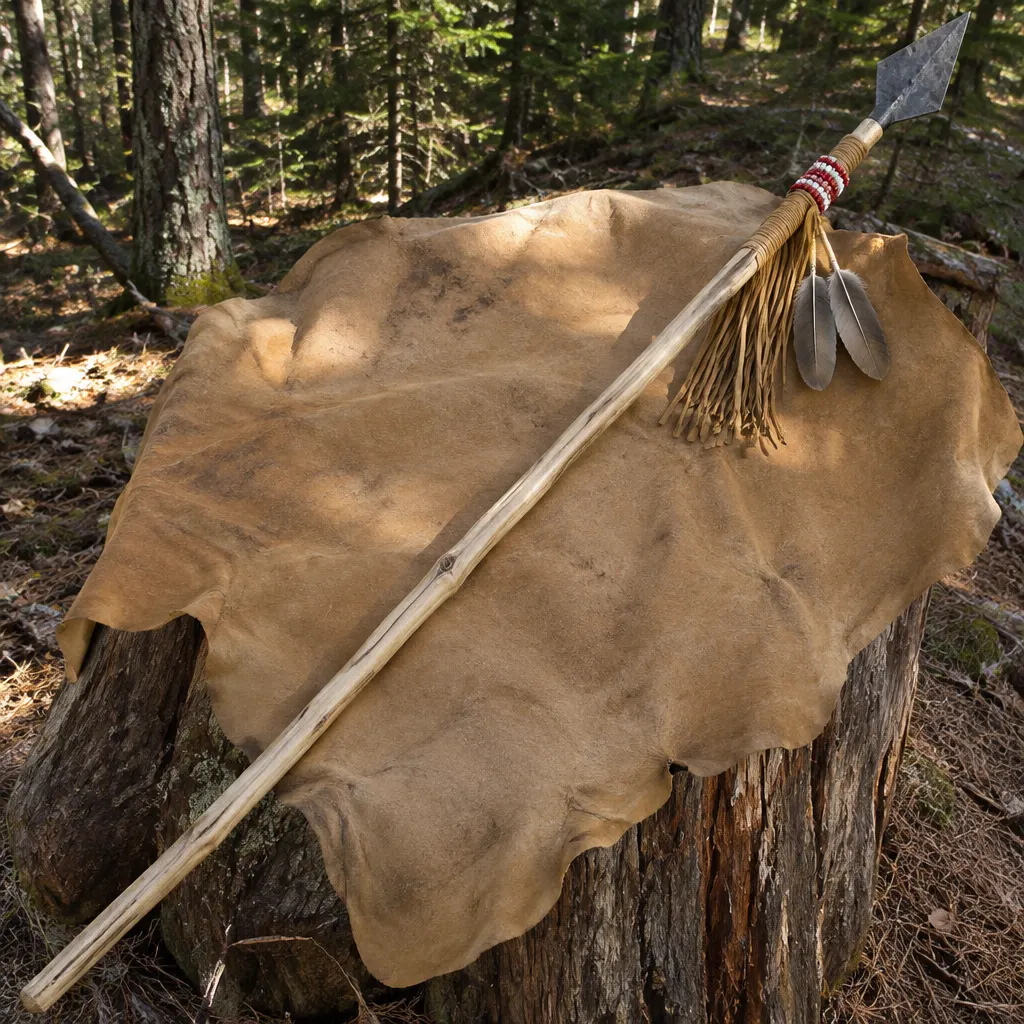
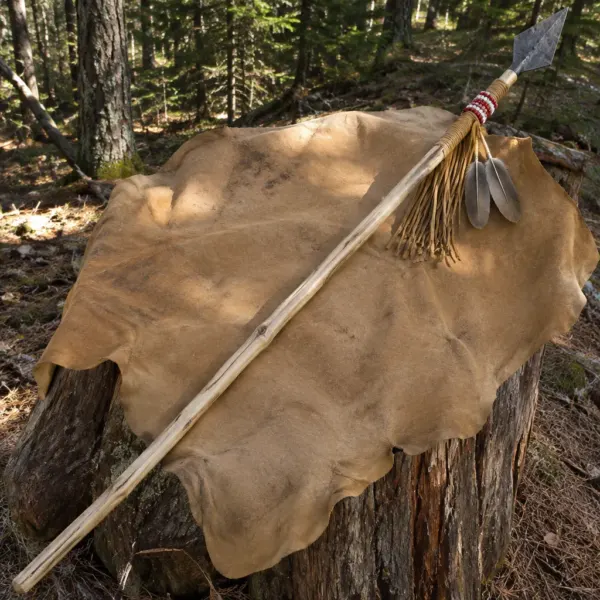
Lances were not only a European idea. Horse cultures across the world used them, including the nations of the Great Plains once horses spread across that country. Our feathered lances are in that Plains style, and they are display pieces. They are much shorter than a knight’s lance and meant for a wall, not a gallop. The Reedy Creek Feathered Lance, Hickory has a long narrow point on a 72 inch overall hickory shaft. The Lovers Leap Feathered Lance, Black Cherry is also 72 inches, finished with brass tacks and gray pigeon feathers.
Pike
A pike is a spear so long it takes two hands and a crowd. Pikes ran from about 10 to 23 feet and were carried by massed infantry in tight blocks. The best known pikemen were the Swiss and the German Landsknechts of the late Middle Ages and the 1500s. A common rule is that a spear becomes a pike when it is too long to use with one hand. Most armies had dropped the pike by about 1700, once the bayonet let a musketeer guard himself.
We do not make pikes. They do not fit in a house, and shipping one would be an adventure for everybody involved.
A pike is a spear so long it takes two hands and a crowd.
Javelin
A javelin is a light spear made to be thrown. Armies used them for a very long time to hit the enemy before the lines met. The Roman pilum is the best known, with a long, thin iron shank behind a small point, made to punch through a shield. The javelin you see at a track meet is the same idea, aimed at grass instead of people.
Atlatl Dart
The atlatl is a spear thrower: a short stick with a hook or spur at the back that holds the end of a dart. It works as an extension of your arm and adds a lot of speed to the throw. The word comes from Nahuatl, the language of the Aztecs, but the tool is far older and turns up all over the world. The oldest known example, found in France, is about 17,500 years old.
The darts look more like long arrows than spears. They run about 4 to 9 feet, with thin flexible shafts and often feather fletching. In the Americas the atlatl was used for thousands of years, and the Aztecs were still using it when the Spanish arrived.
Choosing a Spear Today
Most people buying a spear now want one to hang on a wall, to carry at a living history event or simply to own a fine piece of forged work. A few things are worth checking.
- The head. A socketed head that is pinned or bound is stronger than a head glued into a slot.
- The shaft wood. Ash was the classic European spear shaft. Hickory, osage orange, cherry and maple all make strong American shafts. Our guide to knife handle materials covers these woods.
- The length. Measure the wall and the ceiling before you buy a 72 inch lance. Ceilings are less forgiving than catalogs.
- The cover. A leather point cover protects the edge and anyone walking past. Every spear we make comes with one.
You can see every spear and lance we make in spears and lances. If you are building a wall of old arms, our war clubs and tomahawks hang well beside them.
Questions and answers
What are the main types of spears?
The main types are the boar spear, the general hunting spear, the lance for horseback, the long infantry pike, the thrown javelin and the atlatl dart. They split into spears you hold and spears you throw.
What is the difference between a spear and a lance?
A lance is a spear made for use from horseback. It is usually longer and is driven by the speed of the horse rather than the arm alone. Spear is the broader term and includes the weapons used on foot.
What is the crossbar on a spear for?
On a boar spear, the lugs or crossbar behind the blade stop the spear from going in too deep. They also keep the animal from working its way up the shaft toward the hunter.
What is the longest type of spear?
The pike. Infantry pikes ran from about 10 to 23 feet and needed both hands.
Is a javelin a spear?
Yes. A javelin is a light spear designed to be thrown rather than held.
What wood is best for a spear shaft?
A straight grained, tough hardwood. Ash was the traditional European choice. Hickory, osage orange, cherry and maple also make strong shafts that look good on a wall.
Pieces that go with this guide: Dismal Creek Short Hunting Spear, Osage Orange, Rocktown Short Hunting Spear, Hickory, Pickle Branch Hand-Forged Spear, White Ash, Sugar Grove Hand-Forged Spear, Osage Orange, Reedy Creek Feathered Lance, Hickory and Lovers Leap Feathered Lance, Black Cherry.
Keep exploring
Shop by collection
- Native American-Style Knives
- Fixed Blade Knives
- Signature Collection
- EDC Knives
- Tomahawks & Axes
- Bearded Axes
- Throwing Axes and Tomahawks
- Tomahawks
- Double Bit Axes
- Axes & Hatchets
- Hunting & Skinning Knives
- Gut Hook Knives
- Skinning Knives
- Pocket Knives
- Antler and Bone Handle Knives
- Camp & Bushcraft Knives
- Neck Knives & Small Fixed Blades
- Bowie Knives
- Daggers
- Boot Knives
- Ring Pommel Knives
- Heritage Tools
- Fire Starting Kits
- Leather Awls
- Ulu Knives
- Gift Sets & Combos
- Damascus Knives
- War Clubs
- Spears & Lances
- Shop everything
Hand-Forged Spears and Lances
Short hunting spears, leaf blade spears and feathered lances with forged socket heads.
-
 New
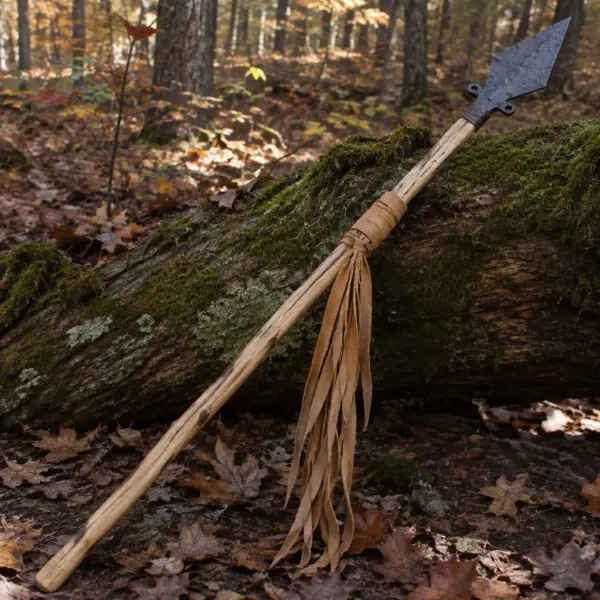
Rocktown Short Hunting Spear, Hickory
7.25 in blade · Hickory
Short Hunting Spear with a broad spear point with a forged socket and cross lugs, hand-forged in high-carbon steel, on hickory.
$360.00Free US shipping -
 New
Needmore Feathered Lance, Curly Maple
10 in blade · Maple
Feathered Lance with a long narrow lance point with a forged socket, hand-forged in high-carbon steel, on curly maple.
$560.00Free US shipping -
 New
Pickle Branch Hand-Forged Spear, White Ash
8.75 in blade · Ash
Hand-Forged Spear with a leaf-shaped spear point with a forged socket, hand-forged in high-carbon steel, on white ash.
$475.00Free US shipping -
 New
Dismal Creek Short Hunting Spear, Osage Orange
6.5 in blade · Osage orange
Short Hunting Spear with a broad spear point with a forged socket and cross lugs, hand-forged in high-carbon steel, on osage orange.
$345.00Free US shipping
Keep Reading

Gifts for Men Who Have Everything: Knives, Hawks and Outdoor Gear by Budget
Hand forged knives, tomahawks and fire kits sorted by budget, with real prices, for the man whose drawer is already full of gadgets.

How to Close a Pocket Knife Safely, Lock by Lock
Step by step closing for slip joint, friction folder, lockback and liner lock knives, with the mistakes that cut fingers.

Throwing Hatchet Guide: Weight, Handle Length and Where to Stand
How heavy a throwing hatchet should be, how long the handle, where to stand and what wood to throw at, before you buy one or build a target.